
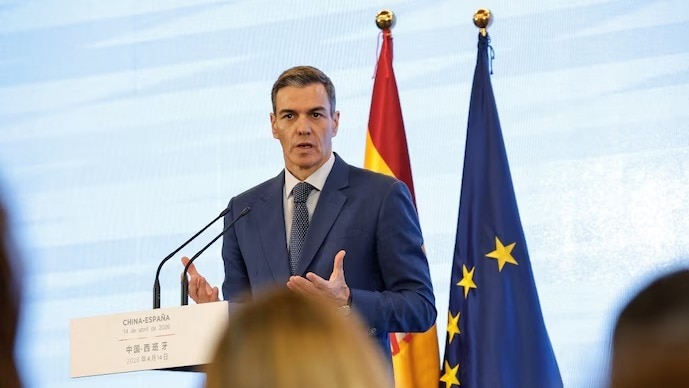
Pedro Sanchez has called an early election for 29 November after parliament rejected his housing decrees. The move turns a legislative setback into a high-stakes test of his weakened coalition and wider left support.Spanish Prime Minister Pedro Sanchez called an early election for November 29 on Monday, in a bid to strengthen his mandate after a fragmented parliament rejected the government's key housing decrees last week amid widespread protests."We need to renew people's support," Sanchez said in a televised address. "We need to mobilise and win a much larger progressive majority in parliament, one that will allow us to overcome vested interests, deliver new social advances and continue transforming Spain."The premier also acknowledged having made mistakes and falling short of campaign promises."I also know that part of that social majority is dissatisfied today," he said. Sanchez has stood out globally for taking a strong stance on progressive issues from Palestinian statehood to defending multilateral institutions and cracking down on "tech oligarchs", even as a series of setbacks and scandals weakened his position at home.Facing the electorate now is a risky move as Sanchez's Socialist Party is trailing in opinion polls. However, he has been boosted by proposals to tackle a mounting housing crisis that were well received but were struck down by right-wing MPs on Friday, leading to planned new public protests about housing. An election defeat would spell the end of one of Europe's last few left-leaning governments at a time when the far-right is making unprecedented gains across the region as a growing swathe of European voters desert the centre ground.Opinion polls suggest a coalition led by the conservative People's Party (PP) with the support of Vox is the most likely outcome in Spain, ushering a far-right party into central government for the first time since the return of democracy after the death of dictator Francisco Franco.Still, Sanchez, a wily political operator, has proven time and again his ability to surprise those who had long written him off.Despite never winning enough votes to form a majority government, he has cobbled together a series of fragile and seemingly impossible coalitions including voices from the far-left to the separatist right to remain in power for three successive terms lasting eight years.But growing fragmentation among his partners has meant the government has passed little in the way of legislation in its third term and failed to pass a budget since 2023, even as Spain's economy has continued to be one of the best performing in the developed world.RIVAL OUSTEDSanchez took office after leading a move to oust centre-right Mariano Rajoy in the wake of major corruption scandals within Rajoy's People's Party. However, senior members of Sanchez's own Socialist Party have in the past year faced allegations of graft, dragging down the party's already weak approval rating which has hovered at around 26-31% throughout his tenure.Against the odds, he won a second four-year term in office in 2023 despite heavy losses in earlier regional and local elections by negotiating support from a loose alliance of parties in parliament.That was achieved after promising a highly controversial amnesty for pro-independence Catalan leaders in exchange for their support, a move still bitterly remembered by many voters as a betrayal of Spanish unity.Sanchez won early plaudits for moves including the exhumation of Franco from a mausoleum the dictator built for himself outside Madrid, and the reform of a labour law that has seen unemployment fall to its lowest level in almost two decades.He cemented his humanitarian and pro-immigration credentials early by saying in June 2018 that Spain would accept the Aquarius migrant rescue ship and its 629 passengers, after Italy and Malta both refused to let the ship dock in their harbours.As other European countries have toughened their policies towards foreign arrivals, Sanchez has consistently argued that immigration is essential for sustaining Spanish growth by plugging gaps in key sectors such as construction, agriculture and hospitality and for providing revenue to prop up Spain's strained welfare system.More recently, his refusal to agree to US-led demands to increase defence spending to 5% of GDP while pivoting toward China has rattled US President Trump and some European leaders concerned about the threat of the bloc being flooded with Chinese goods.Sanchez's housing measures provided a rare chance for the Socialist leader to pitch himself as the leader of a mobilised left and distract from the more politically damaging issues of the migrant crisis in Ceuta and corruption scandals, said Lorenzo Bernaldo de Quiros, economist and president of consultancy Freemarket Corporate Intelligence."This is a window of opportunity," de Quiros said. "If he does not call elections fast, (those topics) will return to centre stage."- Ends
Spain heads to early election amid widespread protests over housing crisis
Full Article
Original Source
Read the full article at Indiatoday →KhanList aggregates and links to publicly available news content. We do not host full articles from third-party sources. Always verify important information with original sources.