
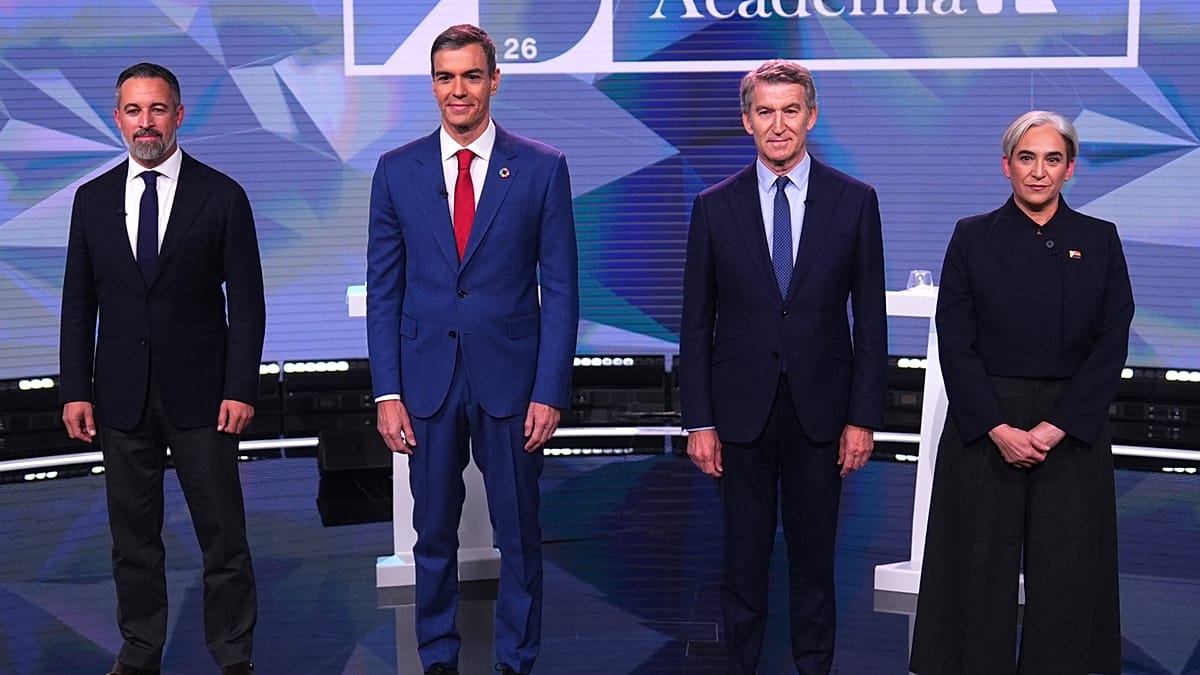
Spain goes to the polls this Sunday in a crucial election that will shape the country’s political future. The vote could pave the way for a change of government, with Alberto Núñez Feijóo becoming prime minister and the far right potentially entering government for the first time since the end of Franco’s dictatorship. Alternatively, it could see Pedro Sánchez, who has been in power since 2018, secure another term in office. ADVERTISEMENT ADVERTISEMENT The election comes after a turbulent period marked by the pandemic, the energy crisis, rising inflation, migration crises, the devastating floods in Valencia and the 2025 power blackout. Access to housing, immigration, the economy and allegations of corruption involving people close to the prime minister have dominated much of the campaign. After two weeks of intense campaigning, the main contenders for the premiership have set aside rallies and political events this Saturday to observe the traditional day of reflection. More than 38.6 million Spaniards are eligible to vote on Sunday, 29 November. How are the candidates spending the day of reflection? Prime Minister and PSOE candidate Pedro Sánchez will spend the day exercising and spending time with his family, while PP leader Alberto Núñez Feijóo has opted to travel to Ceuta, where he has no political engagements planned. Frente Amplio candidate Ada Colau has returned to Barcelona to be with her family and friends after wrapping up her campaign in Madrid on Friday. Podemos candidate Irene Montero has taken her dog for a walk, while ERC’s Gabriel Rufián plans to exercise and enjoy a family meal. Under Spanish electoral law, campaigning and the distribution of election material are prohibited during the day of reflection. Polling stations will open at 9am on Sunday and close at 8pm. Around 1.6 million voters will be eligible to cast their ballots for the first time. More than 100,000 officers to provide election day security The Interior Ministry has mobilised 100,727 personnel to ensure security during Sunday’s election, according to the prime minister’s office. The operation will involve 50,373 Civil Guard officers, 30,036 National Police officers, 14,144 local police officers and 6,174 officers from regional police forces and affiliated units. Andalusia, Madrid and Catalonia are among the regions where the police presence will be greatest. The ministry has also stepped up measures to protect the electoral process against potential cyberattacks and disinformation campaigns. On 4 November, Interior Minister Fernando Grande-Marlaska activated the Electoral Security Coordination Network, which is tasked with protecting voting and vote-counting systems against potential threats and safeguarding voters’ personal data. A total of 38,616,949 Spaniards are eligible to vote, almost 1.15 million more than in the July 2023 election. Of these, more than 2.6 million live abroad, while 1.6 million will be eligible to vote in a general election for the first time. Voters will elect 350 members of Congress and 209 senators, with 61,033 polling stations set up and around 210,000 ballot boxes distributed. The election budget exceeds €243 million. For the first time, voters will be able to use their digital ID cards via the MiDNI app as proof of identity. The Interior Ministry has distributed more than 60,000 QR code readers to polling stations to support the new system. The government will publish the first turnout figures at 2.30pm, followed by a second update at 6.30pm. A press briefing to announce the provisional results is scheduled for 10.30pm. The vote count can be followed live on the official election website (in Spanish), while Euronews will bring you live updates throughout election day.
Spain heads into decisive election as campaigning falls silent
Full Article
Original Source
Read the full article at Euronews →KhanList aggregates and links to publicly available news content. We do not host full articles from third-party sources. Always verify important information with original sources.