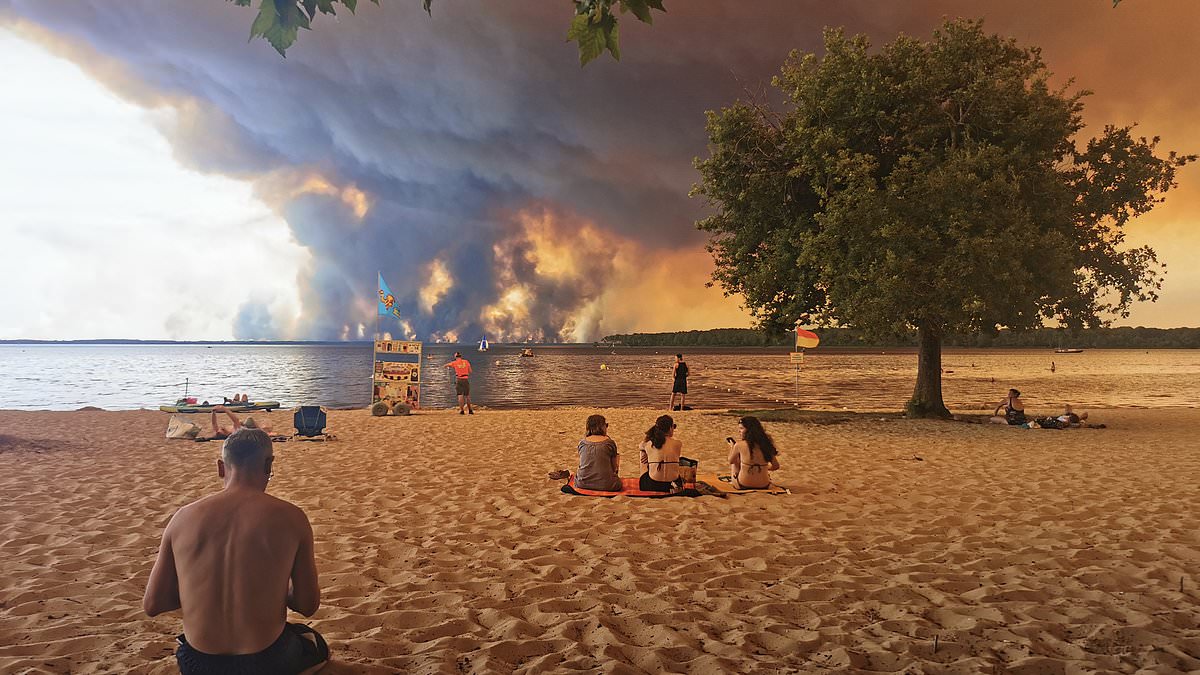
See more Daily Mail on Google - save us as a Preferred Source Published: 10:58 EDT, 29 July 2026 | Updated: 11:01 EDT, 29 July 2026 As temperatures top 45C (113F) in some parts of Andalucia and wildfires spread across both Spain and France, holidaymakers are being warned they may lose money spent on holidays if they cancel.Most insurance policies do not provide cover if you fail to travel unless the Foreign Office (Foreign, Commonwealth and Development Office (FCDO)) specifically says a destination is no-go – or if your intended travelling companion falls seriously ill or you suffer a bereavement.If travellers simply decide that they do not like the look of a situation and do not go, this is regarded as ‘disinclination to travel’ and you will not be refunded the cost of your holiday. The FCDO is not currently warning people to avoid Spain and France. Despite wildfires ravaging great swathes of France and Spain in recent weeks, neither country has been declared unfit for British travellers, according to the FCDOHowever, if you have bought a package holiday and your hotel has been damaged by a wildfire, it is the responsibility of the tour operator to offer alternative accommodation of a similar quality, a different holiday destination or a refund. This comes under the Package Travel Regulations (2018).This is a key advantage of booking a package holiday as opposed to buying flights and accommodation separately. If you have done so, changing travel plans or getting a refund is much trickier and largely down to the generosity of individual airlines and hoteliers.Your travel insurance may provide cover if you are out on holiday already and are forced to move because of a wildfire – having to leave a villa, for example, or a hotel that is under threat. However, not all policies provide such protection, as you usually have to pay for it as an ‘add on’.That said, most travel insurance does offer cover for expenses resulting from a move caused by a disruption as well as damage to possessions.With temperatures touching 40C (104F) in Toulouse today, a vast band of our two favourite holiday destinations are baking. And it’s set to continue, with wildfires still raging close to Bordeaux and in other parts of the Gironde region.President Emmanuel Macron of France has warned that ‘temperatures are set to rise again, the wind is still present, and therefore we must remain humble’.But what can you do to beat the heat when you’re abroad? Top tips for holidaying in the heat Dine at al fresco restaurants and cafes that have installed cooling water mist systems as standard.Check before booking that your hotel/villa have air-conditioning.Always carrying a water bottle - perhaps even two. Do not try to get a tan. Always smear on at least 30 SPF (sun protection factor) sunscreen - and ensure the label of the bottle you buy is at least fourstar UVA protection.The NHS recommends that if you are going out for a while you should apply sunscreen 30 minutes before leaving and again just before you go.Reapply sunscreen at least every two hours.Do not stay out in the sun for longer than you would normally, thinking you are protected because you have sunscreen on.A wide-brimmed hat is recommended as is loose clothing - polo-neck shirts with collars up to protect your neck from burning are a good idea.Always wear sunglasses, but not cheap ones. Glasses should offer 100 per cent UV protection and feature a UV400 mark.Getting up early to go shopping or see sights is a good idea. If you feel tired later, you can always take a continental-style siesta in your room or have a snooze in the shade by the pool.Later evening meals are sensible.Carry an old-fashioned fan or a modern, battery-powered one.Always keep an eye on local news reports to be as informed as you can in case wildfires break out in your region.
Spain and France wildfires: When can you cancel your holiday - and will you get your money back? Our Holiday Guru shares his advice
Full Article
Original Source
Read the full article at Dailymail →KhanList aggregates and links to publicly available news content. We do not host full articles from third-party sources. Always verify important information with original sources.