
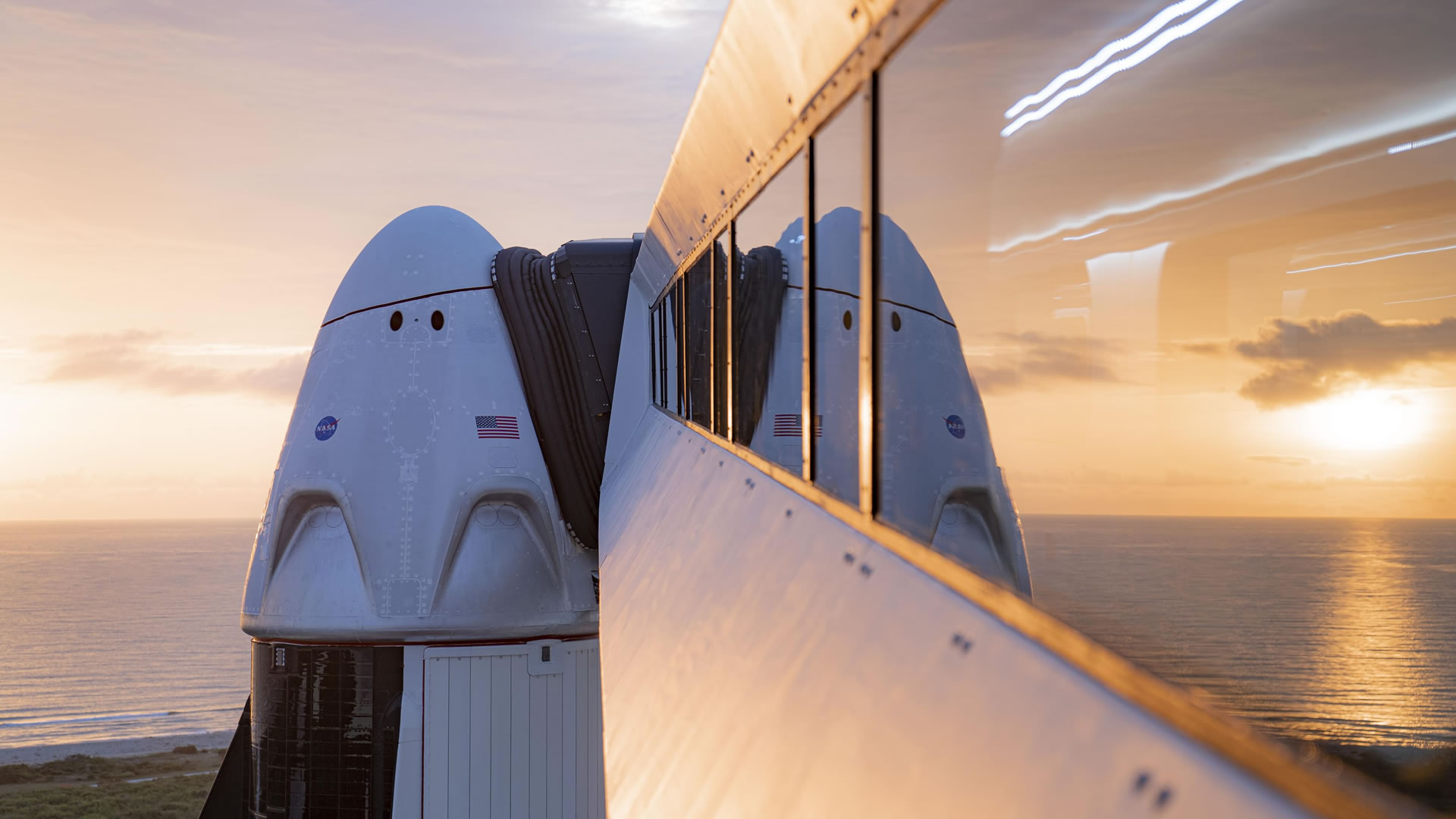
SpaceX’s latest crewed Dragon mission to the ISS is the fastest on record yet. Its Crew-13 Mission for NASA launched and arrived at the International Space Station (ISS) in just under 8 hours (7 hours and 55 minutes). By all accounts, that makes it the fastest delivery any American spacecraft has managed in history. According to NASA, the previous record was about 12 hours and 33 minutes back in November of 2024. This was another SpaceX Dragon cargo capsule mission during the company’s CRS-31 resupply flight. As for manned missions, the previous record was in August 2025 by another Crew-11 mission at 14 hours and 43 minutes. So how was the record-breaking feat achieved? According to NASA, luck certainly played a role. “We got lucky this time,” Julianna Scheiman, director of NASA science and SpaceX’s Dragon program, said at Crew-13’s post-launch press conference today. “The space station was in an opportune spot in space, and the orbital mechanics, the physics of it all, worked out for it to be the shortest launch-to-docking time we’ve had to date,” she said. “This is close to the fastest it could be,” she added. Record-breaking ISS supply time The ISS orbits the Earth at around 28,000 kph, completing an orbit about every 90 minutes. For this reason, you can’t just launch a rendezvous spacecraft and fly straight to it. In order to dock, a craft needs to enter the same orbital plane, have enough velocity to catch up, and be able to carefully maneuver into position. Sounds simple on paper, but this is a very tricky thing to achieve. The most crucial factor is where the ISS is along its orbit when Dragon launches. The spacecraft must launch when the station’s orbital plane passes over the launch site. But it also needs the ISS to be at a favorable point along that orbit. If the phasing is right, Dragon can begin catching the station almost immediately. But that’s only part of the story. The ISS is already traveling at a fair pace in orbit; to this end, any spacecraft needs to also catch up with it. To help out here, Mission controllers tend to put craft like the Dragon in a slightly lower orbit. Being closer to Earth, this enables the craft to “hack” the geometry to gradually catch up with the ISS. With each orbit taking around 90 minutes, even just a handful will easily add hours to a trip. Location, location, location In this case, the Crew-13 happened to launch when the geometry was unusually favorable. The ISS was positioned such that Dragon could get into orbit and begin catching it almost immediately. In space history terms, this is not the fastest of its kind on record either. One Russian Soyuz mission in May 2020 was achieved in around 3 hours and 3 minutes. But that was something of an exception that proves the rule. Russia, for its part, has historically used very tight launch windows where Soyuz would be exactly in the right place after just a few orbits. Great, but the trade-off is flexibility. A fast-track rendezvous of this kind needs very precise phasing between the spacecraft and station. Any kind of delay means losing that window and either using a longer “plan B” or rescheduling. Get the latest in engineering, tech, space & science - delivered daily to your inbox.Christopher graduated from Cardiff University in 2004 with a Masters Degree in Geology. Since then, he has worked exclusively within the Built Environment, Occupational Health and Safety and Environmental Consultancy industries. He is a qualified and accredited Energy Consultant, Green Deal Assessor and Practitioner member of IEMA. Chris’s main interests range from Science and Engineering, Military and Ancient History to Politics and Philosophy.
SpaceX smashes US record as astronauts reach ISS in just 7 hours and 55 minutes
Full Article
Original Source
Read the full article at Interestingengineering →KhanList aggregates and links to publicly available news content. We do not host full articles from third-party sources. Always verify important information with original sources.