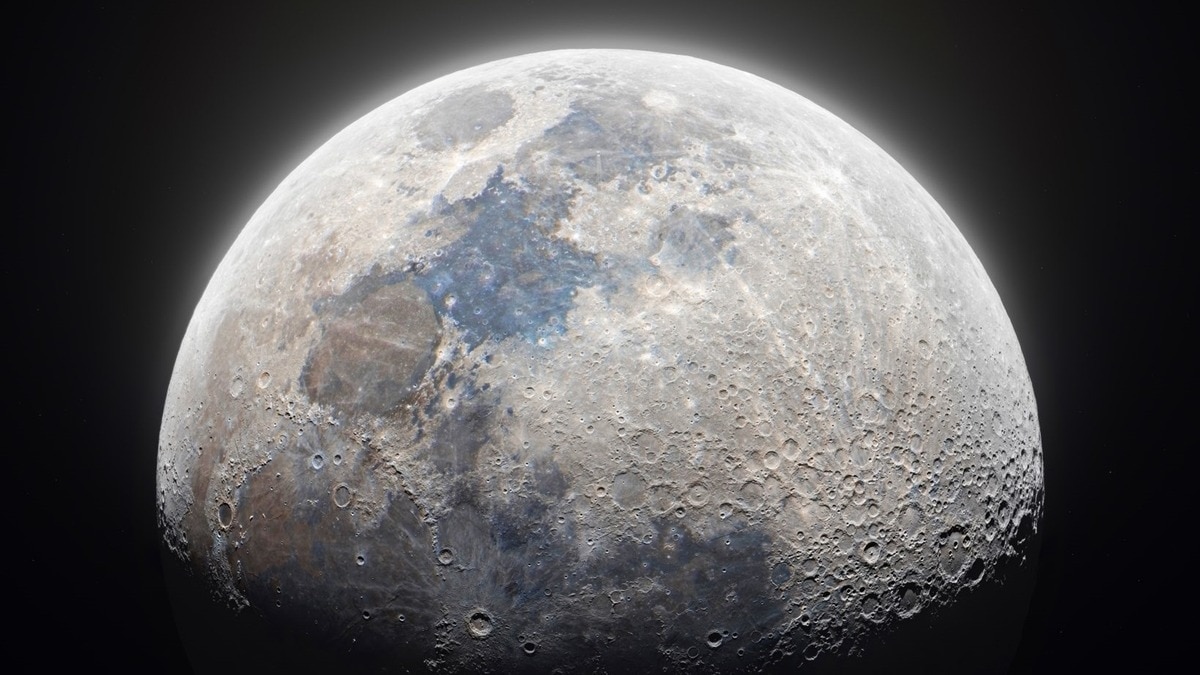
The rocket stage would have struck the Moon at roughly 8,700 kilometres an hour, releasing energy equivalent to about three tonnes of TNT.The far side of the Moon proved especially valuable because it has experienced fewer geological changes than the side that permanently faces Earth. (Photo: Nasa)A discarded upper stage of SpaceX's Falcon-9 rocket has likely crashed into the Moon, near the Einstein Crater, at around 12.05 pm IST. However, a confirmation of the impact is expected to take several hours.The upper stage, weighing about 4,500 kg, had been drifting through space for 19 months after launching the Blue Ghost mission to the Moon, and its collision course had been tracked to within seconds and a few hundred metres.Multiple agencies are tracking the development and there is a high chance that the orbiters flying above the Moon will spot a new craters in the coming days. WHAT ACTUALLY HIT THE MOON?It was not a whole rocket. It was the Falcon 9's upper stage, the second of the rocket's two segments, which fires after the reusable first stage falls away.This particular stage, roughly 12 metres long and about 4,500 kilograms in mass, launched on January 15, 2025, carrying Firefly Aerospace's Blue Ghost-1 and ispace's Hakuto-R Mission 2 landers towards the Moon. Once its fuel ran out, solar activity and the Moon's gravitational pull gradually altered the rocket stage's trajectory.WHY DID IT TAKE 19 MONTHS TO CRASH?The stage was left circling in a wide, unstable loop between Earth and the Moon.Over months, tiny tugs from the gravity of the Earth, the Moon and the Sun, along with the faint push of sunlight itself (called solar radiation pressure), nudged its path a little further each time.Eventually, those small nudges added up into a direct hit. SpaceX said the stage had been passivated, meaning drained of fuel and made safe, but that a controlled disposal burn is not possible for stages on such high energy trajectories.HOW HARD DID IT HIT, AND WHAT WILL IT LEAVE BEHIND?The stage would have struck at roughly 8,700 kilometres an hour, releasing energy equivalent to about three tonnes of TNT.Because the Moon has no atmosphere to create drag or friction, the rocket hit at essentially full speed, digging out a fresh crater and throwing up loose lunar soil, called regolith, in a plume.Scientists expect the impact to leave a crater between 20 and 30 metres wide, along with more than a million kilograms of displaced dust and debris.WHY DO SCIENTISTS CARE ABOUT A CRASHED ROCKET?Because, unlike a natural meteor, researchers already knew this object's mass, speed, shape and timing well in advance.A study published ahead of the impact called it a rare opportunity to record an artificial impact on the Moon in real time, and to test methods for pinpointing exactly where such strikes occur on the lunar surface, useful groundwork for future lunar seismology.Nasa's Lunar Reconnaissance Orbiter, and South Korea's Danuri spacecraft are expected to compare before and after images of the site over the coming days to confirm the crater's exact size.India's Chandrayaan-2 orbiter is also flying above the Moon and could spot the dent on the lunar surface.- EndsPublished By: Sonali VermaPublished On: Aug 5, 2026 15:28 IST
SpaceX rocket has likely crashed into the Moon, confirmation still awaited
Full Article
Original Source
Read the full article at Indiatoday →KhanList aggregates and links to publicly available news content. We do not host full articles from third-party sources. Always verify important information with original sources.