
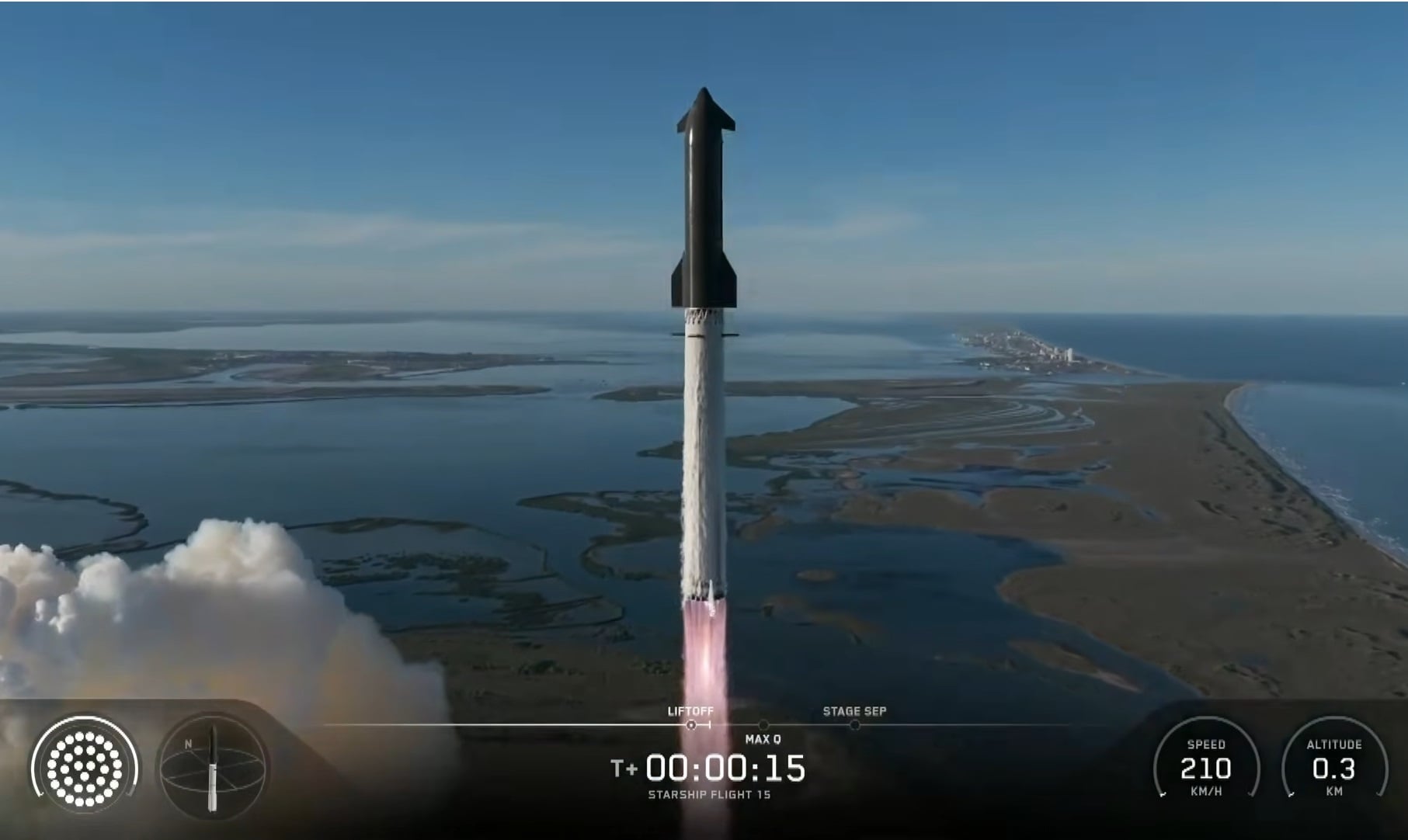
SpaceX sent its Starship on a flight that was meant to feature a first-ever retrieval of both rocket stages, but a launch-pad catch of the first-stage booster had to be canceled due to safety concerns. Instead, the Super Heavy booster was diverted during its descent to make an offshore splashdown. Observers at SpaceX's Starbase on the South Texas coast could see the fiery plunge that took place minutes after launch at 4:47 p.m. CT (2247 GMT) today. "Wow, you could feel the rumble of that splashdown there," launch commentator Jessie Anderson said. This 15th flight test still has a chance to make history: The mission plan calls for the Starship second stage to spend as much as 22 hours in orbit — ending with a return to the pad for a midair capture by the launch tower's giant extendable arms. SpaceX has caught Starship's booster during three previous test flights, but this would be a first for the second stage. SpaceX has the option of ending the flight early and sending the second stage — known as Ship 42 — down to a controlled ocean splashdown if any further safety concerns arise. After reaching orbit, Ship 42 began deploying 26 satellites for SpaceX's Starlink broadband internet network. Starship ranks as the world's biggest and most powerful rocket, standing 407 feet (124 meters) tall and providing 17 million pounds of thrust at liftoff. The rocket is designed to deploy dozens of Starlink V3 satellites at a time — and NASA is counting on SpaceX to provide a Starship-based system for landing astronauts on the moon by as early as 2028.
SpaceX Launches Starship But Passes Up Booster Catch for Safety's Sake
Full Article
Original Source
Read the full article at Universetoday →KhanList aggregates and links to publicly available news content. We do not host full articles from third-party sources. Always verify important information with original sources.