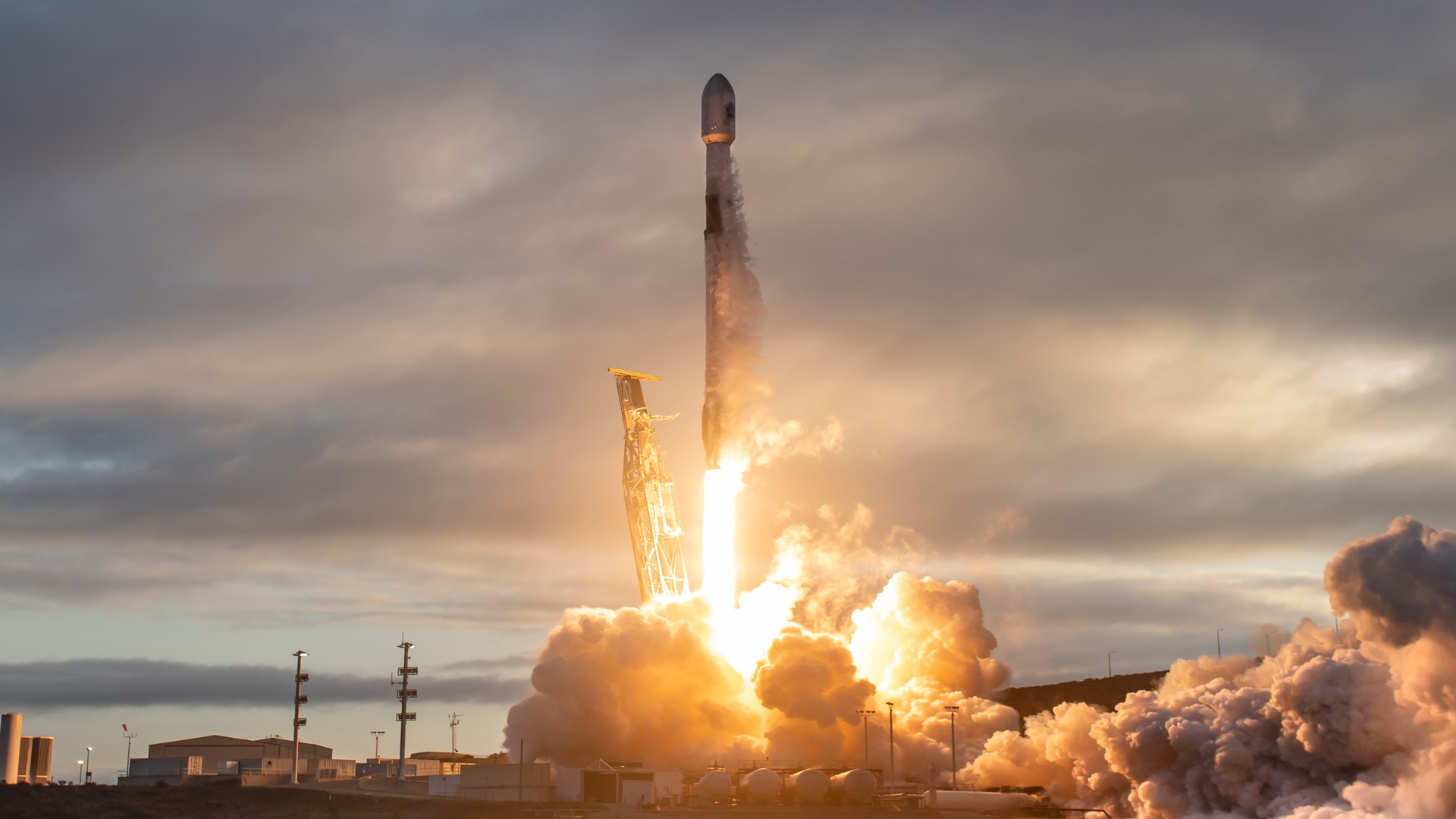
SpaceX has secured $1.6 billion in U.S. Space Force contracts to launch 18 Falcon 9 missions supporting the military’s Space Based Sensing and Targeting (SBST) portfolio through the end of 2027. The missions were awarded under two task orders through the National Security Space Launch (NSSL) Phase 3 Lane 1 program, which allows multiple commercial launch providers to compete for national security missions. All 18 launches will lift off from Vandenberg Space Force Base in California. The satellites will support the Space-Based Sensing and Targeting portfolio, which uses spacecraft to detect and track airborne threats while relaying near real-time information to U.S. military forces. The latest award adds to a string of major Space Force contracts secured by the Elon Musk-led pioneering aerospace company this year. In May, the company won roughly $6.45 billion in Space Force awards supporting satellite constellations for tracking airborne targets and enabling near real-time communications between missile warning sensors and interceptors. The contract further expands SpaceX’s role in U.S. military space programs as the Pentagon increases investment in space-based sensing and tracking capabilities. Those capabilities are expected to support the Trump administration’s proposed Golden Dome missile defense initiative, which aims to build a layered missile defense network using space- and ground-based systems. Expanding military launches The U.S. Space Force said the task orders will strengthen the nation’s space-based sensing and targeting capabilities while speeding up launch procurement for national security missions. “Sensing and targeting of airborne objects from space and providing near-real-time communications across the Joint Force, are vital to the defense of our nation,” said Space Force Col. Eric Zarybnisky, acting portfolio acquisition executive for Space Access. The contracts were awarded under the dual-lane structure introduced in NSSL Phase 3, which is intended to speed up procurement while maintaining competition among launch providers. “We have set an unprecedented two-month acquisition timeline under the Phase 3 Lane 1 contract from requirement identification to award,” Zarybnisky said. “Ultimately, this timeline results in the speed our warfighter demands more than ever before.” According to the Space Force, the timeline includes one month for launch providers to prepare and submit proposals before contracts are awarded. Supporting defense satellites The Falcon 9 missions will deploy satellites supporting the SBST portfolio, improving the military’s ability to detect and track airborne threats from orbit while providing near real-time communications across the Joint Force. The contracts form part of the Space Force’s broader effort to modernize national security launch services by working with commercial launch providers capable of delivering critical missions on accelerated timelines. The National Security Space Launch Phase 3 program is structured to provide the Department of Defense with reliable access to space while encouraging greater participation from the commercial launch industry. Under the Lane 1 framework, eligible providers compete for individual task orders rather than receiving fixed launch allocations.The Space Force’s Space Systems Command, which manages an annual acquisition budget of about $15.6 billion for the Department of War, oversees military space acquisitions and launch services, with the NSSL program serving as its primary vehicle for procuring national security launches.Recommended ArticlesGet the latest in engineering, tech, space & science - delivered daily to your inbox.With over a decade-long career in journalism, Neetika Walter has worked with The Economic Times, ANI, and Hindustan Times, covering politics, business, technology, and the clean energy sector. Passionate about contemporary culture, books, poetry, and storytelling, she brings depth and insight to her writing. When she isn’t chasing stories, she’s likely lost in a book or enjoying the company of her dogs.
SpaceX lands $1.6 billion Space Force contract for military sensing satellite launches
Full Article
Original Source
Read the full article at Interestingengineering →KhanList aggregates and links to publicly available news content. We do not host full articles from third-party sources. Always verify important information with original sources.