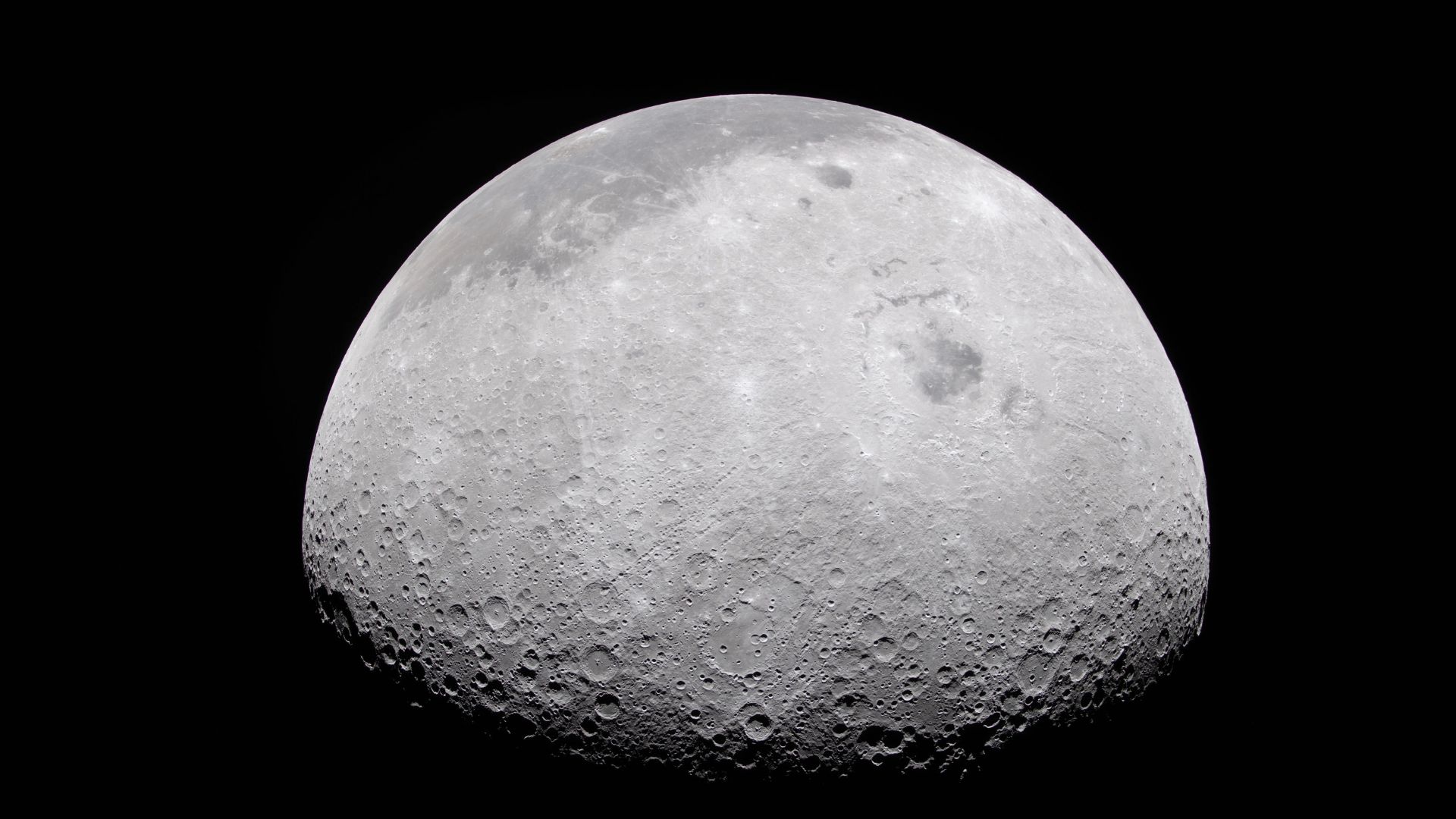
A 8,000-pound (4,000-kilogram) piece of space hardware is currently barreling toward a violent end. Floating through the void since early 2025, the discarded upper stage of a SpaceX Falcon 9 rocket is on a collision course with the Moon. Traveling at 5,400 mph (8,690 km/h), this bus-sized chunk of debris will collide with the Moon’s surface in the vicinity of Einstein crater on Wednesday, August 5. It will hit hard. While the collision poses zero danger to Earth, it is set to trigger a dramatic physical transformation on the lunar surface. For planetary scientists, this orbital accident is a rare silver lining. NASA, alongside international partners operating lunar satellites like South Korea’s Danuri, plans to capture before-and-after imagery of the impact site. Researchers hope the data will illuminate how artificial impacts behave, provide insights into lunar geology, and assess potential dust hazards for future astronauts stationed on the Moon. Lunar impact The rocket part was never supposed to crash here. On January 15, 2025, a SpaceX Falcon 9 rocket successfully launched Firefly Aerospace’s Blue Ghost 1 lunar lander toward the Moon for NASA’s Commercial Lunar Payload Services initiative. Originally launched to boost commercial lunar landers toward the Moon, the booster exhausted its fuel and was left in a high-energy deep-space orbit. Most rocket stages safely burn up in Earth’s atmosphere or splash into the ocean after delivering their payloads. However, because boosting the January lunar lander required extra thrust, this uncontrolled second stage remained stranded in deep space alongside thousands of other pieces of orbital debris. Over the course of eighteen months, a subtle push-and-pull between solar radiation and gravitational forces nudged the dead stage off course and locked it into a lunar bullseye. As per NASA, the impending impact of the Falcon 9 upper stage is expected to carve out a crater approximately 60 feet wide and 12 feet deep, blasting a plume of dust and rock ejecta across the lunar surface. “The impact poses no danger to Earth and Nasa scientists are planning to collect lunar data from the event and refine techniques for tracking objects in space,” Nasa’s Jimi Russell stated as per the Guardian’s report. Space junk threat to future Moon bases Although the impact won’t be visible from Earth, stargazers might catch a glimpse of the dust plume rising above the Moon’s surface. New simulations show the impact could launch a central plume of dust up to 60 miles (100 kilometers) into space. Lacking an atmosphere to cushion incoming debris, the Moon is routinely bombarded by meteoroids, though collisions with human-made objects remain rare. Several notable precedents exist, including a Chinese rocket stage collision in 2022, NASA’s deliberate 2009 crash to study lunar dust, and failed soft-landing attempts like Russia’s Luna-25 in 2023. To prevent such unintended cosmic collisions as deep-space missions multiply, NASA and SpaceX are actively discussing strategies to manage and dispose of future rocket stages responsibly. Yet the impending crash carries a sobering reminder. As deep-space exploration accelerates, traffic around the Moon is surging. Space agencies and private firms are actively advancing plans for permanent lunar bases, from NASA’s Artemis missions to international habitat projects. Hence, uncontrolled space junk on and around the Moon could be an operational hazard. As cis-lunar orbital traffic grows exponentially, abandoned boosters and spent satellites drifting through unstable lunar orbits increase the risk of orbital collisions, potentially hitting the lunar surface or future crewed stations with unpredictable hypervelocity shrapnel. Therefore, it is highly important to establish strict orbital debris mitigation protocols and compulsory disposal trajectories to avoid cluttering the lunar orbit. Recommended ArticlesGet the latest in engineering, tech, space & science - delivered daily to your inbox.Mrigakshi is a science journalist who enjoys writing about space exploration, biology, and technological innovations. Her work has been featured in well-known publications including Nature India, Supercluster, The Weather Channel and Astronomy magazine. If you have pitches in mind, please do not hesitate to email her.
Space X’s rocket piece is about to crash at 5,400 mph speed on moon’s surface
Full Article
Original Source
Read the full article at Interestingengineering →KhanList aggregates and links to publicly available news content. We do not host full articles from third-party sources. Always verify important information with original sources.