
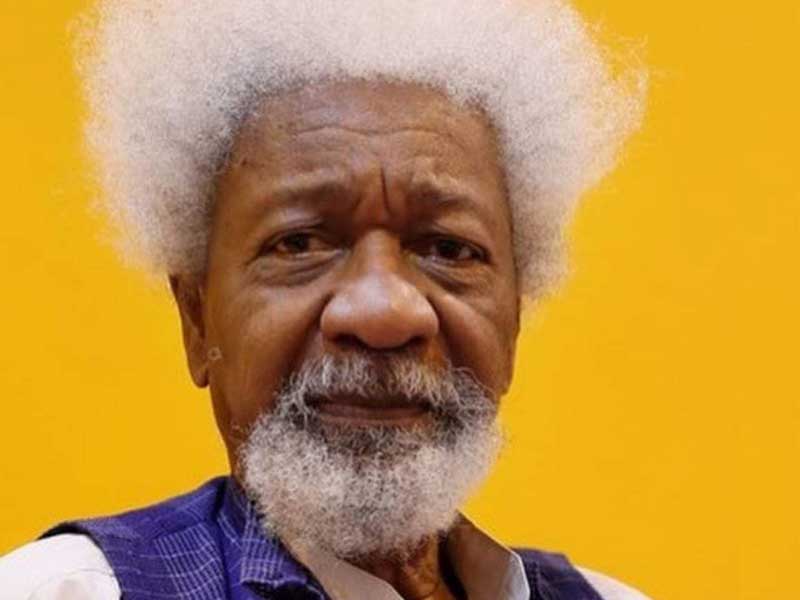
Follow THISDAYLIVE on GoogleAdd us as a preferred source to see more of our stories in Google Follow us on Google * At WPRF, Nobel Laureate stresses strategic role of communication in strengthening institutions, democracy * Dandaura cites survey showing only 46% of Africans trust their presidents * Okonkwo warns irresponsible communication can cost lives, cites Rwanda genocide Sunday Aborisade in Abuja Nobel Laureate, Professor Wole Soyinka, on Thursday challenged public relations professionals to embrace greater responsibility in shaping public perceptions, rebuilding confidence in institutions and strengthening relationships across society. He warned against the dangers of irresponsible communication amid technological disruption and growing demands for transparency and accountability. Soyinka, whose goodwill message was read at the Africa Day activities of the 13th World Public Relations Forum (WPRF) 2026 in Abuja, said public relations had assumed a strategic role in determining the credibility and survival of democratic institutions, organisations and societies. The literary icon, who won the 1986 Nobel Prize in Literature, said the international gathering provided an important opportunity to reaffirm the relevance of public relations in shaping perceptions, building trust, strengthening institutions and fostering meaningful relationships. He noted that the profession carried an even greater responsibility at a time when technological advancements were transforming communication and increasing public expectations for transparency and accountability. Soyinka commended the Global Alliance for Public Relations and Communication Management, the African Public Relations Association (APRA), the Nigerian Institute of Public Relations (NIPR) and other partners for bringing the international conversation to Africa. He expressed optimism that the deliberations would strengthen professional collaboration and advance the relevance of public relations globally. The forum brought together communication experts, policymakers and industry leaders to examine the challenges of misinformation, declining institutional credibility and the responsibility of communication professionals in strengthening democracy and Africa’s position in global affairs. Speaking at the event, NIPR Vice-President, Prof. Emmanuel Dandaura, described Africa’s declining public confidence in political leadership and public institutions as a fundamental crisis of trust that required urgent attention from communication professionals. Citing an Afrobarometer survey conducted across 39 African countries, Dandaura disclosed that only 46 per cent of respondents expressed trust in their presidents, while confidence in national parliaments stood at 37 per cent. He described the findings as a wake-up call, arguing that public relations practitioners must move beyond the conventional responsibility of disseminating information to helping institutions establish credibility and sustain public confidence. According to him, four major initiatives emerged from the Abuja forum: Nigeria’s proposed definition of public relations, the Abuja Declaration on Responsible Communication, an evaluation framework for measuring its implementation and an African communication framework. He, however, cautioned that the success of the initiatives would depend not on their presentation at the forum but on their practical implementation. “The Abuja Declaration should not be regarded as an achievement merely because it has been presented. Its real value will be determined by the extent to which its principles translate into measurable action and professional conduct,” he said. Dandaura urged communication professionals across Africa to support the domestication of the proposed framework, encourage cross-border collaboration and strengthen ethical standards within the profession. Also speaking, APRA President, Mr. Arik Karani, called for a more effective response to misinformation, stressing that communication practitioners must combine speed with accuracy, particularly in the rapidly evolving digital environment. “Speed is essential, but accuracy matters more than any other thing in the digital era that we live with,” he said. Chairman and Chief Executive Officer of United Nigeria Airlines, Prof. Obiora Okonkwo, warned that irresponsible communication could undermine democratic stability, threaten public health and, in extreme circumstances, cost human lives. Citing the 1994 Rwandan genocide, he recalled how a radio station, Radio Télévision Libre des Mille Collines (RTLM), became an instrument for propagating ethnic hatred and inciting violence. “The lesson is clear: communication is not always an innocent exercise. In the hands of irresponsible actors, the microphone can become as destructive as a very dangerous weapon,” he warned. Okonkwo also referenced Nigeria’s 2023 general election and the misinformation that characterised the COVID-19 pandemic as examples of how unverified information could deepen divisions, undermine public confidence and encourage dangerous behaviour. Drawing from his experience in the aviation industry, he maintained that transparency and truthfulness remained the most sustainable foundations of corporate reputation. “Truthfulness is not the enemy of reputation management. It is its most sustainable foundation,” he declared. He advocated stronger professional self-regulation, information literacy and media literacy, warning that artificial intelligence had made it increasingly easy to produce convincing fabricated images, videos and voices capable of misleading unsuspecting members of the public. In his contribution, Director-General of the National Orientation Agency (NOA), Lanre Issa-Onilu, called for a fundamental change in national character, arguing that communication professionals could not successfully promote an institution or country whose actual conduct contradicted the image being projected. He questioned the rationale behind marketing Nigeria as an attractive investment destination when prospective investors continued to encounter unnecessary bureaucratic bottlenecks. He also challenged the country’s ability to promote national unity while discrimination, prejudice and other divisive tendencies persisted. Issa-Onilu identified the Nigerian National Ethics Policy and National Value Charter as critical instruments for sustainable national development, arguing that institutional and economic reforms would achieve limited results without corresponding improvements in citizens’ values and conduct. “Policies do not implement themselves. People implement them, and their values influence the results,” he said. The NOA director-general stressed that national character could not be transformed through occasional appeals and public campaigns but through consistent demonstration of ethical values in everyday conduct. He urged stakeholders, particularly communication professionals, to make responsible communication and ethical behaviour integral to Nigeria’s national development agenda.
Soyinka, Others Task PR Professionals on Rebuilding Public Trust
Full Article
Original Source
Read the full article at Thisdaylive →KhanList aggregates and links to publicly available news content. We do not host full articles from third-party sources. Always verify important information with original sources.