
Sovereignty is not fundamentally about where data is stored. It is about who retains the capacity to decide, govern, change, and ultimately survive without asking someone else for permission. For the past few months I spent a surprising amount of time talking about sovereignty. Data sovereignty. Digital sovereignty. Cloud sovereignty. Sovereign infrastructure. Sovereign cloud. Sometimes the conversation becomes so specific that we start discussing where a server physically sits, who operates it, who owns the keys, which jurisdiction governs the provider, and what happens if something goes wrong. And certificates… don’t forget the certificates!Quite often, we have these conversations on Microsoft Teams, Zoom or Google Meet. There is something almost beautifully absurd about discussing technological independence through infrastructure operated by some of the world's most powerful technology companies. It is not quite a contradiction. But it is certainly worth noticing. Because perhaps the problem begins with the way we understand sovereignty in the first place. Sovereignty was never really about geography The modern political concept of sovereignty is usually associated with territory, borders and the state. That association is so strong that it is easy to forget that sovereignty is fundamentally about authority. Jean Bodin, writing in sixteenth-century France, described sovereignty as the highest and perpetual power of the commonwealth. His concern was not servers, borders or databases. It was the question of who ultimately has the authority to make decisions and establish the rules under which a political community exists. Centuries later, the concept evolved through very different political traditions. Hobbes connected supreme authority with the problem of order and collective security. Later theories shifted the source of sovereignty toward the people, constitutions and institutions. The details changed. The underlying question did not: Who gets to decide? And perhaps an even more important question follows: Who gets to decide when somebody else disagrees? That second question is where sovereignty becomes particularly interesting in the digital world. A country can have a flag, a currency, a parliament, a constitution, internationally recognised borders and an army to protect them. But what happens when some of the infrastructure through which its economy, public administration, communications and essential services operate is controlled somewhere else? The territory remains sovereign. The dependency may not be. From land to infrastructure This is where the contemporary discussion about digital sovereignty becomes more interesting than a simple conversation about data localisation. Data sovereignty is often reduced to a question of location: Where is my data stored? But location is only one layer of control. Here are few other things to consider: Who operates the infrastructure? Who controls the software? Who controls the encryption keys? Who can change the terms? Who can discontinue the service? Which country's laws apply to the provider? Who has access to the supply chain? Who can realistically replace the system if the relationship ends? And, perhaps most importantly: Who can continue operating when circumstances change? These questions point toward a broader conception of sovereignty. The European Commission now defines technology sovereignty in terms of Europe's ability to act independently in the digital world by developing and controlling key technologies, data and infrastructure while reducing reliance on non-EU providers. That definition is revealing. It does not say that Europe should stop using foreign technology. It says that dependence matters. And there is a significant difference. Dependence is not the opposite of sovereignty No modern country is completely self-sufficient. Countries depend on one another for energy, raw materials, manufacturing, finance, telecommunications, transportation, medicine and technology. Modern economies are built on interdependence. So the question cannot realistically be: Can we become completely independent? The more useful question is: Which dependencies are acceptable, and which dependencies become dangerous? That distinction is important because sovereignty is sometimes presented as technological autarky: build everything yourself, own everything yourself, keep everything inside your borders. That is neither particularly realistic nor necessarily desirable. A country may perfectly reasonably decide that it does not need to manufacture every processor, write every operating system or operate every cloud platform itself. But it may also decide that certain capabilities are too important to be entirely dependent on somebody else's goodwill. Sovereignty, then, begins to look less like isolation and more like the ability to choose. The ability to say yes. And equally, the ability to say no. And, critically, the ability to change your mind. Sounds like basic freedoms, doesn’t it? The uncomfortable middle ground This is where digital sovereignty becomes philosophically awkward. Suppose a government stores sensitive information inside its own country. The data centre is physically located there. The employees operating it are local. The contracts are governed by local law. It sounds sovereign. But perhaps the infrastructure depends on foreign software. Or foreign hardware (where the chip comes from?). Or foreign cloud management tools. Or foreign security technologies. Or foreign telecommunications equipment. Or a foreign platform or API that ultimately controls a critical dependency somewhere further down the stack. Where, then, does sovereignty begin? And where does it end? There may be no clean answer. A quick review of the latest academic literature on digital sovereignty makes precisely this problem visible: the concept is used by different actors in different ways, and scholars increasingly question whether “digital sovereignty” represents a genuine extension of sovereignty or a stretching of an older political concept to fit a new technological environment. The term itself is applied to multiple actors and values, rather than referring exclusively to states. That matters because perhaps we have been asking the wrong question. Instead of asking: “Is this system sovereign?” we might need to ask: “Sovereign in what sense?” Legal sovereignty? Data sovereignty? Operational sovereignty? Economic sovereignty? Technological sovereignty? Strategic sovereignty? And who is the subject of that sovereignty? The individual? The company? The community? The state? (or the EU?) The answer may be different in every case, I’m afraid. Sovereignty is also a capacity There is another way of looking at this. Sovereignty may not mean possessing everything. It may mean retaining sufficient capacity to act (Braun). A sovereign state does not necessarily manufacture every product consumed by its citizens. It does not need to own every road, every factory or every computer. But if a dependency becomes so fundamental that the state cannot act without another actor's permission, the character of that relationship changes. This is why infrastructure matters. Infrastructure is not neutral. It creates possibilities and constraints. A railway determines how goods can move. An electricity grid determines what can operate. A telecommunications network determines how people communicate. Financial infrastructure determines how transactions can occur. Digital infrastructure increasingly does the same. Cloud platforms, identity systems, collaboration tools, operating systems, payment networks, app stores and data infrastructures are not merely convenient pieces of technology. They are becoming part of the environment in which institutions exercise power. And that brings us back to platforms. In an earlier article, I explored the idea of the platform as a kind of social contract: a space where governance, rules and trust become inseparable from the technology itself. Sovereignty takes that argument one level higher. If platforms can govern aspects of our digital lives, what happens when governments themselves become dependent on platforms governed elsewhere? That is no longer merely a question of software procurement. It is a question about political capacity. The Teams (Zoom, Meet etc.) paradox Which brings us back to Teams & Co. There is nothing inherently wrong with using Microsoft Teams (or any other such tool) to discuss digital sovereignty. That would be taking the argument too far. Interdependence is normal. Global technology ecosystems are normal. And foreign technology is not automatically a sovereignty problem. But the irony is useful. We can spend an hour discussing how to protect our digital autonomy while relying on infrastructure whose ownership, governance, legal exposure and economic value sit partly outside our own jurisdiction. The same phenomenon appears everywhere. We want data sovereignty, but use globally dominant platforms to move and process the data. We want technological autonomy, but depend on global supply chains. We want open standards, but build workflows around proprietary ecosystems. We want resilience, but sometimes concentrate critical functions in a handful of providers. This is not hypocrisy. It is something more interesting. It is the schizophrenia of digital sovereignty: the gap between the control we increasingly want and the dependencies we have already built our digital lives around. And that gap is precisely where the real conversation begins. From sovereignty to choice Perhaps digital sovereignty should therefore not be understood as the digital equivalent of building a wall around a country. It is better understood as a question of agency. Can an institution understand its dependencies? Can it govern them? Can it move between providers? Can it preserve access to its data? Can it operate when a supplier fails? Can it resist unwanted external interference? Can it maintain critical capabilities under changing political or economic circumstances? And can it make these choices without having to rebuild its entire digital existence from scratch? If the answer is yes, there may be a meaningful degree of sovereignty. If the answer is no, storing the data in the right country may provide only a comforting illusion of control. This is why sovereignty has become such an important concept in technology. Not because the internet abolished borders. It didn't. But because it created something much more complicated: a world in which borders remain political, while dependencies increasingly run through infrastructure that does not respect them. The next question, then, is unavoidable. If sovereignty once depended on controlling territory, what happens when some of the most important territory in our lives is no longer land at all? It is infrastructure. And infrastructure, unlike territory, can be rented. That may be where the story really begins. Further Reading and Conceptual References Bellanger P. - Digital Sovereignty (capacity to control our present and our future in a digital environment). Berman (Shiff Berman) P. (ed.) - The Oxford Handbook of Global Legal Pluralism (how state-driven digital sovereignty collides with overlapping, non-state legal and normative systems in cyberspace.) Bodin J. - Six Books of the Commonwealth (the classical foundation for understanding sovereignty as supreme political authority). Braun & Hummel - Is digital sovereignty normatively desirable? (sovereignty through institutions, rules and practices). Couture & Toupin - What does the concept of sovereignty mean for digital technologies? (sovereignty through technological capability, innovation and control). Hobbes T. - Leviathan (sovereignty, political authority and the preservation of collective order). Hummel P. et al. - Data sovereignty: A review (data sovereignty across individual, collective and national dimensions) Santaniello, M. - Attributes of Digital Sovereignty: A Conceptual Framework (political power and control of digital networks, infrastructure, and data)
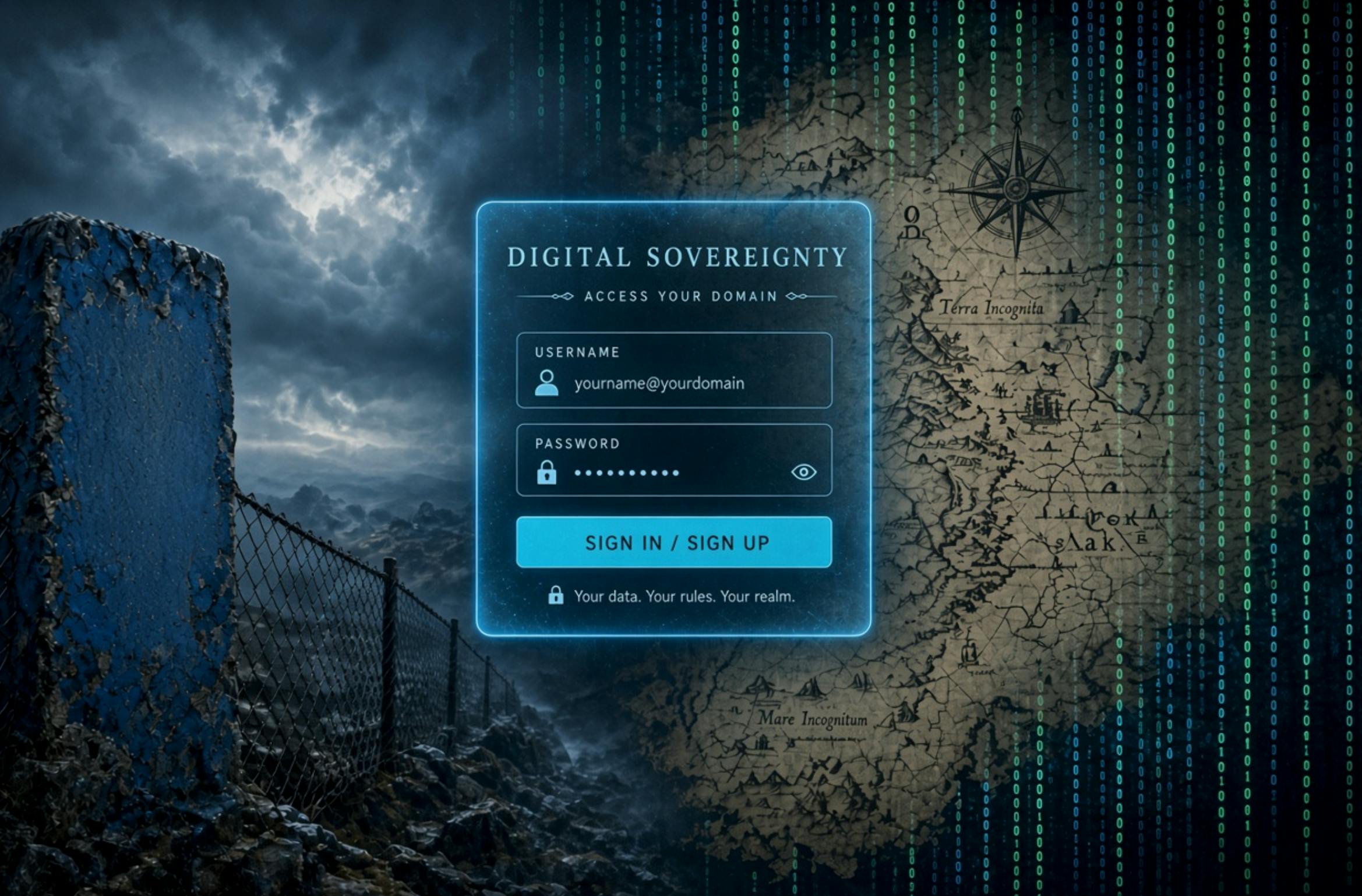
Sovereignty. Somewhere Between a Border and a Login
Full Article
Original Source
Read the full article at Hackernoon →KhanList aggregates and links to publicly available news content. We do not host full articles from third-party sources. Always verify important information with original sources.