
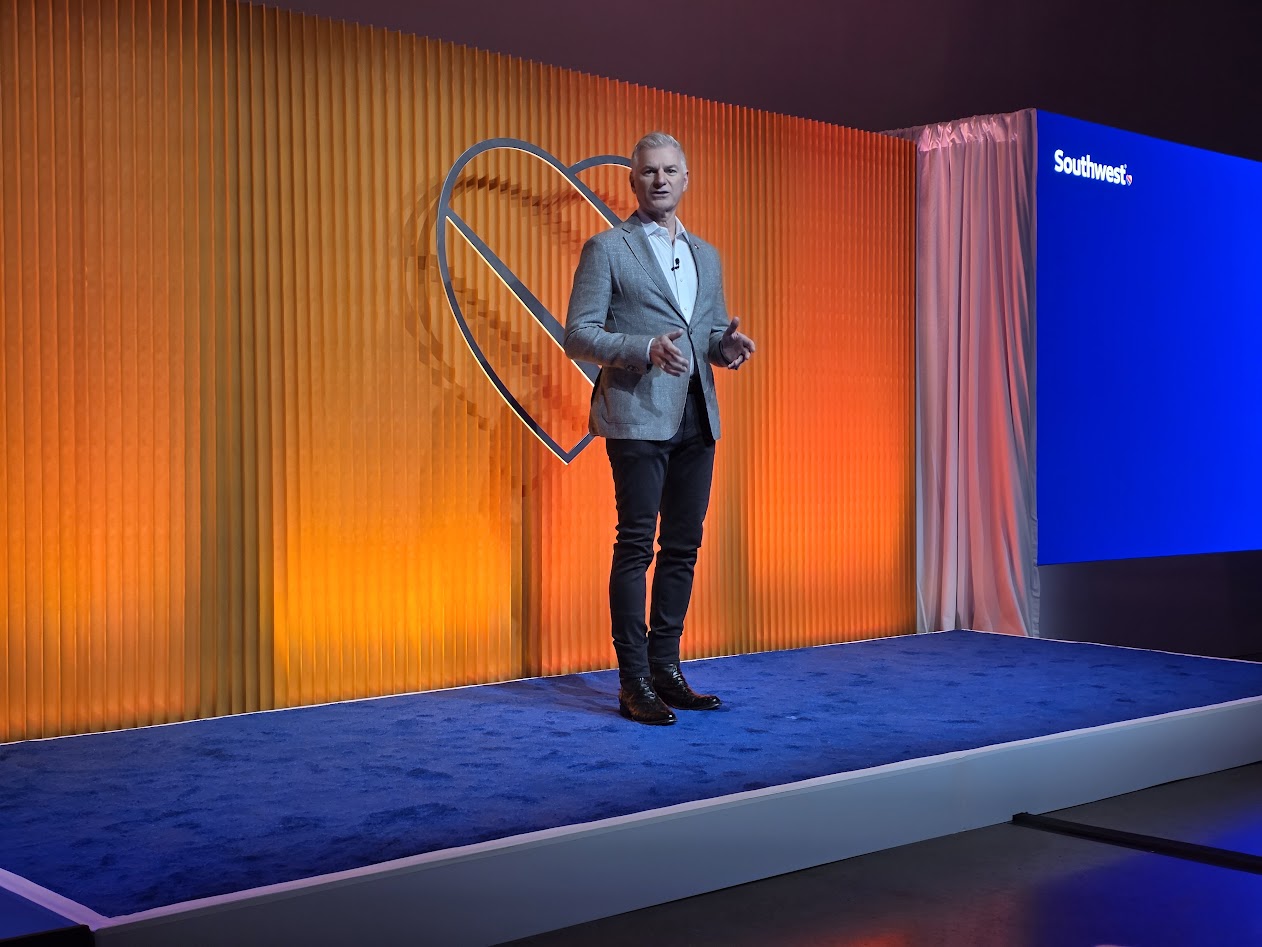
Southwest Airlines says some customers were reaching A-List Preferred and then stopped spending. In a leaked employee briefing last week that was shared with me, executives explained that the new Platinum tier and rewards along the way are designed to keep those customers giving the airline more business. The discussion is led by Chief Operating Officer Andrew Watterson, joined by Chief Customer and Brand Officer Tony Roach and Rapid Rewards vice president Nandika Suri. Watterson opens by telling employees he wants them to understand the reasons behind the announcements so they can answer questions from customers, friends and family. I covered the 2027 Rapid Rewards changes and Bob Jordan’s internal message to employees. This discussion explains the customer behavior Southwest wants to change, including why they’re abandoning the A-List name and how they expect to keep people loyal after adopting a business model that Watterson describes as “very similar to other airlines.” Customers Reached Top Status And Stopped Spending Toward the end of the discussion, as one executive describes the new top tier: So we had customers that would get to A-List Preferred and just stop spending because they already got the top status. Now taking care of the highest engaged customers with a new tier, you’re really widening everybody that you can actually engage into the program. A reward below the first tier gives customers who won’t qualify for status something to stretch for. Another between Gold and Platinum gives existing elites a reason to keep going. If someone knows they won’t reach the first tier, status doesn’t influence their next purchase very much. Once they’ve earned everything they want, the next purchase has less reason to go to Southwest, too (although they do get to use the benefits they’ve earned on that next trip). The new progression puts more targets in front of customers to stretch for. Starting January 1, qualification is through either points or flights: Reward or status Tier qualifying points Qualifying one-way flights 2,000 points or two Preferred Seat Certificates 20,000 15 Silver, replacing A-List 35,000 25 Gold, replacing A-List Preferred 65,000 50 Three Companion Pass trips 95,000 75 Platinum, including unlimited Companion Pass trips 140,000 100 But Companion Pass already gave customers something to earn beyond A-List Preferred. Southwest is moving that existing benefit into the elite structure and changing which activity counts toward it. A customer who already earned both A-List Preferred and Companion Pass doesn’t actually get a new reason to keep spending. Platinum adds earlier boarding, a third checked bag and a higher flight earning bonus. Its biggest selling point, though, is a benefit Southwest already offered and that’s now harder to get. The airline is making ordinary card spending count more towards status with one tier qualifying point per dollar spent, but their card initial bonuses won’t count any longer. What’s Up With The Lame Elite Names? Cranky Flier recently mocked these changes, arguing Southwest could change its products without abandoning playful language. He contrasted the old fare (Wanna Get Away) and boarding names with their generic replacements, questioned the Icon lounge branding, and concludes “It feels like this could have been written about pretty much any airline’s loyalty program.” Here, executives explain replacing A-List and A-List Preferred with Silver, Gold and Platinum. Customers were trying to make sense of elite status nomenclature alongside Plus, Premier and Priority credit cards and Priority boarding privileges. And what we found is when we were testing adding another tier with another name, they just got confused. They didn’t know what the difference was. A Priority card, was that priority boarding? What is it? So moving to the simplified structure using the metals that a lot of loyalty programs use simply clarifies from a tier standpoint. Silver, Gold, Platinum is a very simple, easy progression. Customers told us that actually is what they preferred us to do. That doesn’t preserve the airline’s personality as the products change, but A-List naming no longer made sense since it was tied to the old boarding process, the status meant you’d board with the A group that’s now gone. Once Southwest assigned seats and changed boarding, the name lost meaning even if it had brand equity. Adding another tier made with A-List (A-List Supreme?) wouldn’t be connected to anything. The executives make a similar argument for combining status and Companion Pass qualification. Customers previously had to track two different qualifying points balances. Bringing the benefits together makes that part easier. But eliminating a second counter didn’t require eliminating credit card initial bonuses, referral bonuses, anniversary points and category bonus points from Companion Pass qualification under new 2027 rules. Watterson Admits Their New Model Is “Very Similar To Other Airlines” Watterson opens by describing the old bundled offering and its distinctive policies, which he says drove success for more than 15 years. Then he explains the replacement: We move to a pay more to get more model, which is very similar to other airlines. And then we rely upon the foundation of our new positioning is reliability and hospitality. On the April 24, 2025 earnings call, Watterson explained that the old offering wasn’t producing enough revenue and that Southwest was moving toward greater segmentation. Now he describes the difference that remains as reliability and hospitality. In his own employee message, CEO Bob Jordan said: You will hear us describing these new offerings as “premium.” For Southwest, premium isn’t about copying somebody else’s playbook or becoming something that we’re not. It’s about creating a better travel experience, delivered through the Hospitality of our People. Southwest wants employees to keep treating customers like in their traditional fun manner while selling increasingly familiar airline products at different prices. Historically, customers could point to concrete policies that made Southwest different. Now they want customers paying for a more conventional product because Southwest will operate it reliably and deliver better service. The airline has been operating reliably in terms of not cancelling flights but hasn’t been a strong on-time performer. The Goal Now Is To Sell Credit Cards They’re building airport lounges, and so they lay out the answer to whether Southwest’s customers even go to lounges. Southwest doesn’t need a first class cabin to have customers who’ll pay for lounge access. I’ve written about the Icon lounge designs Southwest showed at Media Day. Baltimore’s display had greenery, orchids and a checkerboard floor. Nashville’s included a record player, a wood liquor cabinet and Music City touches. The explanation for “Icon” invokes Southwest’s iconic brand, founder and intended customer experience. Watterson ends by explaining how all of this is supposed to work: We get people to be sticky with Southwest to use our products, use our credit card and buy us over and over again, no matter the travel purpose. And so that is part of what powers a new Southwest like the old Southwest, that repeat purchase, but now with a segmentation of different products, different services they can engage with. Southwest Is Becoming More Like Competitors, But Less Than I’ve argued that each change to Southwest’s model creates pressure for the next one. They needed customers who weren’t already going directly to Southwest.com. Appearing on Google Flights and online travel agencies put their fares next to competitors’ stripped-down prices. That created pressure to unbundle, while selling better seats meant assigning them. Now they need more reasons for customers to buy the higher priced products and keep their spending with Southwest. But they’re still offering a similar product with less at the top end. Southwest has no first class and no ovens for hot inflight meals. They have no seatback screens, either. The promise fleetwide Starlink rollout by fall 2027 will address a significant weakness. Lounges will improve the ground experience. There’s still a lot missing from the premium product onboard. They also lack regional airline partners bringing in connecting passengers from smaller communities and long haul flights to sell. If they eventually fly 787s overseas they’ll need to sell the premium cabins and fill the rest of those airplanes, with domestic connections feeding one end and foreign partners helping at the other. They’re entering a more complex and costly business, and they’ll need the revenue to match. International premium cabin awards will help Southwest capture more card spending. Southwest announced Icelandair, Etihad and China Airlines partnerships for earning and redemption, including premium cabins, starting in spring 2027. But we don’t know how those awards will price. Topics on this page
Southwest Says Flyers Hit Top Status And Stopped Spending—Leaked Briefing Explains Its Loyalty Overhaul
Full Article
Original Source
Read the full article at Viewfromthewing →KhanList aggregates and links to publicly available news content. We do not host full articles from third-party sources. Always verify important information with original sources.