
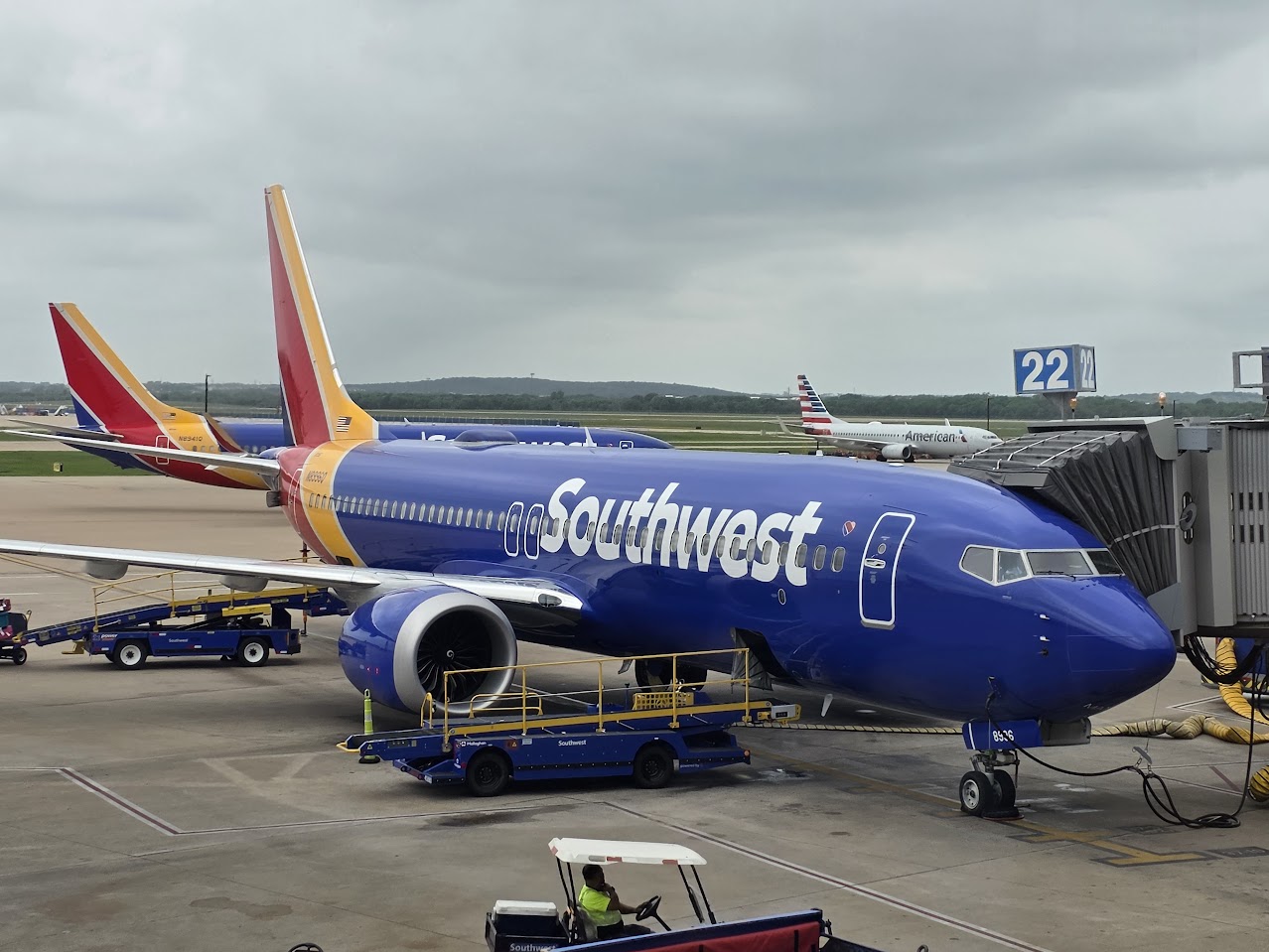
Airline data analytics company Cirium is out with its August 2026 on-time performance report. Canada’s WestJet led North America for the fourth consecutive month. 82.55% of its completed flights arrived within 15 minutes of schedule. Except… they also cancelled over 6% of their flights. Since a cancellation doesn’t count as late in this data, an airline that is quick to cancel may look better than one that sticks it out and gets passengers to their destination. WestJet had the worst completion factor of any North American airline in the report, while Southwest had the best. Here are the North American results: Rank Airline On-Time Completion Approx. Canceled 1 WestJet 82.55% 93.74% 1,230 2 Delta 79.15% 98.23% 2,839 3 United 74.49% 98.53% 2,320 4 American 74.19% 97.72% 4,524 5 Alaska 73.95% 98.57% 706 6 Southwest 68.28% 99.22% 922 7 Frontier 67.18% 97.79% 462 8 Air Canada 65.44% 95.22% 1,735 9 JetBlue 63.85% 94.91% 1,617 WestJet canceled approximately 1,230 flights on a schedule of 19,652. Southwest canceled about 922 while operating six times as many flights. That works out to roughly one cancellation in every 16 WestJet flights versus fewer than one in 128 at Southwest. Southwest did an amazing job, even though their on-time performance doesn’t look like it (or rank like it). Flight attendants at WestJet went on strike at the beginning of August, producing a network-wide work stoppage and a messy recovery after a tentative agreement was reached August 3. Southwest Is Performing Well, Just Not On-Time Southwest was late a lot in August. Only 68.28% of completed flights arrived within 15 minutes of schedule. Yet it completed 99.22% of its flights, easily the best result in North America. A 25-minute delay is usually preferable to a cancellation that may leave a passenger waiting until the following day. That is especially true on Southwest, which generally cannot hand a passenger over to another airline under an interline agreement. A delayed connecting flight can still strand someone, and on-time performance does matter. But Southwest’s tradeoff is still a good one. On-time is harder for them because they do 30-minute boarding, which is part of turning planes faster on the ground. They build in less buffer. And passengers are bringing a lot more bags onto the plane than they used to when the airline didn’t charge for checked bags. So boarding takes longer. Weather Hit JetBlue, Alaska And Air Canada Very Differently JetBlue is perfectly fine in the air. They’ve always been a mess on the ground. And they melted down again last month, delayed more than a third of the time and cancelling over 5% of flights. Northeast weather was an issue, but the airline was already buckling and had a harder time recovering than other carriers. Its pilots had already described recurring scheduling-system failures, unreachable crew schedulers and pilots stranded out of position without hotels. Another crew trip-pickup and trading software outage was reported August 9, when nearly half of JetBlue flights were delayed. Meanwhile, Alaska slipped from 80.59% on time in June to 76.19% in July and 73.95% in August. That’s still better than average, and Seattle had some weather issues in August and Hawaii was hit by a hurricane. Air Canada’s results, though, I don’t like to see. I generally expect them to do better in spring and summer than the winter, and their performance did improve as temperatures thawed reaching 78.65% on-time performance in May. That fell to 71.90% in June, 68.47% in July and 65.44% in August. WestJet operates in Canada too, so “Canadian weather” isn’t the whole story. Air Canada is of course much larger, and spreads its operation across three hubs while WestJet is concentrated around Calgary. Frontier’s Cheap Fares Are Financed With Passenger Time Frontier only delivered 67.18% of completed flights on time. And the airline explains the tradeoff they face. High aircraft utilization on peak days and quick turns are core to its low-cost structure, and the airline acknowledges that this makes it especially vulnerable to delays, cancellations and aircraft unavailability. Frontier has moved toward out-and-back schedules that return aircraft and crews to bases each night which keeps problems from spreading, but they don’t invest in slack in their schedule. Reaccommodation is also tough when flights do cancel because of thin schedules and lack of interline agreements with other carriers. You get a cheap fare but part of delivering that is not investing in the robust sorts of redundancy that contributes to a more reliable operation. An Airport Can Close And Still Look Reliable Cirium also ranks airport on-time performance. But it’s tough from this data to isolate an airport‘s contribution to performance. It’s mostly a function of the dominant carriers (a reliable airline makes its hub airport look good) and weather. There are airports that are better to operate from, holding all else equal, but often that effect gets overwhelmed by specific airport factors. Interestingly, though, India swept the top three places in the large category: Hyderabad: 90.07% Bengaluru: 89.98% Kolkata: 89.05% Mexico City looks good, and Mexico City has fewer flights than it might because the government has been careful with access to the airport. And Aeromexico’s 89.74% on-time performance came with a 99.94% completion factor. They make Mexico City look like a superstar. Topics on this page
Southwest Airlines Is Late Nearly One-Third Of The Time—But Is The Most Reliable Getting Passengers Where They’re Going
Full Article
Original Source
Read the full article at Viewfromthewing →KhanList aggregates and links to publicly available news content. We do not host full articles from third-party sources. Always verify important information with original sources.