
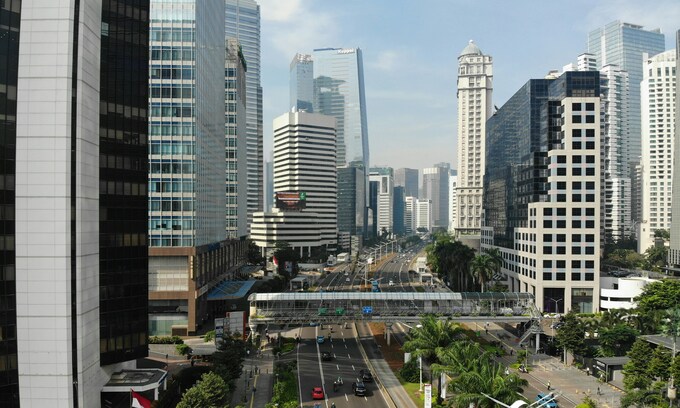
Indonesia's capital Jakarta has emerged as one of Southeast Asia's leading intelligent urban centers, ranking second in the region in an assessment of cities using AI and digital technology to enhance urban life. In the inaugural Intelligent Cities Index 2026, released by global consulting firm Boston Consulting Group (BCG), the city state of Singapore ranked highest in Southeast Asia and 11th globally.It was followed by Jakarta, which ranked 39th worldwide. A high-angle view of a multi-lane road with traffic and a pedestrian bridge in Jakarta, Indonesia. Photo by Unsplash The Indonesian capital is the most populous city in Southeast Asia with 42 million people, according to an estimate by the U.N. Department of Economic and Social Affairs' Population Division in its World Urbanization Prospects 2025 report. The city even overtook Tokyo to become the world's most populous city last year, according to a United Nations study.Vietnam's most populous city, Ho Chi Minh, ranked 48th globally, making it the third smartest city in Southeast Asia, followed closely by Malaysia's capital, Kuala Lumpur, at 50th.No other Southeast Asian countries are ranked.The index evaluates how 61 major cities across 39 countries use artificial intelligence and digital technologies to serve residents and businesses across five areas: resident outcomes, intelligent city strategy, technology adoption, ways of working, and enabling factors such as infrastructure, talent and funding.The world's five leading cities are London, Dubai, New York City, Washington, D.C., and Amsterdam.BCG said the index shows that artificial intelligence is becoming a key foundation of intelligent cities. Cities with higher levels of AI adoption tend to have more use cases and deliver better outcomes for residents.Rather than focusing solely on technology infrastructure, the index examines how effectively cities turn digital capabilities into better services and quality of life. BCG said technology alone is not enough, with successful cities also requiring effective governance, funding, talent, infrastructure and innovation ecosystems.The report found that cities where residents use smart-city applications more frequently also tend to report higher satisfaction. London and Dubai, for example, combine high usage with strong satisfaction among app users.BCG also identified different paths for cities seeking to improve their intelligent-city maturity. Some succeed by developing balanced capabilities across multiple areas, while others focus on particular strengths such as strategy, governance, partnerships, infrastructure or talent.For cities seeking to advance, BCG recommends clarifying long-term priorities, improving governance and partnerships, expanding proven AI and digital services, and investing in data, technology, infrastructure and skills.The report said AI adoption can improve resident outcomes even in cities that have not yet developed world-class infrastructure or funding ecosystems. This suggests cities can begin by expanding practical AI-enabled services while building broader capabilities over time.
Southeast Asia's most populous metropolis ranks its 2nd smartest city
Full Article
Original Source
Read the full article at E →KhanList aggregates and links to publicly available news content. We do not host full articles from third-party sources. Always verify important information with original sources.