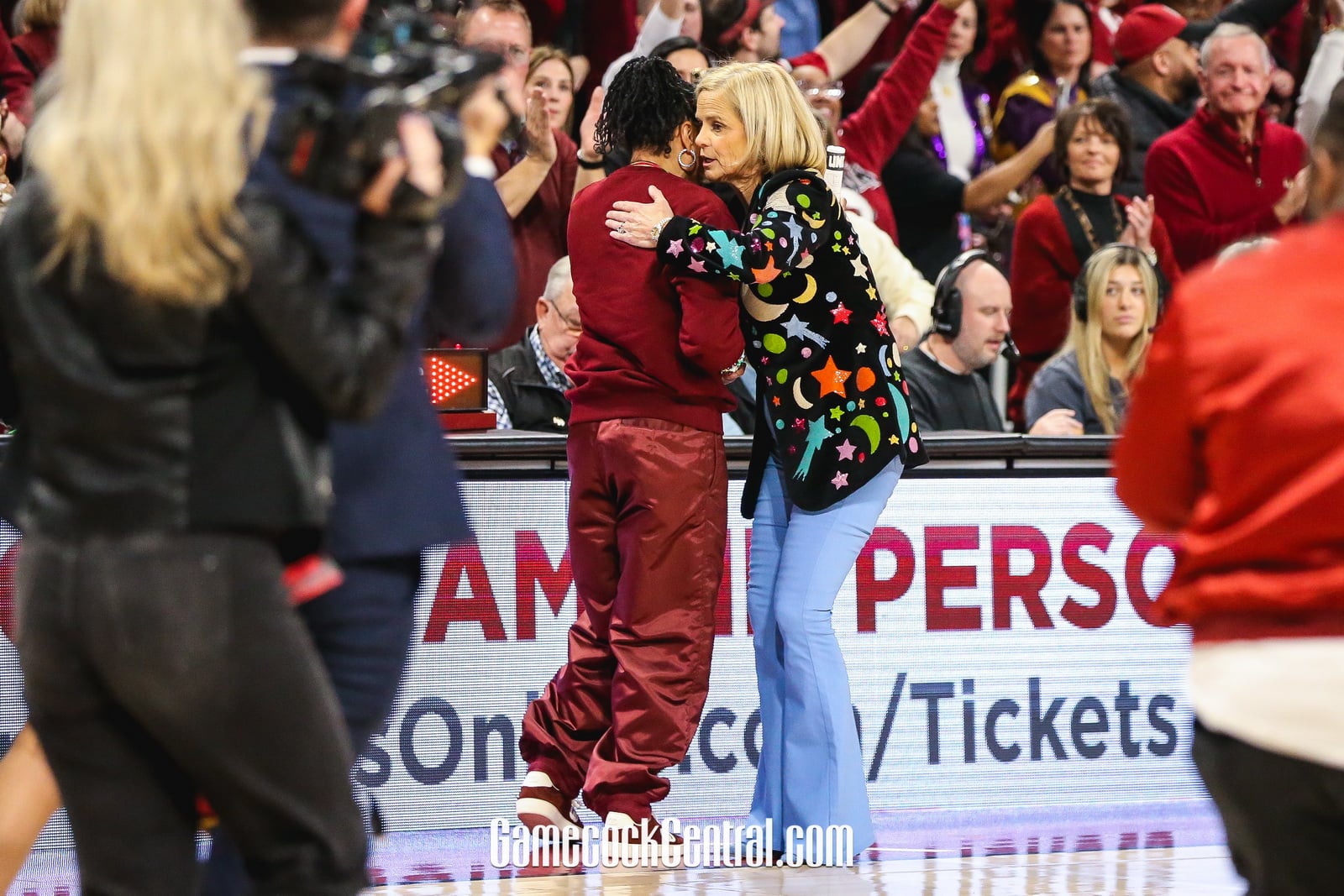
The SEC might have the best collection of women’s basketball coaches in the country, but not all are equal. GamecockCentral ranks the 16 current head coaches. I’m not using a set formula for these rankings. But I prioritize NCAA Tournament success (especially Final Fours and championships), SEC history, and success at the current school. And I promise I won’t blatantly forget that Kim Mulkey exists, like some people. Each tier is listed alphabetically. EliteKim Mulkey (LSU), Dawn Staley (South Carolina) They are not only the best in the SEC, but among the best in the country. You could probably count on one hand, definitely on two hands, the number of other fan bases who wouldn’t trade their coach for one of these two. Mulkey is second among active coaches and third overall with four national championships. Staley is tied with former Stanford coach Tara VanDerveer for third all-time with three national championships. Staley has a career .780 winning percentage and .819 at South Carolina. Mulkey’s overall winning percentage at Baylor and LSU is .858. Since the 2021-22 season, when Mulkey took over at LSU, Staley has a .942 winning percentage, and Mulkey has a .853 winning percentage. Staley rules the SEC. Mulkey has never won a regular-season or tournament title in the SEC, or beaten Staley while at LSU, while Staley has a combined 19 (she had a head start, obviously). Staley also has eight Final Four appearances to Mulkey’s five. Staley has South Carolina as a perennial Final Four participant (six in a row and counting) and playing for the title in most years. LSU isn’t on that level. But Mulkey has the extra natty, so they stay on the same tier for now. Questions about this story? Chris Wellbaum is discussing it with subscribers on the Women’s Basketball forum. AlmostVic Schaefer (Texas) Schaefer wins a lot, but rarely wins the big ones. He has an overall winning percentage of .694, weighed down by his 80-110 record at Sam Houston State in the 1990s. His winning percentage at his two stops in the SEC (not counting when Texas was in the Big 12) is .806. Schaefer has made four Final Fours, twice finishing runner-up. He also has four regular-season conference titles and four tournament titles, although only two tournament titles have come in the SEC. He has finished below third in his conference just once since 2014. Schaefer gets you there. But it’s what happens there that keeps him from being elite. His teams weren’t close in three of his four Final Four losses, and they gave up the largest blown lead in Final Four history in the other one (and blew a 16-point lead in one of the two wins). Schaefer’s career 1-8 postseason record against Dawn Staley leaves no doubt that they aren’t close to being on the same tier. He also doesn’t put players in the WNBA, although that wasn’t a consideration in this ranking. But Schaefer faces a pivotal season after three of his top returning players transferred out, and weren’t kind on the way out the door. Pretty, pretty goodKenny Brooks (Kentucky) Brooks took over a dismal situation at Kentucky and made the Wildcats competitive overnight. He’s had great players like Georgia Amoore and Clara Strack, but Brooks has mostly filled out the roster with under-the-radar transfers. Brooks doesn’t have Kentucky competing for SEC titles yet, but he has a 2023 Final Four appearance at Virginia Tech. That, especially at a program with a limited history like the Hokies, still counts for a lot. Nobody else on the rest of the list can claim a tournament run like that. Pretty goodJennie Baranczyk (Oklahoma), Yolett McPhee-McCuin (Ole Miss), Shea Ralph (Vanderbilt) The common thread among this tier is that all three took over a struggling program and turned it into a top-15 program. The other common thread is that they haven’t yet won big in March or competed for an SEC title. Baranczyk took over Oklahoma after the Sooners had gone just 48-67 in the previous four years, and she won the Big 12 in her second and third seasons. She hasn’t been as successful in the SEC, finishing fourth and fifth, but still finished 11th and 10th in the postseason polls. The problem is that Oklahoma failed to get out of the second round of the NCAA Tournament in Baranczyk’s first three seasons, or past the Sweet 16 in the last two. Her uptempo offensive style seems to win lots of games in the regular season but not in March. Oklahoma is just 6-5 in conference tournaments under Baranczyk, and 7-5 in NCAA Tournaments. The job that Yo did, building a terrible Ole Miss program into a perennial NCAA Tournament team, is an all-time great turnaround. Ole Miss has just one 20-win season since Van Chancellor left after the 1996-97 season, and Yo has won 20 or more games for five straight seasons. But the Rebels have plateaued and never finished higher than third in the SEC, including two straight sixth-place finishes, or made it past the Sweet Sixteen. Every offseason, Ole Miss makes a splash in the transfer portal, and then the season ends in low-scoring disappointment. Between 1983 and 2016, Vanderbilt had just two losing seasons. But the Commodores hadn’t had a winning season in five years when Ralph took over. A longtime UConn assistant, Ralph had turned down other job opportunities, but seems to be a perfect fit at Vanderbilt. Last season, Vanderbilt finished second in the SEC and sixth in the final polls. Ralph has made Vanderbilt a recruiting force, and Mikayla Blakes is one of the best players in the country. The next step is to contend. Vanderbilt lost bad games to Ole Miss and Georgia, and then was upset in the SEC Tournament quarterfinals and NCAA Sweet 16. By next summer, we should know if those were growing pains for a young program or something Ralph has to correct. GoodSam Purcell (Mississippi State), Joni Taylor (Texas A&M), Larry Vickers (Auburn) These are the coaches that aren’t a threat to win the SEC, but you know they have well-coached teams that punch above their weight class. They may not make a deep NCAA Tournament run, but nobody wants to face them in the first round. Purcell and Vickers fall into the “do more with less” category. Every offseason, Purcell’s Bulldogs get picked over by the major programs, and then he rebuilds and makes Mississippi State competitive again. Who knows what Purcell could accomplish somewhere he could actually retain and develop players? Vickers took over a dumpster fire at Auburn, and he had to build the roster almost from scratch despite being hired two days before the transfer portal opened (meaning after everyone else had already tampered). Auburn only went 15-17 and 3-13 in the SEC, but the Tigers were surprisingly competitive and knocked off a ranked Alabama team. Vickers gets extra credit because of his track record before Auburn. He led Norfolk State to four consecutive regular-season MEAC titles and three straight tournament titles. Vickers had a 49-7 conference record during that span, proving he can win on an even playing field. Taylor has struggled at Texas A&M, but she was the SEC Coach of the Year in 2021 at Georgia, so she knows what she is doing. Injuries derailed the 2024 Aggies, who made the NCAA Tournament, as well as the 2025 season. Taylor went all-in on transfers last season and, after a slow start, had the Aggies playing like a tournament team by the end of the season. After nearly two decades of Gary Blair running the show, it’s not clear whether Texas A&M has the right institutional support. Prove ItKim Caldwell (Tennessee), Kellie Harper (Missouri), Kelsi Musick (Arkansas) This tier is for the coaches who make other programs happy with their coach. Harper had successful runs at Western Carolina and Missouri State, but she was fired by NC State in between, and then oversaw Tennessee’s descent into irrelevance. She managed to finish third in her first four SEC seasons, followed by a fourth-place finish that, combined with forgetting to call a timeout to guard Kamilla Cardoso, cost Harper her job. The records masked the fact that the Lady Vols had fallen a big step below the SEC’s contenders. When Missouri hired Harper, it felt like the Tigers were trying to give the appearance of investing in women’s basketball while not actually trying. The best thing that happened to Harper was Caldwell, whose tenure at Tennessee has made Harper’s look better by comparison. So far, Caldwell has looked overwhelmed by the scrutiny that comes with being the coach at Tennessee. In her first season, Caldwell finished eighth in the SEC, tied for the worst finish in Tennessee history. The excuse was that she needed to get her players in. So she did, and Tennessee finished 8-8 again, tied for the second-worst record in program history. Tennessee ended the season on a program-worst eight-game losing streak and suffered embarrassing record-setting losses to UConn and South Carolina. So Caldwell forced out the entire team and half the coaching staff (who all quickly found new jobs, including a head coaching position), placing the blame on them for being a bad fit. Maybe she’s right, and next year she won’t be on this tier. Or she’s making excuses, and next year she’ll be looking for a new job. Musick had some success at Division II Southwestern Oklahoma State, leading the Bulldogs to two Regional Semifinals and a Runner-Up finish in 2019. In four seasons in Division I, Musick has never made an NCAA Tournament and has lost her only games in the WNIT and WBIT. Her biggest qualification for the Arkansas job appears to be that she was inexpensive. IncompleteTammi Reiss (Florida) In seven seasons at Rhode Island, Reiss compiled a .654 winning percentage, won two Atlantic 10 regular season titles, and made the NCAA Tournament last season. She has a solid track record as a head coach, but Florida is a different beast. It wouldn’t be fair to rank her before she has coached a game there. UnknownPauline Love (Alabama), Ayla Guzzardo (Georgia) Neither coach in this tier has ever been a power conference head coach before, so time will tell. Love has ample experience in the SEC as an assistant, having spent the last decade at Arkansas, Alabama, and Oklahoma. Guzzardo was a head coach at Southeastern Louisiana and McNeese during that same span, and led the Lady Lions to the NCAA Tournament in 2023. I’m not sure which path better prepares a coach for the rigors of the SEC, but it’s a big leap for both. It doesn’t help that they are taking over the two programs with the lowest investment in women’s basketball in the SEC. What do you think? Join the discussion on the Women’s Basketball forum.
South Carolina women’s basketball: Ranking the coaches of the SEC
Full Article
Original Source
Read the full article at On3 →KhanList aggregates and links to publicly available news content. We do not host full articles from third-party sources. Always verify important information with original sources.