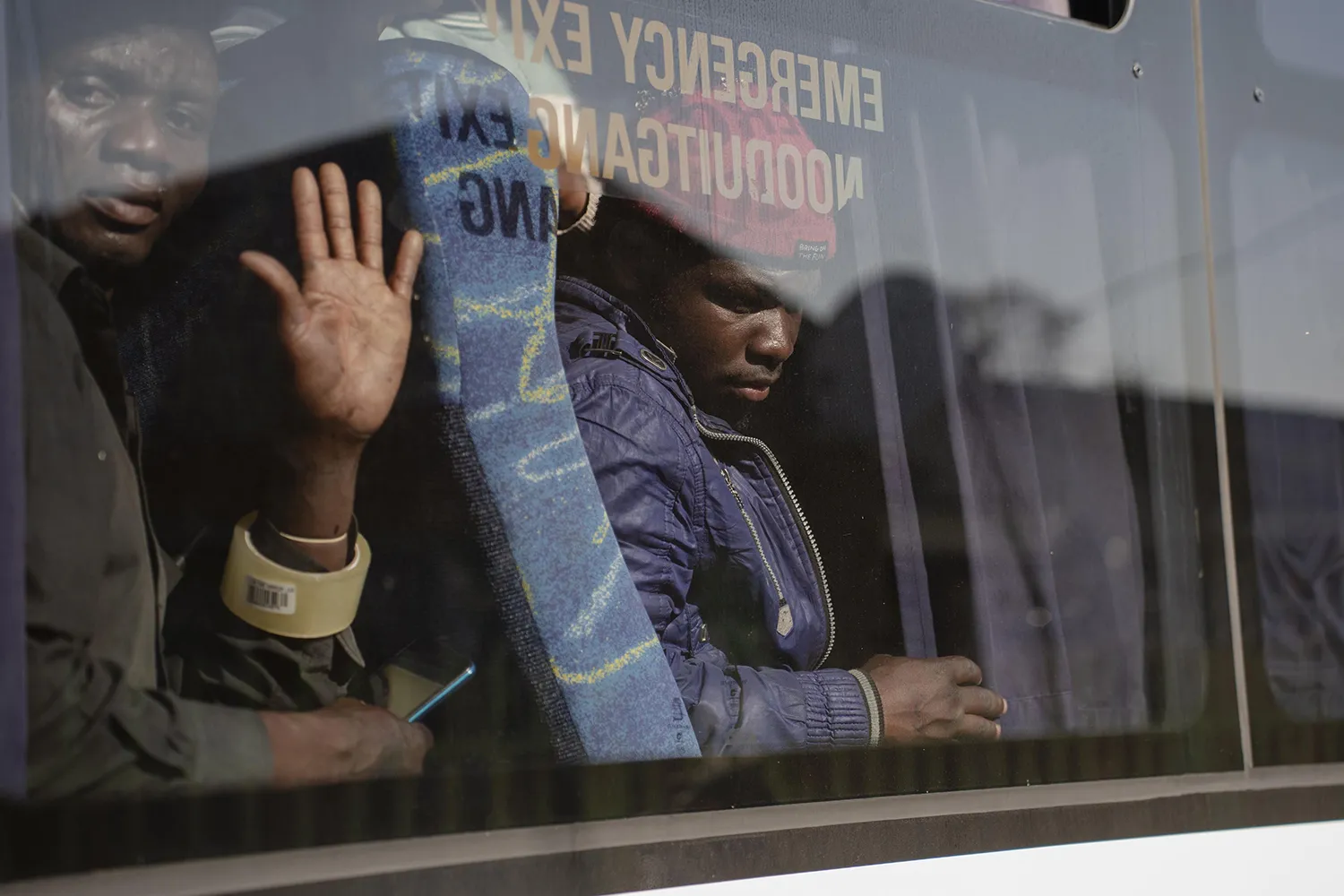
Welcome to Foreign Policy’s Africa Brief. The highlights this week: African governments try to distance themselves from Pretoria following xenophobic attacks, Spanish politicians seek to make sense of the border incident in Ceuta, and renewed clashes erupt in Ethiopia’s Tigray region. South Africa has long been a leader of the African continent, but the country’s influence may be waning as its reputation takes a hit following widespread violent attacks on Black African migrants within its borders. Since the end of apartheid, South Africa has experienced recurring waves of xenophobic violence, which have killed an estimated 705 people over the past two decades. There was an uptick in anti-migrant attacks in 2008, and xenophobic sentiment has worsened again this year as migrants have become scapegoats for the country’s economic woes and high unemployment rate. The two anti-migrant groups driving this latest wave—Operation Dudula and March and March—are well funded and organized. More than 160,000 Africans have fled the country over the past two months, according to an AFP tally of repatriations by African governments. Amid this migrant exodus, African governments have distanced themselves from the country in recent weeks, postponing high-level meetings with Pretoria, while Africans across the continent are increasingly boycotting South African cultural events. Critics have also called into question South Africa’s reputation as a strong moral voice and advocate for the global south, particularly on human rights violations in Gaza. Since 2023, Pretoria has led a genocide case against Israel at the International Court of Justice. “[P]rinciples are measured by how well governments uphold them at home, not just by what they advocate abroad,” read a recent opinion piece in the Addis Standard. “For many African migrants living in South Africa … that commitment often feels incomplete.” Last week, Nigerian President Bola Tinubu declined to meet directly with a delegation sent by South Africa to address diplomatic tensions over the xenophobic attacks, sending the visitors to Nigeria’s minister of state for foreign affairs instead. Ghanaian President John Mahama also delayed a visit last month from South African President Cyril Ramaphosa. Ghanaian government spokesperson Felix Kwakye Ofosu told the BBC that the visit was postponed “in view of the present climate around xenophobia.” However, Mahama later met with a delegation, which included South African Foreign Minister Ronald Lamola, that Pretoria deployed to address the fallout. “We do not harbor ill will toward South Africa. However, we remain deeply concerned about the attacks,” Mahama said after the meeting. “This undermines the very spirit of African solidarity and our collective efforts toward continental integration.” It’s not just governments that are putting pressure on South Africa. Grammy award winner Tyla removed a show in Lagos, Nigeria, from her global tour following social media campaigns calling for Nigerians to boycott her concert. Other South African artists have had their appearances at festivals in Zimbabwe and Malawi canceled following similar boycotts. “A majority of South African artists perform on the continent, and many of them are seeing their gigs being cancelled,” South Africa’s justice minister, Mmamoloko Kubayi, said as she called for her compatriots to reject xenophobic violence. “We do believe that it can not only hurt the brand, but can hurt our social cohesion.” Xenophobia in South Africa has also brought economic challenges. Already, the mass exodus of migrants has disrupted South African businesses, even though migrants make up only about 5 percent of the country’s population. For instance, Sixty60, the grocery delivery platform of African supermarket chain Shoprite, has faced a driver shortage, since around 70 percent of its drivers are foreign. Sixty60 is just one of many South African businesses that relies heavily on migrant labor; South African drivers reportedly quit the company at nearly double the rate of their foreign peers due to drivers’ working conditions and concerns around safety. “In lieu of open-mindedness and courage, South Africans have emulated the worst attitudes of the West toward Africans, treating them as the rankest sort of undesirables—people who have come to ‘steal’ their jobs or commit crimes,” FP’s Howard W. French wrote recently. “Over time, the effect on the country is likely to be similar to cutting off one’s nose to spite one’s face.” Wednesday, Aug. 5: The U.S. Senate Foreign Relations Committee holds a briefing on the war in Sudan. Thursday, Aug. 6: The U.N. Security Council discusses its mission in South Sudan. Weaponized migration? More than 50,000 migrants entered Ceuta, a Spanish city on Africa’s northern coast, late last week, while more than 80 died attempting to cross. Although most migrants left within 48 hours, European countries near Spain hastened to tighten their borders in the wake of the rush. The reason behind it is still unclear, but some Spanish politicians have accused Morocco of engineering the influx over geopolitical tensions regarding Western Sahara. Ceuta is bordered by Morocco but separated from mainland Spain by the Strait of Gibraltar. Ten days prior to the influx, Spanish Prime Minister Pedro Sánchez visited Algiers, where he pledged to strengthen bilateral cooperation. Algeria hosts the Polisario Front, which fights for Sahrawi independence in Western Sahara, a region Morocco has claimed sovereignty over since the 1970s, when Spain withdrew from the territory. Morocco also claims sovereignty over Ceuta. Analysts have pointed out the similarities between this episode and another migration surge in 2021, when some 10,000 migrants entered Ceuta over a period of a few days after Madrid allowed Polisario Front leader Brahim Ghali to receive COVID-19 treatment in Spain. “The Moroccan police were shouting at us: ‘Go, go, go! Run now, run into Spain,’” one migrant who crossed into Ceuta last week told the Guardian. “Ceuta was a clear example of the ‘weaponization of immigration,’” Pol Morillas, director of Barcelona-based think tank Cidob, told the Financial Times. Morocco’s interior ministry, however, rejected this narrative, blaming the surge instead on social media misinformation after the Spanish supreme court ruled that migrants arriving by sea could not be immediately deported. Spanish intelligence services concluded that Morocco did not plan the mass crossing but did allow it to occur. Moroccans were among the top 10 nationalities in irregular border crossings into the European Union last year and this year. Renewed Tigray fighting. Clashes erupted in northern Ethiopia between federal forces and the Tigray People’s Liberation Front (TPLF) in the western Tigray region of Shererina over the weekend, in the latest sign that the 2022 Pretoria peace agreement that ended the country’s two-year civil war has fractured. The escalation follows months of sporadic fighting, troop buildups, and the TPLF’s move to reinstate its prewar regional government earlier this year. Hundreds of Tigrayans fled across the border to Sudan during the fighting, even as the country faces the world’s worst humanitarian crisis in its fourth year of civil war. Disarmament in Congo? The Democratic Republic of the Congo’s government said last week that the Democratic Forces for the Liberation of Rwanda (FDLR), operating out of eastern Congo, has signed an agreement to disarm. The FDLR is a Hutu rebel group opposed to Rwandan President Paul Kagame, and some of its militants are linked to the 1994 Rwandan genocide. The FDLR was a main component of the peace deal brokered by U.S. President Donald Trump last year between Rwanda and Congo. The agreement required that Rwanda withdraw its troops fighting alongside M23 rebels in Congo, while Congo root out the FDLR within its borders. A U.N. expert report in June found that the Congolese army has continued to partner with the FDLR in fighting Rwanda-backed M23 rebels. So far, Rwandan Foreign Minister Olivier Nduhungirehe has dismissed the new disarmament agreement, saying that it is merely a delaying tactic. Ugandan treason trial. Ugandan opposition leader Kizza Besigye remains in critical condition in the hospital after collapsing during a court hearing last Wednesday in Uganda’s capital of Kampala. His wife, UNAIDS Executive Director Winnie Byanyima, said in a social media post that Besigye was “only partially conscious” and unable to speak. Besigye, who is 70 years old, has been in prison since late 2024 on treason charges, after he was kidnapped and transported from Nairobi, Kenya, to a military prison in Uganda. He collapsed as he was protesting the authorities’ refusal to let him proceed with his chosen defense team. Local rights groups have petitioned the U.N. Human Rights Committee to intervene in the wake of Besigye’s health concerns, condemning the trial as a politically motivated effort by President Yoweri Museveni’s regime to crack down on dissent. Saudi Arabia said on Thursday it had formed a coalition with neighboring nations to protect global shipping and freedom of navigation through the Red Sea, Bab el-Mandeb Strait, and Gulf of Aden as the Strait of Hormuz remains closed amid war in Iran. The group, named the Multinational Maritime Defense Alliance, counts among its members some of Saudi Arabia’s immediate Red Sea neighbors, including Egypt, Sudan, Djibouti, and Somalia. Last month, Iran-backed Houthi rebels in Yemen announced a naval blockade on Saudi ships moving through the Bab el-Mandeb southern gateway to the Red Sea. Although many details of the new initiative remain unknown, the partnership will include intelligence sharing and joint maritime operations. The Book That Predicted Pete Hegseth’s Failures by Keith Johnson How to End the Iran War by Allison Minor and Nate Swanson The Wildberries Theory of Russian Defeat by Alexey Kovalev Financing African needs. As Western aid dwindles and Chinese investment shifts to private equity, the African Development Bank (AfDB) must reinvent how it funds the continent’s own development priorities by leveraging private investment, argues Rabah Arezki in Foreign Policy. “As large European banks have scaled back or sold their African franchises, the AfDB is the only remaining institution that can attract cross-border capital at scale,” Arezki writes. “But rather than trying to finance every project itself, the AfDB should leverage its money, convening power, and preferred creditor status to bring in private lenders alongside its own financing.” Senegalese homophobia. In April, Senegal’s government toughened anti-LGBTQ+ laws, doubling the maximum prison term for same-sex relationships to 10 years and criminalizing any “promotion” of homosexuality. In Foreign Policy, Yagnishsing Dawoor reviews Senegalese author Mohamed Mbougar Sarr’s prescient novel, Pure Men, in the context of the country’s increasing intolerance of queerness. The book “probes the roots of Senegalese homophobia, exploring how religious ideals combine with the myth of African heterosexual purity to sustain a culture of murderous hate,” he writes.
South Africa’s Global Image Loses Its Luster
Full Article
Original Source
Read the full article at Foreignpolicy →KhanList aggregates and links to publicly available news content. We do not host full articles from third-party sources. Always verify important information with original sources.