
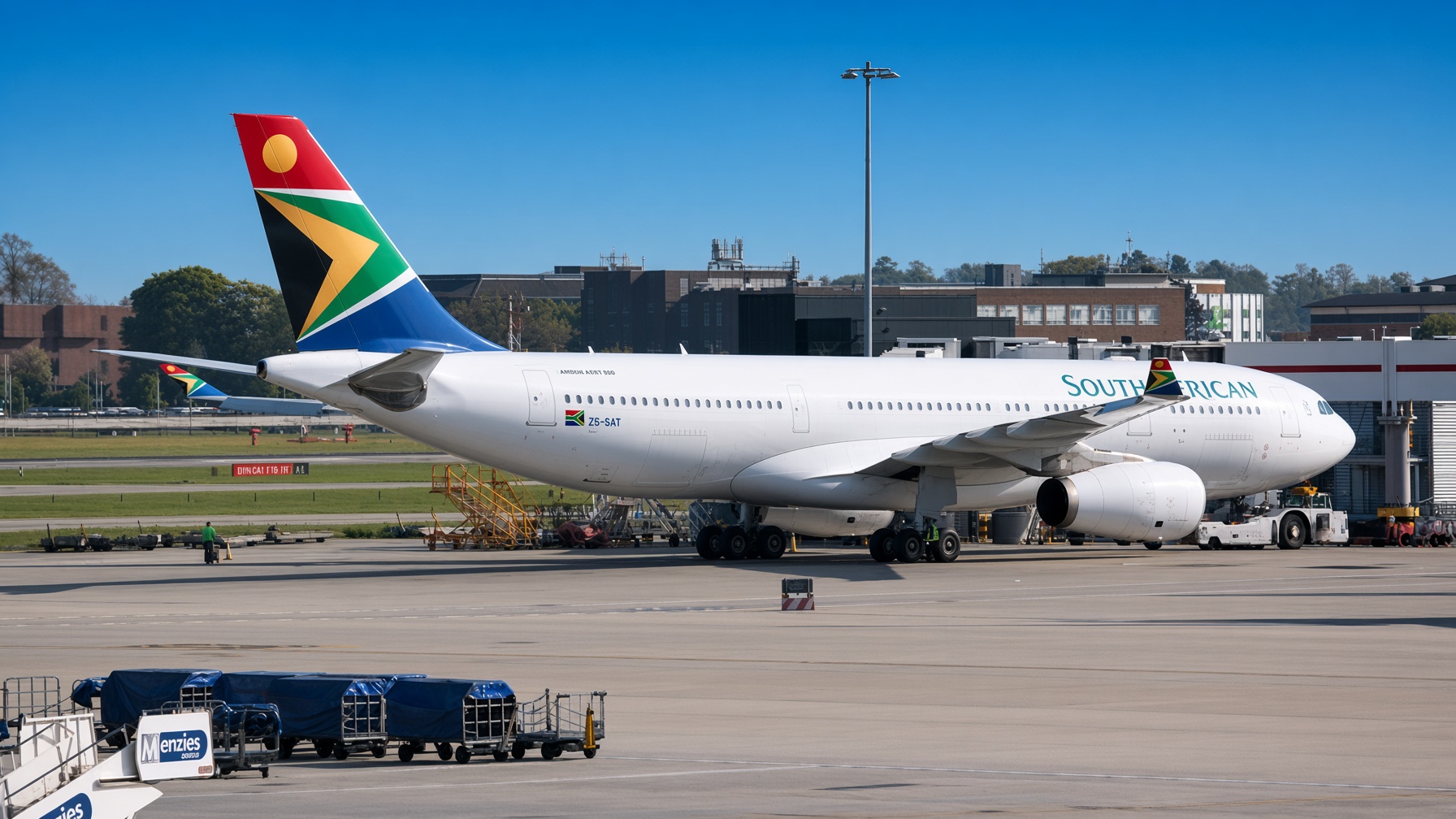
South African Airways has delayed salaries for a second consecutive month. The Star Alliance member sold a valuable pair of London Heathrow takeoff and landing slots, reported a ‘profit’ but still needs help finding the cash to pay its bills. The airline could shut down iif financing fails. My bet is that the government comes back with another bailout, throwing in more money after burning through billions. They’ve spent decades keeping this airline alive, and they only just offered another loan guarantee. (HT: Enilria) Credit: tupungato / 123RF Pilots And Managers Have Been Moved To Later Pay Dates The airline has admitted delaying pay for pilots, managers and executives while prioritizing operating expenses. It says most employees, including flight attendants and ground staff, were paid on time. A spokesperson said roughly 30%–40% of staff were affected, so ‘most’ is technically accurate but the ambiguity is doing a lot of work there. He blamed the fuel prices, naturally, though the airline’s problems long predated the U.S. conflict with Iran. Indeed, he acknowledges this: the business has not been cash-generative for a very long time. They sold London Heathrow slots, and already used the cash to fund losses. And the South African Treasury has given them until February to find a buyer as a condition of a R1 billion government guarantee approved August 5 (about $61 million). They also have to identify assets for sale within 90 days. The carrier denies a report that its board considered returning to South Africa’s equivalent of bankruptcy. They Just Claimed To Be Profitable The airline’s financial statements for the year ended March 31, 2025, the last available, show: Group net profit of R155 million; the airline company’s net profit was R30 million. A R317 million group loss before interest, tax, depreciation and amortization. R1.169 billion in gains under the asset disposal line, including a small lease-modification gain. Excluding asset sales their pretax results were actually a R996 million loss. SAA sold one of its two Heathrow slot pairs in March 2025 and retained the other. The most recent Auditor General’s report was the seventh consecutive disclaimed audit opinion (they don’t vouch for it!) and it identified R500 million of disclosed irregular expenditure (cough). They can’t be sure where the money went. And that was all before the run up in fuel prices. They’re A 92-Year-Old Airline With A Long History Of Bailouts SAA dates to 1934, when the government took over Union Airways. It became a long haul airline, operating Boeing 747s and flying to Europe, the Americas, Asia and Australia. The airline’s struggles have been going on for years. I wrote in 2017 about government money going to repay SAA’s banks, and in 2018 about another bailout request, asset sale plans and overdue financial reporting. The airline entered ‘business rescue’ in December 2019 and exited in April 2021. It resumed scheduled flights in September 2021 after an 18-month interruption. A deal to sell 51% of the airline collapsed in March 2024. I covered the government’s claim then that SAA could sustain itself for 12–18 months and wouldn’t receive further bailout money. It survived that period. It’s now back seeking more taxpayer money. In 2020, a court declared former board chair Dudu Myeni a delinquent director for life, focusing on her interference with a proposed Emirates agreement and an Airbus transaction intended to improve the airline’s finances. The judge called her a “director gone rogue.” The Zondo state-capture inquiry documented the destruction of governance at SAA and its subsidiaries, including procurement abuses. Politically connected leadership inserted themselves into the airline’s business decisions. One CEO departed in April. They appointed an acting head, but he was put on leave in August and their chief legal officer became acting CEO. The airline has received total subsidies of ~ US$3 billion, which is huge for a carrier that claims 19 planes. Including taxpayer losses and creditor writeoffs in bankruptcy they’ve burned at least $8 billion. What Star Alliance Would Lose South African joined Star Alliance in 2006 as its first African member. Star’s African network is no longer dependent on SAA to the same degree. Ethiopian Airlines provides a much larger connecting operation through Addis Ababa, Egyptair serves the continent from Cairo, and other Star members fly directly to South Africa. Airlink already provides an alternative for some of the most important partners. United has a codeshare and mileage partnership with Airlink. And Lufthansa also codeshares with it. That carrier serves more than 45 destinations. What Will Happen To South African? It’s unclear how much cash SAA has and how much and how soon it can borrow more. Its 2025/26 annual report missed the September filing deadline. I’m betting on more government funds to keep them going, thinking they’ll find a buyer or just have it operate long enough for it to be a different politican’s problem (plus it’s too good of a prestige and cash cow for entrenched elites to give up). Topics on this page
South African Airways Can’t Make Payroll—Selling Off Assets Hasn’t Freed Up Enough Cash
Full Article
Original Source
Read the full article at Viewfromthewing →KhanList aggregates and links to publicly available news content. We do not host full articles from third-party sources. Always verify important information with original sources.