
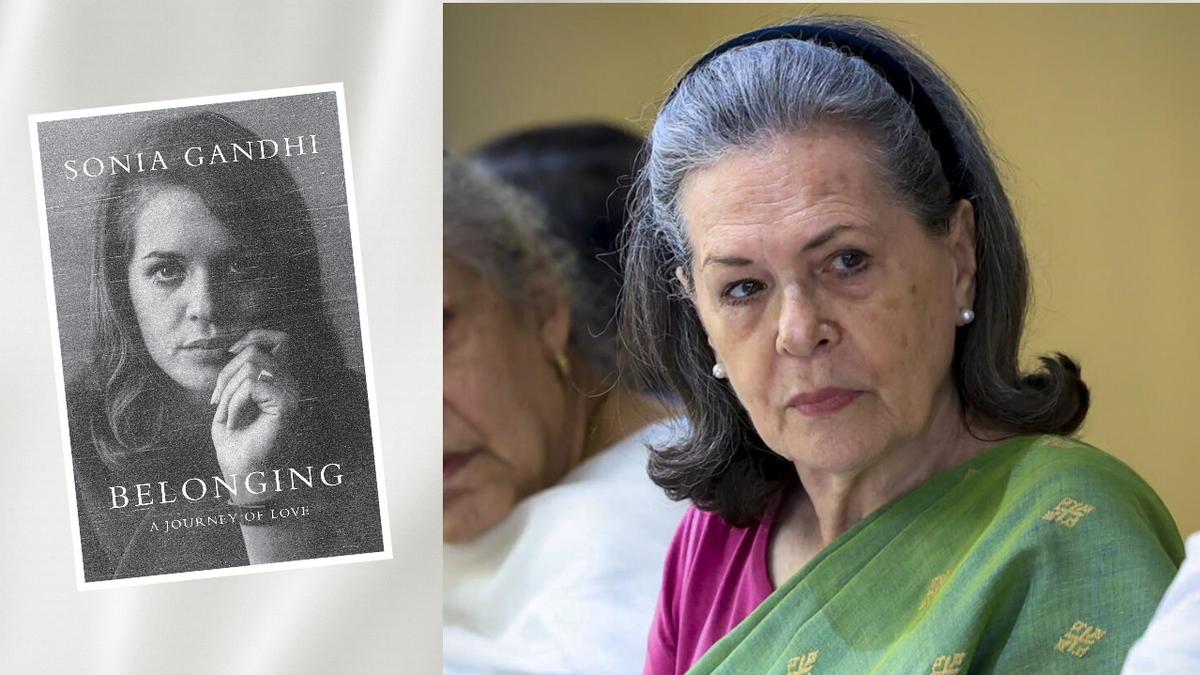
Stories from the publishing world do not usually become front page news, but the controversy over the hotly anticipated Sonia Gandhi memoir, Belonging, has done just that. An unheralded part of the editorial process, the legal read, has become the subject of national discussion.It appears from statements made by Penguin Random House India that some of the book’s contents were flagged by the publisher’s lawyers for deletion, and after some rounds of discussion, the author was not willing to remove them, and consequently the publication by Penguin in India was shelved. Although the publisher has not revealed what the deleted portions were, and has said the discussions were confidential, sources have variably suggested they concerned Prime Minister Narendra Modi, the RSS (Rashtriya Swayamsevak Sangh), communal riots and Chinese occupation of Indian territory.Why are legal reads so necessary for publishers, even before the book is published? And in the process of legal review, is the lawyer playing the role of a censor? A manuscript may survive an editor, but can it survive an over-zealous lawyer? As a lawyer who frequently works with media and publishing houses, I would like to first lay out the legal landscape and then explain the mechanics of the legal read.While our Constitution protects the freedom of speech and expression, that right is subject to reasonable restrictions which are set out in law. Apart from civil and criminal claims for defamation, our laws contemplate a variety of offences, including broadly worded sections criminalising outraging religious feelings, causing enmity between different sections of society, and obscenity. Other more specific legislations prohibit actions such as the divulging of official secrets, the identification of juveniles in criminal matters, and even the advertising of magical remedies.Increasingly, privacy rights are also being claimed by the subjects of reporting, and unlike in defamation actions, truth is not a defence for the violation of a subject’s privacy. The wide range of possible troubles a controversial non-fiction book about current events can run into causes publishers grave concern, and that is where the lawyers come in. A legal read is a review of a manuscript before it heads to the press with an eye to avoiding any potential legal danger.The legal readWhen publishers bring a manuscript for a legal read, the lawyer scans through the possibilities, both realistic and far-fetched, and goes back to the publisher with a list of passages that may have raised questions. While legal advice is conservative by its very nature, the test one adheres to is of “defensibility”. It is impossible to insulate a book from litigation or prosecution completely, or even to foresee fully what some person may find offensive, but it is possible to ensure that the contents are legally defensible. The legal read is a diagnostic and preventative step, but should not be so cautious as to turn into risk avoidance. Getty Images The first step in a legal read is to check line-by-line for offence. Let us consider defamation risk. The rule I use is to imagine that every person in the book is known to me, and is a friend. If a line in the manuscript tells me something about that friend which may cause me even the mildest discomfort, I consider that statement carefully. If it is a statement of fact, what is the basis for it? Is it something that is true, or substantially true? Are there official or formal documents to support it? Were there eyewitnesses who are reliable, and if need be, can be called into a witness box? If it is a statement of opinion or judgment, is it an opinion that the author holds in good faith, on the basis of some material which is true? Naturally, the more shocking or ex-facie defamatory a statement is — for example, allegations of criminality — the harder the lawyers look at their ability to ultimately defend it in a courtroom.Once the contentious portions have been identified, the lawyer reaches out to the author to ask if there are supporting materials, and try to determine whether they are sufficient. Often, a handful of newspaper articles are produced — and those by themselves are not good enough, as they are hearsay evidence. On the other hand, direct eyewitness evidence, recorded interviews, correspondence from the subject, official reports, and original documents proving the allegation are all very helpful. Where the sources are insufficient, lawyers attempt a mitigatory strategy of rewriting those sentences in a way that they become defensible. Only when it is not possible to rework them at all do they recommend those portions be excised from the draft.The legal read process therefore is a back-and-forth conversation involving the lawyer, the publisher and the author; it would be a false dichotomy to think of this as oppositional between a quisling publisher and pedantic lawyer on one hand and brave author on the other hand. After all, the author and publisher end up being equally liable in law and end up in the dock together, and as the lawyer, I have found myself defending my own risk assessment in the courtroom.What are the risks?By the very nature of publication, the jurisdiction for an offence or for the tort of defamation can arise anywhere. Wherever a copy of the book is sold in our vast country, a reader may be offended and rush to a police station or a court. As a consequence, while books may be published in Delhi and movies may be made in Mumbai, summons may arrive from a district court anywhere from Kashmir to Kanyakumari. Plaintiffs and complainants find jurisdictions where their political and financial muscle makes legal actions easier. In Indian law, as any experienced litigant will tell you, the process is the punishment. For instance, when the Sanathan Sanstha sued Delhi journalist Dhirendra K. Jha and his publisher Juggernaut Books for damages of ₹10 crore over his book Shadow Armies (2017), they filed the suit in the district court of Ponda in Goa, where they have their headquarters. The case was dismissed in 2020. Journalist Dhirendra K. Jha was sued for defamation after the release of his book, ‘Shadow Armies’, in 2017. On the civil side, ex-parte injunctions (court order granted at the request of one party without notifying or hearing the opposing side), even though they are frowned upon by the law, are depressingly common. Often, on the basis of extracts, like in the famous case of Khushwant Singh’s Truth, Love & a Little Malice (2002), an injunction is granted. The weeks that injunction applications should take to be finally determined, as per our civil procedure, routinely stretch into months and then years. In Singh’s case, it took seven years. Even though injunctions may be ultimately vacated, the commercial life of a non-fiction book may be over by the time that takes place. The books will have lain in a warehouse for years, no one cares about the topic anymore, and the sunk costs of the publisher are never recovered.In criminal matters, the accused parties may — depending on the exact nuance of the offence — have to appear in court, seek bail and exemptions from appearance. There is also the continuing potential for being remanded to custody, being questioned by the police, and searches and seizures. The very threat of criminal action is intimidating for most parties. Journalist and author Khushwant Singh whose autobiography ‘Truth, Love & a Little Malice’ was stuck in litigation for seven years. Certain publishers are more accepting of risk — adhering closer to a standard of defensibility, rather than merely “likely to cause trouble”. The latter approach tries to avoid legal trouble altogether, but the cost may sometimes be muzzling the author, and depriving the public of a sharper viewpoint. The problem is that legal reads are becoming more conservative as a rule, due to political polarisation, social media outrage, knee-jerk reactions, and an unpredictable legal system. A gulf is opening up between what the author knows and wants to say, and what they are permitted to say, and this self-censorship harms the public good.Drawing the lineSo, who makes the final decision? It depends on the contractual relationship between the author and the publisher. Authors usually provide representations and warranties that what they say is true and accurate to the best of their knowledge, and indemnify the publisher against any losses suffered if that turns out to not be the case — but those indemnities only become possible after the matter is finally determined, which may be a decade later. Typical terms in a publishing contract permit the publisher to make edits on the basis of legal advice, without the author having any say in the matter. Where the authors are big-hitters, those standard contracts may be tweaked to the author’s satisfaction. But in the end, it is the publisher who is also embracing the risks of publication, and therefore has to draw the line where it sees fit.There is an economic aspect of the publisher’s risk assessment as well; a publishing giant like Penguin Random House has deep pockets and access to legal resources and media liability insurance, but a small independent publisher may not have the ability to withstand negative legal outcomes, and may be understandably more risk-averse.While we do not yet know what the contents of Sonia Gandhi’s Belonging were which caused the impasse between the author and Penguin India’s lawyers, the reader may now have a little more context as to what takes place before such a book goes to print.The writer is a lawyer and author.
Sonia Gandhi’s ‘Belonging’: when legal review becomes a publishing battleground
Full Article
Original Source
Read the full article at Thehindu →KhanList aggregates and links to publicly available news content. We do not host full articles from third-party sources. Always verify important information with original sources.