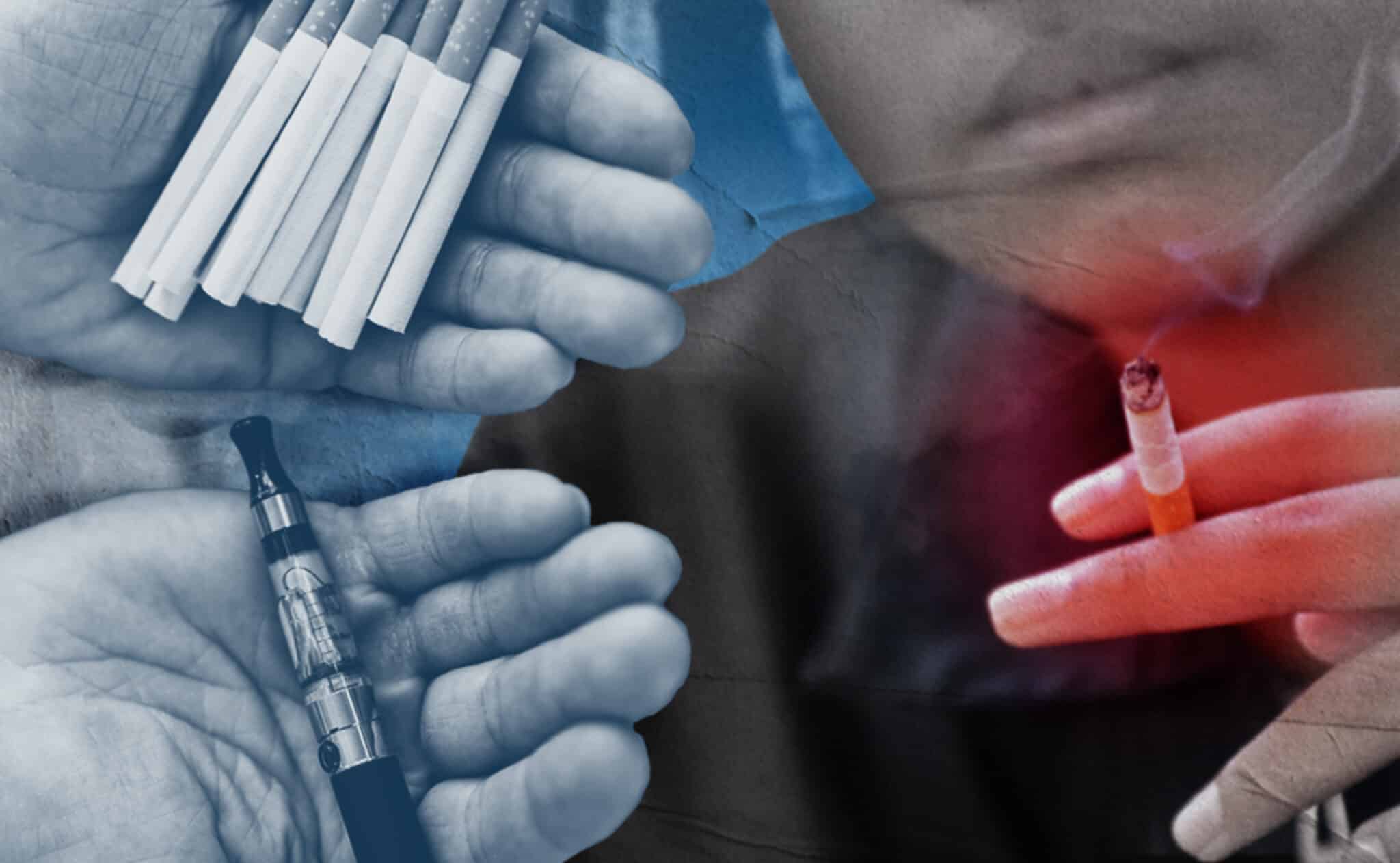
Ahead of President Ferdinand Marcos Jr.’s fifth State of the Nation Address (Sona), local officials from across the country are urging him to prioritize and certify as urgent a bill seeking stronger nationwide protection from secondhand cigarette smoke and vape emissions. INQUIRER FILES MANILA, Philippines — Ahead of President Ferdinand Marcos Jr.’s fifth State of the Nation Address (Sona), local officials from across the country are urging him to prioritize and certify as urgent a bill seeking stronger nationwide protection from secondhand cigarette smoke and vape emissions, particularly for children and young people. Governors, mayors, councilors and local health officials are pushing for the passage of House Bill No. 9603, or the proposed Smoke-Free and Vape-Free Environment Act, which seeks to establish national standards for smoke-free and vape-free public spaces and workplaces based on policies already being implemented by some local governments. The call comes amid continued exposure to secondhand smoke and vape emissions and growing concern over vaping among young Filipinos. It also comes four years after Republic Act No. 11900, or the Vaporized Nicotine and Non-Nicotine Products Regulation Act, lapsed into law without Marcos’ signature or veto. Article continues after this advertisement READ: As vaping ‘epidemic’ grips PH youth, tobacco sellers flout law vs targeting kids “We, representatives of local government units, call on President Ferdinand Marcos Jr. to make the immediate passage of House Bill No. 9603, or the Smoke-Free and Vape-Free Environment Bill, a priority in his State of the Nation Address (SONA),” Local Government Units for a Smoke-Free and Vape-Free Environment (LGUs for SFVF) said in a unity statement released ahead of the July 27 Sona. The proposed measure would not ban cigarettes or vapes outright. Instead, it seeks to strengthen restrictions on where they may be used and establish a common national framework for local governments, including funding, enforcement mechanisms and penalties. For the local officials supporting the measure, children face particular risks from exposure. “The biggest victims are our children, youth, and even babies still in the womb. Because their lungs are not yet fully developed and their immune systems are still weak, they face a higher risk of respiratory illnesses, asthma, pneumonia, and other long-term health effects caused by secondhand smoke and vape emissions,” LGUs for SFVF said. Article continues after this advertisement From local policies to a national standard HB 9603 was filed by Albay 1st District Rep. Krisel Lagman together with 14 other legislators as principal authors, according to PLCPD, a non-stock, nonprofit organization of lawmakers from the Senate and House of Representatives established in September 1989 and involved in public policy on human development, reproductive health and children’s rights. The proposed measure seeks to establish a national standard anchored on what its proponents describe as the experience and successful implementation of model smoke-free and vape-free policies in local governments. Article continues after this advertisement Local officials supporting the bill want the national government to adopt six measures grouped under the R.E.L.A.T.E. framework. The first is the removal of indoor designated smoking and vaping areas, followed by the expansion of smoke-free and vape-free zones in public spaces and workplaces. The framework also calls for local health budget allocations for tobacco and vape control and cessation programs and awards for LGUs that effectively implement the law. The final two components are the creation of task forces in local governments for stronger enforcement and enhanced and stiffer penalties for violators. The proposal is being backed by local officials who say their experience implementing smoke-free ordinances has shown what LGUs can accomplish and where national legislation could reinforce their efforts. Iloilo Gov. Arthur Defensor Jr. said the measure would protect places where Filipinos routinely gather. “The bill will help safeguard our schools, parks, markets, workplaces, and public spaces from the harmful effects of secondhand smoke and vape aerosols. We humbly ask Congress to pass the Smoke-Free and Vape-Free Environment Bill for cleaner air, healthier lives, and a brighter tomorrow for the Province of Iloilo and the nation. Let us choose a healthy environment for our children,” Defensor said. Baguio City Mayor Benjamin Magalong, one of the group’s spokespersons, likewise said successful local policies need stronger national support. “We are honored to be recognized globally for our smoke-free ordinances and the strict implementation of our local policies,” Magalong said. “But this protection must not rest on cities alone. We need a national law that serves as the backbone of local efforts, earmarks dedicated funding for sustained enforcement, and gives local governments the teeth to ensure proper and strict implementation,” he added. Quezon City Mayor Joy Belmonte expressed similar support during a June 2 event at Quezon City Hall held in solidarity with the proposed measure. “We advocate for stronger policies that safeguard the health and well-being of our kababayans, especially our youth. [HB 9603] pushes for a harmonized ban on smoking and vaping in all public areas and workplaces,” Belmonte said. LGUs backing the call The unity statement drew support from governors, mayors, councilors and local health officials from several parts of the country. The governors who signed were Defensor Jr. of Iloilo, James Edduba of Kalinga, Eugenio Jose “Bong” V. Lacson of Negros Occidental and Jose Enrique Miraflores of Aklan. Benguet Provincial Board Member Lady Charmaine Molintas Likigan also signed the statement. The mayors were Magalong of Baguio City; Belmonte of Quezon City; Alfredo B. Dacumos Jr. of Sablan, Benguet; Roderick Chiok Awingan of La Trinidad, Benguet; Meekia Icasas of Lezo, Aklan; Raisa Treñas of Iloilo City; Minez “Em” Hamor of Casiguran, Sorsogon; Ma. Ester Hamor of Sorsogon City; Lawrence Lemuel Fortun of Butuan City; and Ruffy Biazon of Muntinlupa City. Lambunao, Iloilo Vice Mayor Arvin Losaria also joined the call. The councilors listed as signatories were Inday Labindao of Buruanga, Aklan; Marina C. Buyco of Anilao, Iloilo; Eden Dequilla of Balasan, Iloilo; Amy O. Gabo of Concepcion, Iloilo; Liecel Mondejar-Seville, Jocelyn P. Espia and Ryan Torres Sala of New Lucena, Iloilo; Ariel Duran of Basey, Samar; Kirk Pedrajas of Pototan, Iloilo; Carl Clint Lingaya of Lambunao, Iloilo; and Lailyn D. Polig-Paquitol of Tublay, Benguet. Local health officials who signed were Iloilo Provincial Health Officer Dr. Maria Socorro Quiñon; Benguet Provincial Health Officer Dr. Meliarazon Fianza Dulay; Pototan Municipal Health Officer Dr. Rodina P. Mondragon; Concepcion Municipal Health Officer Dr. Mark Anthony Celestial; Anilao Municipal Health Officer Dr. Karen Ann A. Gonzales; Dingle OIC Municipal Health Officer Dr. Marjoe Renz Deita; San Dionisio Municipal Health Officer Dr. Regine Viel Manderico; and New Lucena Municipal Health Officer Dr. Ma. Cristina Reala. Youth vaping adds to concern The LGUs’ call comes amid broader concern over young Filipinos’ exposure to tobacco smoke and their use of e-cigarettes. More than 40 percent of Filipino youth are exposed to secondhand cigarette smoke in enclosed public spaces, according to the 2019 Global Youth Tobacco Survey. The same survey found that 14.1 percent of Filipino students aged 13 to 15 used e-cigarettes, including 20.9 percent of boys and 7.5 percent of girls. The Philippine Pediatric Society previously found that 11 percent of students aged 10 to 15 had tried vapes, while the Department of Education (DepEd) reported that 6.7 percent of Grades 7 to 9 students had tried and were using e-cigarettes. Across the broader population, an estimated 1.5 million Filipinos use e-cigarettes or vapes, based on the 2023 National Nutrition Survey. More recent data cited by the Institute for Global Tobacco Control (IGTC) at the Johns Hopkins Bloomberg School of Public Health showed vaping among Filipino adolescents rising from 7.5 percent in 2021 to nearly 40 percent in 2023, based on figures from the Food and Nutrition Research Institute. The figures come from different studies, age groups and methodologies and therefore should not be read as a single statistical trend. They nevertheless show why youth vaping and exposure to secondhand smoke have remained part of the public health debate. What young Filipinos say about vaping Research released by IGTC in June examined how young Filipinos encounter and perceive e-cigarettes. Researchers conducted 24 focus group discussions in January 2024 involving 171 participants aged 13 to 20 from Metro Manila, Cebu City and Davao. Participants discussed their experiences with e-cigarettes and examined 10 locally purchased products, including flavored varieties. Among them, researchers found perceptions that young people were being targeted by e-cigarette marketing. “The sales target is young ones,” a boy aged 13 to 15 who did not vape told researchers. Others associated vaping with image and social acceptance. “When someone vapes, they look cool. So, I just tried,” said a boy aged 13 to 15 who used e-cigarettes. “To look cool, to look handsome. When you vape, you look like a rich kid because vapes are expensive,” an 18- to 20-year-old woman said. READ: How flavors, social media draw Filipino youth to vaping Social media also figured in their accounts. “People vaping on TikTok […] They do tricks, make circles […] That made me curious, that’s why I bought one,” one participant said. Flavors and fragrances were also cited as reasons for curiosity and continued use. “It was very fragrant and makes you curious and want to buy one. That is why when I tried it, ma’am, it hooked me,” one participant said. Another said: “That is why we vape because there are more flavors to choose from, so when more new flavors come out, we keep vaping more and more because you keep trying different flavors.” Marketing and packaging Previous research has also examined how packaging can shape perceptions of tobacco products. An IGTC-linked study involving young adults in the Philippines and Mexico found that colors, imagery and other packaging elements could communicate flavors and influence product appeal and perceptions. “Packaging is a key marketing tool used by the tobacco industry to promote their products,” the study said. “Through packaging design features and appeals (e.g. color, pack shape, the imagery on pack), TTCs target specific consumer groups, associate their brand with core values held by young adults, and influence perceptions of harm, appeal, and expectations about the product,” it added. The latest IGTC research similarly found that some Filipino participants considered products without graphic health warnings more appealing. “[The pack that] doesn’t have that much warning signs on it looks more pleasing to the eye,” one participant said. READ: Tobacco packaging: Getting PH youth hooked on smoking, vaping Another described the effect of graphic warnings: “Those pictures make you not want to use it anymore […] like the sickness you can see in the picture, I will be like this when I smoke, so it is better to just stop.” IGTC assistant scientist Tuo-Yen Tseng said graphic warnings were not a complete solution but could discourage initiation. “We know that a graphic health warning label isn’t a be-all, end-all solution — it won’t by itself rewire the brain of someone who is addicted to nicotine — but it can help discourage someone from picking up one of these products for the first time, and this is something that our focus group data collection verified,” Tseng said. Four years after the Vape Law The appeal to Marcos comes four years after RA 11900 substantially changed the country’s regulatory framework for e-cigarettes. The law took effect in July 2022 after Marcos neither signed nor vetoed the measure within the constitutional period. Among its provisions, RA 11900 lowered the minimum legal age for buying vape products from 21 to 18 and gave the Department of Trade and Industry (DTI) regulatory jurisdiction over vape and novel tobacco products, with the Food and Drug Administration (FDA) playing a consultative role in technical standards. READ: Bill allowing younger vapers lapses into law The law regulates their importation, manufacture, sale, packaging, distribution, use, advertising, promotion and sponsorship. It also prohibits products packaged, labeled, presented or marketed with flavor descriptors proven to “unduly appeal particularly to minors,” including references to fruit, candy brands, desserts or cartoon characters. Supporters argued that regulation was needed to impose order on a growing industry and protect consumers. “If we don’t regulate these products, every kind of device will proliferate in the market,” then-congressman Wes Gatchalian, one of its proponents, said. “Without regulating them, there will be no order. It would be difficult to police unwarranted and fly-by-night industries,” he added. Philippine E-cigarette Industry Association president Joey Dulay likewise said: “We support the vape law because it provides a comprehensive regulation that will protect consumers and promote responsible trade, ensuring minors and non-smokers are protected.” Health agencies opposed key provisions The law, however, faced opposition from the Department of Health (DOH), DepEd, medical associations and public health groups, which urged Marcos to veto it. The DOH warned that lowering the minimum age and allowing flavorings and promotional practices could increase young people’s exposure. “By lowering the age of access to vapor products from 21 to 18 years old, allowing flavorings, and permitting advertising and sponsorship strategies, the bill, when passed into law, will expose our youth to harmful and addictive substances by making vapor products enticing and easily accessible,” the DOH said in 2021. READ: DOH: Vaping puts young Filipinos at risk DepEd estimated that some 1.1 million students were aged 18 to 20 during school year 2020-2021. “This is the number of learners who will become legally allowed to be marketed the harmful products once the bill becomes law,” DepEd said at the time. Risks from smoke and vape emissions HB 9603 addresses a related but distinct issue: exposure to cigarette smoke and vape emissions in public spaces and workplaces. Despite existing smoke-free policies, millions of Filipinos continue to report exposure to tobacco smoke outside the home. Around 2.5 million adult Filipinos are exposed to tobacco smoke in enclosed workplaces, while 4.2 million reported exposure in public transportation, according to the 2021 Global Adult Tobacco Survey. The DOH has also said vape liquids and emissions contain substances including nicotine, propylene glycol, carbonyls and carbon monoxide that can be addictive, toxic or carcinogenic. “There is also growing evidence of the harmful effects of using vapes both to the user and those exposed to its emissions, including its potential to cause cardiovascular diseases, respiratory problems, and explosion injuries,” the DOH said. In 2018, the DOH reported a case of e-cigarette- or vaping-product-use-associated lung injury involving a 16-year-old patient from the Visayas who was hospitalized after experiencing “sudden-onset severe shortness of breath.” That case concerned injury associated with vaping itself and should not be read as evidence of injury specifically caused by secondhand vape exposure. IGTC assistant scientist Jennifer Brown previously told INQUIRER.net that smoke-free public places are among tobacco-control interventions supported by evidence. “We have evidence that policies, like 100% smoke-free public places, comprehensive advertising bans, prohibiting flavors, and raising tobacco taxes, can help prevent people from starting to use tobacco products and support those who are addicted to nicotine and want to stop,” Brown said. “With the necessary political will behind them, countries around the world have successfully adopted strong, national-level tobacco control policies that protect [their] residents from tobacco-caused death and disease,” she added. READ: Tougher measures needed to protect PH youth from ‘vapedemic’ Youth groups seek stronger safeguards The LGUs’ appeal follows separate calls from youth groups for stronger restrictions on vaping. More than 6,000 young Filipinos joined online and on-ground World No Tobacco Day activities this year calling for an immediate ban on vapes and e-cigarettes. The TobaccOFF NOW! movement also sought stronger enforcement against tobacco and vape advertising and restrictions on flavors and designs appealing to young people. “Through Pilipinas, TobaccOFF NOW! and the broader F*Nicotine campaign, we, the youth, get to express our frustration about tobacco, vape, and other nicotine products taking over our lives and our health,” campaign lead Vonn Vincent Tanchuan said. “We’ve been inspired by the youth sentiments online and in communities, reminding our government that we deserve better protection from the tobacco and vape industry. I know that our movement will just grow bigger and bigger until this is achieved,” he added. READ: Youth group seeks ban on vapes, e-cigarettes Positive Youth Development Network executive director Jeannie Anne Maguad said: “Our youth-led movement is urgently calling for an immediate ban on vapes and e-cigarettes because these harmful products serve as the starting point for our young people, encouraging them to eventually use cigarettes and other nicotine products.” “This immediate action must be taken while simultaneously executing the other crucial demands in our TobaccOFF NOW! manifesto, including eliminating flavors, terminating packaging designs, and strongly enforcing advertising bans,” she added. Push comes ahead of Marcos’ fifth Sona The LGUs are making their appeal days before Marcos delivers his fifth Sona on July 27, when the President is expected to lay out his priorities for the government and Congress. The request also comes as Marcos enters the final two years of his six-year term and much of his administration’s legislative agenda remains unfinished. /das Your subscription could not be saved. Please try again. Your subscription has been successful.
Sona 2026: LGUs ask Marcos to prioritize smoke-, vape-free bill
Full Article
Original Source
Read the full article at Newsinfo →KhanList aggregates and links to publicly available news content. We do not host full articles from third-party sources. Always verify important information with original sources.