
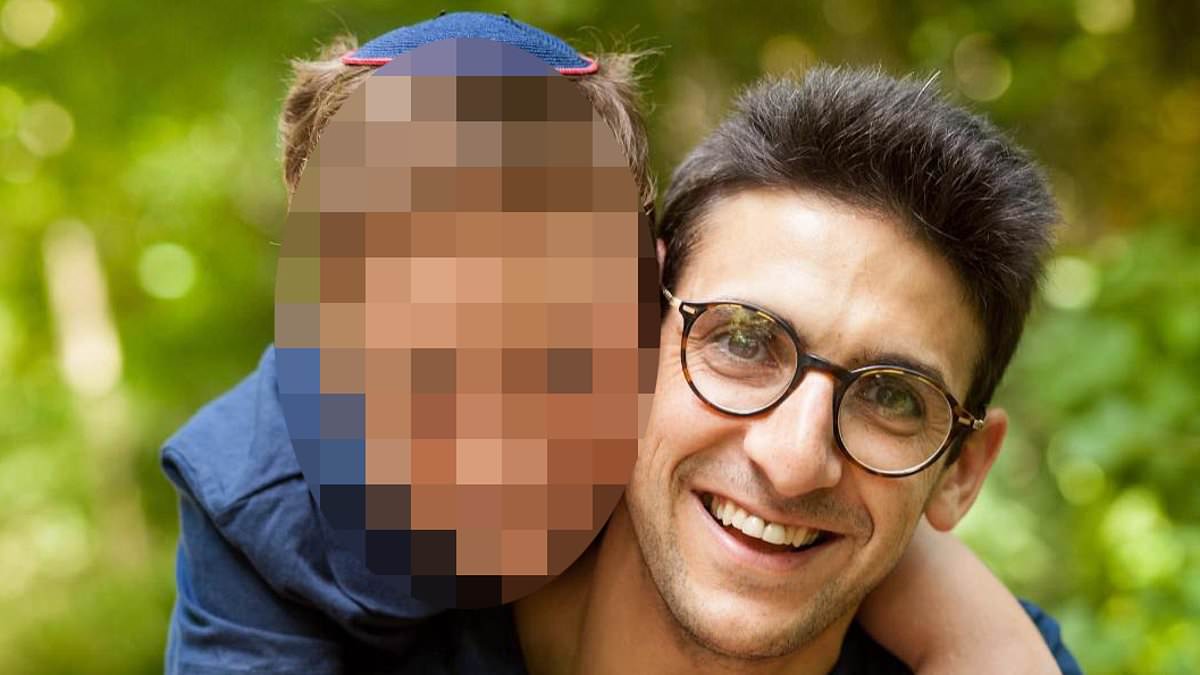
A man who survived a terror attack on a synagogue said 'things don't feel safer' for British Jews 12 months on – as he revealed his teenage son had received death threats following the atrocity.Yoni Finlay, 40, was accidentally shot by a police bullet as he barricaded the doors of Heaton Park Hebrew Synagogue, in Manchester, from a knifeman on Yom Kippur, the holiest day in the Jewish calendar, last October.Speaking ahead of a memorial service on Monday to mark almost a year since the attack, Mr Finlay said the Jewish community was living with 'more security than we've ever had'.He also revealed his 16-year-old son, Uriel, a college student, had faced death threats.'My initial thoughts were at the time that a year on maybe things would feel easier, but I don't think they do,' he told BBC Radio 4's Today programme.'I don't think things feel safer, we certainly live behind ever increasing gates, more security than we've ever had.'While 'more' is being done to protect the Jewish community, he said that people were taking steps to hide their identity and 'any event that we attend within the community, the address is never displayed on the poster'.Mr Finlay, who praised his son and three daughters for the way they had coped following the attack, added: 'Even my own son, who's in college at the moment, has faced death threats.' Yoni Finlay, 40, was shot trying to defend the congregation from terrorist Jihad Al-ShamieAdrian Daulby, 53, died after also being mistakenly shot by the same police bullet as he tried to stop Jihad Al-Shamie from entering the synagogue Melvin Cravitz, 66, was murdered in the terror attack on Yom KippurUriel previously described his father as a 'complete hero' for saving 'so many lives' in the aftermath of the atrocity.Two men – Melvin Cravitz, 66, and Adrian Daulby, 53 – were killed and Mr Finlay and two others injured when Syrian-born Jihad Al-Shamie, who was a British citizen, drove into the gates of the synagogue and launched a knife attack, on October 2.Al-Shamie, who was wearing a fake suicide belt, was killed by police gunfire at the scene. He was on bail for an alleged rape when he carried out the attack.Rabbi Daniel Walker, who leads the Heaton Park Hebrew Congregation, also told the BBC that the Jewish community was 'almost in a harder position than we were even immediately after the attack'.He said a rise in antisemitic violence, plus a lack of action to 'deal with core problems', had left members of his congregation – and the UK Jewish community in general – feeling increasingly 'vulnerable'.'Looking back I think we're actually almost in a harder position than we were even immediately after the attack,' Rabbi Walker said.'I think the sense of vulnerability has grown. It hasn't diminished.'According to the results of a Freedom of Information request to 33 police forces in England and Wales, violent hate crimes targeting Jewish people have jumped by nearly two thirds since 2022, while antisemitic criminal damage and arson offences have also almost doubled during the same period.Rabbi Walker said attacks elsewhere, including in Sydney, Australia, where 15 people were killed in a mass shooting for the festival of Chanukah on Bondi Beach, and in London, where ambulances belonging to the Hatzola emergency medical service were set alight and two orthodox Jewish men were stabbed as they left morning prayers, had made his congregation's grief and pain harder. Rabbi Daniel Walker at a vigil outside the Heaton Park Hebrew Congregation Synagogue the day after the October 2 attack Rabbi Walker and King Charles later toured the sea of floral tributes left to victims 'Something has gone seriously wrong in our society,' he added.'I think we're dealing with symptoms. We're extremely grateful for the increased security, but I don't think there's really any evidence of anyone dealing with the core problems.'And on the contrary, in many ways, those may have become worse over the last months.'Referring to the anniversary and memorial, he added: 'I think it will be a time when a lot of our community will be asking ourselves and the rest of society how we're going to make sure this doesn't happen again.'I don't think that's been done yet. I don't think the community feels secure enough yet, for good reason.'Mr Finlay insisted that the fact that there were 'no spare tickets' for the memorial service, scheduled to take place at the synagogue on Monday night, was 'testament' to the amount of support the Jewish community had received in the wake of the tragedy.‘The pain and the trauma we’ve been through doesn’t go away,' he added. 'But someone evil came to our synagogue last year and tried to destroy us and we haven’t let that happen.'Chief Rabbi Ephraim Mirvis, the Mayor of Manchester Bev Craig and Sir Stephen Watson, the chief constable of Greater Manchester Police, were due to attend the memorial, which was being held amid tight security.In July, Sir Stephen apologised after it emerged that phones were twice seized from the attacker months before the car and knife assault but were not examined.Earlier this month, Iraqi national Hekmat Omar Ali Hakim, 49, of Salford, Greater Manchester, was also charged with failing to disclose information regarding terrorist activity in connection with the attack, Counter Terrorism Policing North West said.Mr Cravitz died from multiple knife wounds inflicted by Al-Shamie, while Mr Daulby and Mr Findlay were struck by a single bullet, fired by an armed police officer, as they tried to barricade the door of the synagogue to stop Al-Shamie forcing his way inside.Another survivor, security guard Bernard Agyemang, 44, who suffered multiple fractures, including a broken right leg and collarbone, as well as a suspected brain injury, said his memories of the attack were 'just as vivid' today as 12 months ago.'The events of that day will stay with me forever,' he said.'I still live with the physical injuries and the emotional trauma.'Anniversaries like this are a reminder of everything that was taken from our community. 'But they are also an opportunity to come together, support one another and remember those we lost.'My thoughts are with the families of Melvin and Adrian.'No words can ease the pain of losing loved ones in such terrible circumstances.'Although the first anniversary of the Heaton Park attack isn't until October, the Jewish community will mark it with private prayers on the religious anniversary date of Yom Kippur, which falls next month, rather than by the secular calendar.Rabbi Walker said Monday's additional service was being held because the community also wanted to hold a public memorial before the Jewish High Holy Days to ensure those affected are remembered by wider society.
Son of Manchester synagogue attack survivor who barricaded doors 'receives death threats'
Full Article
Original Source
Read the full article at Dailymail →KhanList aggregates and links to publicly available news content. We do not host full articles from third-party sources. Always verify important information with original sources.