
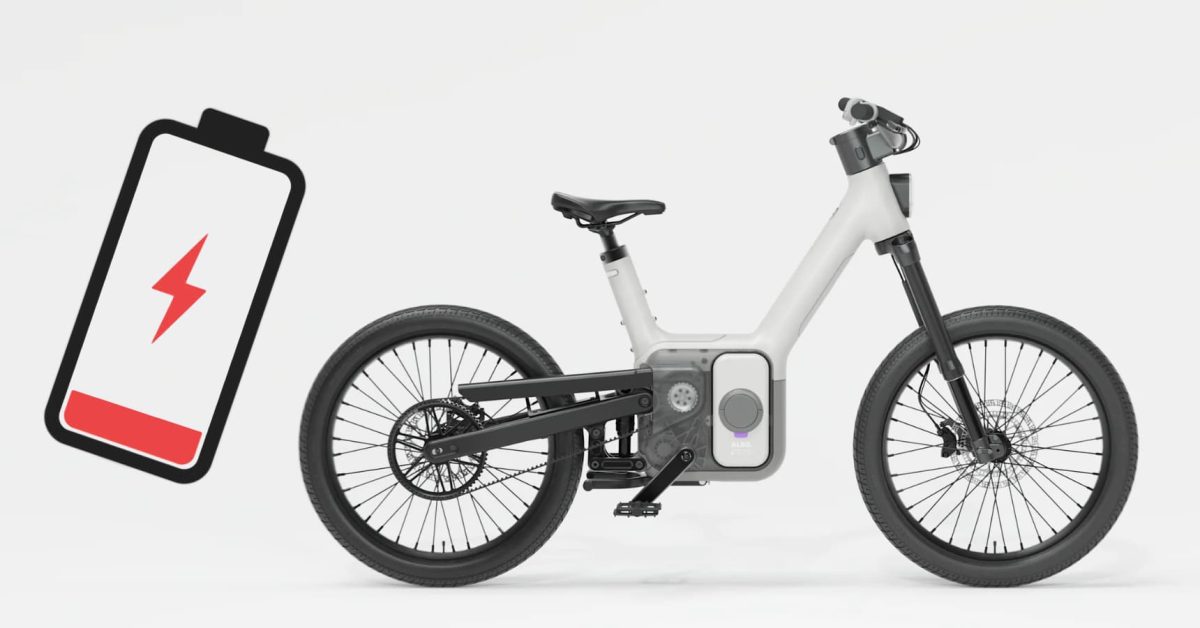
The ALSO TM-B is one of the most technologically interesting new e-bikes to hit the road in years, largely because it does away with one of the most fundamental parts of a bicycle: the mechanical connection between the pedals and rear wheel. With only copper wires connecting the pedals to the rear wheel, the TM-B is one of the most revolutionary new e-bikes in years. But that raises an obvious question. What happens when the battery dies? One early Launch Edition owner, Aaron Draczynski, decided to find out by deliberately running his TM-B down toward empty to see whether ALSO’s drive-by-wire system would leave him stranded. He shared the experience on YouTube, discovering that the answer is surprisingly complicated – and involves something called “Infinite Turtle Mode.” First, the TM-B slowly takes away your power Unlike a conventional e-bike, where the rider’s pedaling mechanically turns the rear wheel through a chain or belt, the ALSO TM-B uses a pedal-by-wire drivetrain. Pedaling generates electricity, while the rear wheel is driven electrically. That arrangement enables all sorts of interesting features, including electronically simulated gearing and the Launch Edition’s massive Level 10 boost mode, which can multiply rider input by up to 10 times. But it also means there’s no traditional drivetrain to fall back on when the battery runs out. Fortunately, the bike doesn’t simply go from full power to dead. The owner began his experiment at 31% charge and quickly watched the bike progressively restrict its maximum assist as the battery drained closer to empty. From 23% to 13%, the maximum boost dropped from Level 8 to Level 5 as it began conserving battery. By 10% charge, the bike was limited to Level 4. At 8%, it dropped to Level 3, followed by Level 2 at 5%. Shortly afterward, only Level 1 remained. Then at 4% battery, conventional electric assistance disappeared entirely. Interestingly, the normal electronic shifting of the bike’s simulated software gears continued to work through most of that process. But when the battery reached 4%, things changed as the bike started exhibiting issues. The first sign of trouble came when the bike began seemingly randomly shifting gears while in manual mode without the rider even touching the shifter. Several times per second, the bike seemed to want to shift itself between gears. Keep in mind that the TM-B doesn’t have actual physical gears (and no chain or derailleur, for that matter), but instead simulates various gears using predefined software to make the rider feel like they are working more or less intensely to pedal the bike. Image credit: Aaron Draczynski via https://www.youtube.com/@papermodelplane Enter ‘Infinite Turtle Mode’ Once the TM-B reached its final low-battery state, an infinity symbol appeared on the display and the bike entered what the owner referred to as “Infinite Turtle Mode.” Instead of using stored battery energy to provide meaningful assistance, the system effectively attempts to pass the rider’s pedaling energy through the electronic drivetrain to keep the rear wheel turning. It’s similar in concept to those old crank-powered flashlights, which, even with a dead storage battery, would still illuminate for as long as the owner cranked them. And on flat ground, the owner reported that the infinite turtle mode apparently worked surprisingly well. Draczynski described the experience as roughly equivalent to pedaling a normal bicycle in fourth gear. There was resistance at the pedals, and he could maintain a reasonable pace without feeling like he was simply spinning his legs uselessly. Image credit: Aaron Draczynski Then he reached a hill and found the limitation of that effectiveness. Even a slight incline transformed the experience, with the bike feeling more like it was permanently stuck in seventh or eighth gear. Getting home through his hilly neighborhood became, in his words, a “truly grueling ordeal.” Manual shifting was also disabled in this mode, meaning there was no way to electronically select an easier virtual gear for climbing, since again, there aren’t any physical gears in the bike. Everything in the pedaling experience is software-simulated. That’s an important limitation for a bike relying entirely on a drive-by-wire drivetrain. The infinite turtle mode might keep you moving with significant effort on level terrain, but it doesn’t turn a dead TM-B into a conventional bicycle, unless that conventional bicycle is being ridden through beach sand. The low-power state apparently shuts down some other features as well. The owner could no longer lock or unlock the TM-B through ALSO’s smartphone app, though he did report the bike’s touchscreen controls continued working, and he guessed that the bike had shut down connectivity to conserve power for its key systems to operate. Image credit: Aaron Draczynski There’s another battery problem to watch Perhaps more concerning than the low-battery riding experience was what happened when this particular TM-B was simply sitting in the owner’s garage. Describing another scenario he encountered, Draczynski says he left the bike sitting unplugged in his garage at around 70% charge. The following evening, it had fallen to 40%, and a day later it was down to 18%. When he returned the next morning, the TM-B displayed a “Bike issue detected” message followed by “Install battery to ride.” There was just one problem: the battery was already installed. Plugging in the charger didn’t initially help because the bike apparently couldn’t detect its own battery, and thus charging didn’t begin. Worse, the battery refused to eject using the normal ejection process, leaving the owner unable to remove it and charge it off of the bike. Image credit: Aaron Draczynski Ultimately, Draczynski used the physical reset button underneath the frame, which brought the system back to life. The bike recognized the battery again and began charging normally. That degree of overnight battery drain obviously isn’t something we’d expect from a normal e-bike, so hopefully this was either an isolated software issue or something ALSO can address with an update. For his part, Draczynski suspects that the bike might be draining its battery so heavily at rest due to the lack of a cell signal in his garage. “I was quite surprised at the drop from day to day,” he explained on Reddit. “If I had to wager a guess, the bike might be searching for a cellular signal, but there’s no reception in my garage so it’s just draining the battery.” But the experiment offers an interesting first real-world look at one of the biggest questions surrounding ALSO’s unusual drivetrain. A normal e-bike with a dead battery becomes a heavy bicycle. The TM-B instead becomes something much stranger: an electricity-generating exercise machine that uses your legs to generate current, electronically sends that current through the bike, and then uses it to turn the rear wheel via the rear hub motor. And based on this testing, it does in fact work. Just try not to be at the bottom of a hill when you find out for yourself. FTC: We use income earning auto affiliate links. More.
Someone ran Rivian’s pedal-by-wire e-bike out of battery and things got weird
Full Article
Original Source
Read the full article at Electrek →KhanList aggregates and links to publicly available news content. We do not host full articles from third-party sources. Always verify important information with original sources.