
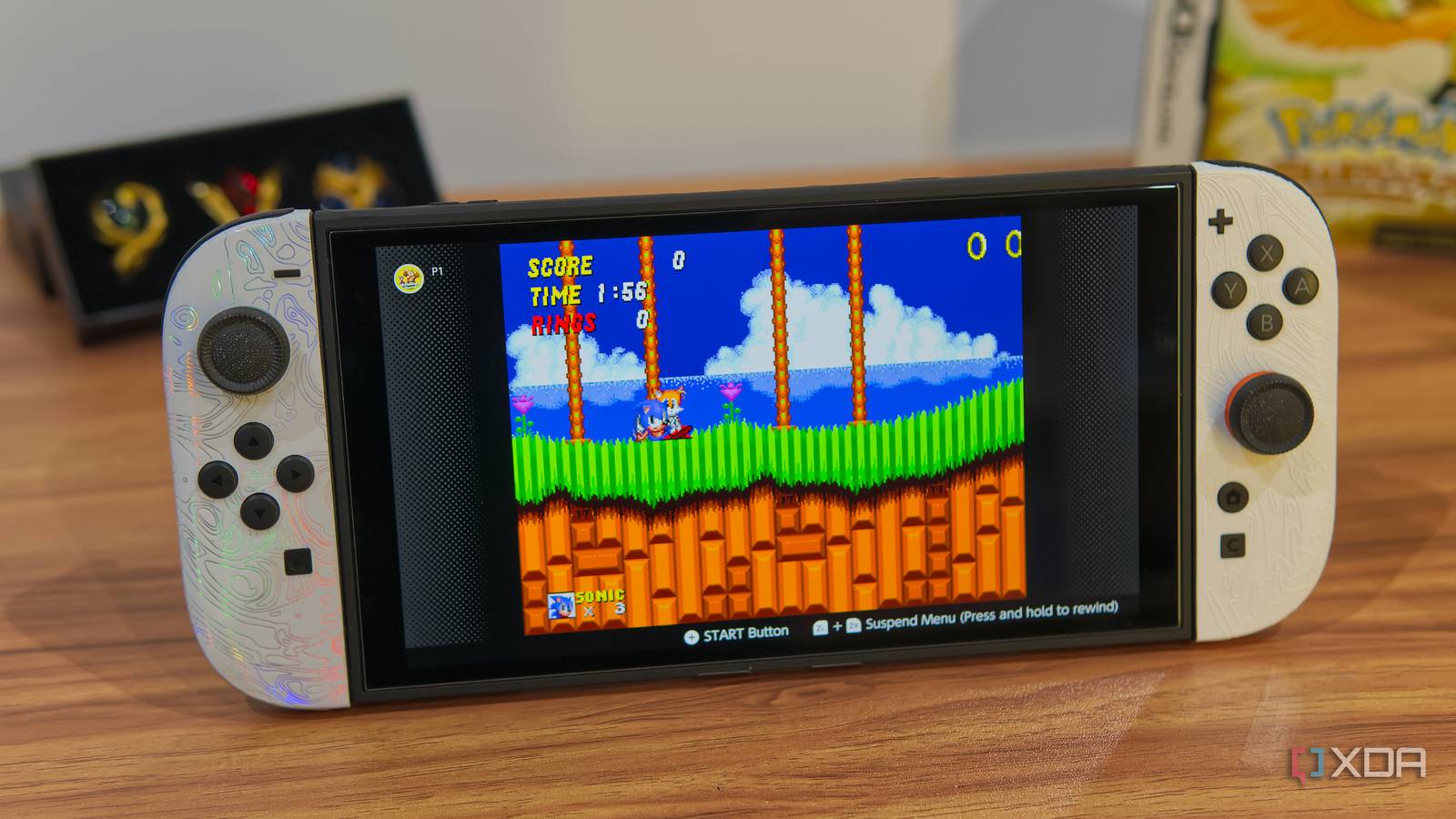
Published Nov 7, 2026, 11:30 AM EST João has been covering the tech world for over 7 years, with a heavy focus on laptops and the Windows ecosystem. I also love all things tech and videogames, especially Nintendo, which he's always happy to talk about. Prior to joining XDA in 2021, he worked at Neowin: https://www.neowin.net/news/poster/jo%C3%A3o-carrasqueira/ Do you know that feeling when you remember a game from your childhood looking absolutely amazing, but then you go back to it today, and it looks far uglier than you remember? It happens to everyone after a certain age, but you may not realize it's not just the graphics —old games can also feel slower than you remember. And the thing is, it's not always just because the game is old. Some of these games can feel slower because of regional variants, specifically the PAL versions of each title. That means you may need to find the right ROM for the best experience. Electricity in the US is different from Europe 50Hz or 60Hz? These slowdowns in older games date back to when electrical power grids were first being implemented around the world. By the time standards were firmly set, the United States had settled on 60Hz current at 110V-120V, while Europe opted for 50Hz current at 220V-240V. This had a real impact on early TVs, because the frequency of the electrical current also changed how often the panels could refresh. This carried well into the early generations of video games, which meant that games and consoles also had to adapt to either the 50Hz or 60Hz standard across regions. So, while games in the United States could run at up to 60 frames per second, in PAL regions such as Europe, they were capped at 50fps. While power-line frequency hasn't become unified, modern TVs can usually switch between 60Hz and 50Hz anywhere in the world, and even in Europe, they can match the source's refresh rate. 50Hz is only used in specific situations that still require it, but modern consoles and PCs output 60Hz now, and the difference has stopped mattering in most cases. Some developers didn't optimize properly Europe held games back The difference in refresh rates alone wouldn't be the biggest problem. As long as games were optimized to run at 50Hz, the experience wouldn't necessarily be hurt. But because adapting game releases to every region required additional work, what ended up happening is that many developers simply slowed down the game from the original 60Hz version. In an ideal scenario, games would be adapted so that the same content would be displayed in the same amount of time, just with fewer frames per second. This would be slightly less smooth, but it would mostly preserve the feel of the game. What many developers did, however, was take the original game at 60Hz and slow it down so that every frame was still displayed, just one-sixth slower. Putting games from this era side by side with their PAL region variants (as seen in this YouTube video, for example) shows how quickly the European copy falls behind in terms of time progression. This gets even more egregious if the games didn't target 60fps in the first place, as the frame rate would always be one sixth lower. One of the most notable examples is The Legend of Zelda: Ocarina of Time, which targeted 20 frames per second in North America. This is already a low frame rate, but in Europe, the game actually ran at around 17fps. And in some cases, developers didn't even adjust the audio when slowing down the game. The soundtrack for the original Sonic the Hedgehog on the Sega Genesis (or Sega Mega Drive, in Europe) is actually slower, too. It was a mess. Some titles did try to properly adjust, though, especially later on. To take Sonic as an example again, Sonic Adventure on the Dreamcast actually let you choose between 50Hz and 60Hz modes before playing, and the 50Hz mode was properly optimized. In fact, a lot of Sega's games on the Dreamcast featured a similar setting. You have to use the right ROMs Pay attention to region indicators These days, it typically doesn't matter whether you're playing a copy of a game from North America or Europe, as TV panels have standardized at 60Hz and can display at that refresh rate regardless of the electric-current frequency. However, if you're playing those old games, they're still available in versions for both PAL regions and NTSC regions such as the United States, so you have to find the right one. Official sources, like Nintendo's own emulators in the Nintendo Classics lineup, usually offer NTSC releases anyway, though some games in Europe are available in both versions. This is because while the NTSC version is faster, it usually includes only English as a game language, whereas PAL ROMs tend to include additional languages for different European markets. Otherwise, many references to older games will typically carry a (U) for American versions and (E) for European versions for this reason. For example, Ship of Harkinian, the clean-room decompilation of the original Ocarina of Time, required users to dump a European copy of the game for asset extraction when it first released (though this has since changed). Gaming is easier now Modern games have largely eliminated these problems, so you don't have to worry about regional differences when buying a new game. But for those who enjoy retro gaming, playing the wrong version of an old title can taint your memories at first, so it's worth paying attention to ensure you get the best experience possible.
Some old games feel slower than you remember, and the European version is to blame
Full Article
Original Source
Read the full article at Xda-developers →KhanList aggregates and links to publicly available news content. We do not host full articles from third-party sources. Always verify important information with original sources.