
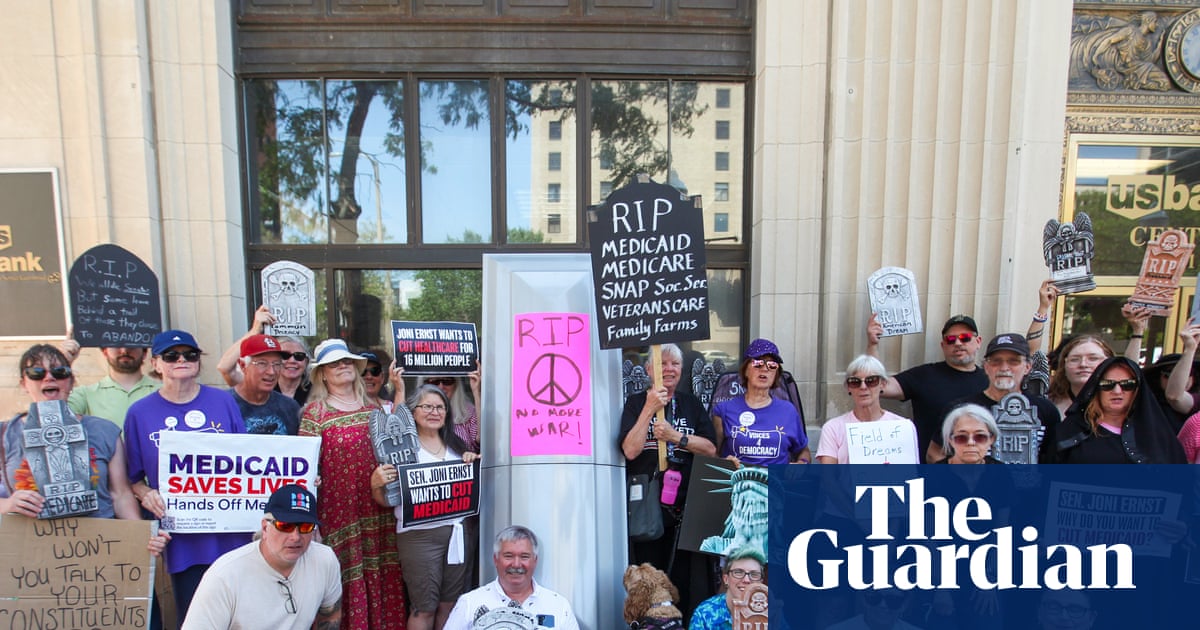
Some conservative states that have rejected hardship exemptions for the new Medicaid requirements may be choosing not to due to political reasons, experts say.New federal work requirements for Medicaid, slated to come into effect on 1 January, mean that adults enrolled through the Affordable Care Act (ACA) Medicaid expansion will have to work, attend school, volunteer, or take part in another qualifying activity at least 80 hours a month to maintain their coverage.The bill also includes federal exemptions designed to help low-income people keep their Medicaid coverage when they are hospitalized, have to travel for medical care, or if they live in areas affected by disasters or high unemployment.Most recently, New York City has adopted the high-unemployment exemption for the Bronx, where about 200,000 residents would otherwise have been subject to the new requirements.However, some states like Missouri and Iowa are choosing not to take up this exemption for its residents, per new research by the healthcare policy nonprofit KFF, despite having counties that would qualify for this exemption.The Guardian has contacted both the Missouri and Iowa state departments for comment.Experts have noted to the Guardian why this could be the case – including states not wanting the extra administrative burden and varying political factors.Jennifer Tolbert, deputy director of KFF’s Program on Medicaid and the Uninsured, pointed to ideological opposition.“If [state officials] are advocates of work requirements, they may feel like these work requirements should apply to everyone evenly and whether someone lives in a county with high unemployment or not really shouldn’t be a factor,” Tolbert said.“It could also be an administrative burden, too, if the state were to adopt this hardship exception they have to submit the data on an ongoing basis to CMS and then they have to make sure their system, their eligibility system is able to blanket exempt or exclude people from these work requirements based on where they live and they’re living in a particular county. So that could be a factor as well.”Sarah H Gordon, associate professor at the Boston University School of Public Health, also pointed to politics coming into play behind these states’ decisions.“States that are not taking up the hardship exemption tend to be more politically conservative states that typically align with the idea that health insurance should be tied to employment or other community engagement activities,” Gordon said. “Medicaid is a federal program and there is a lot of variation between states.”She added: “Not taking up that exemption is partly political. We have states that are taking up work requirements early, states that are taking less time to make sure they understand the new requirements. This is just a patchwork of implementation where some states are going above and beyond to try and minimize coverage losses and other states really aren’t and way more people will lose coverage.”Joel Ferber, director of advocacy at Legal Services of Eastern Missouri, said that it was “disappointing” that the state was not currently planing to take up these exemptions that could potentially benefit its residents.“They say that they are not because they don’t want to create additional bureaucratic burdens of its participants, but this doesn’t make sense.“If you polled Medicaid participants and said to them, would you rather lose your healthcare or fill out a hardship form, 100% of them would likely choose to fill out the form. So it just doesn’t make sense,” he continued.Most notably, the introduction of these new requirements will result in millions of Americans losing their healthcare coverage. A clear example of this policy in action is in Arkansas, which introduced Medicaid work requirements in 2018. By the end of that year, more than 18,000 people had lost coverage, yet researchers found no significant increase in employment.Jacob Wallace, associate professor at the Yale School of Public Health and an expert on Medicaid, called the new work requirements “very concerning”.“Historically, they don’t encourage people to work, but they do seem to generate administrative burdens and paperwork that leads to people dropping off the program,” Wallace said. “There’s a very broad concern about the loss of coverage that is likely to happen, and hopefully states are trying to mitigate those losses as best as they can.”He added: “And the more hoops we ask people to jump through to exempt themselves or qualify themselves for work requirements, the more people we lose just because we don’t have the right address, or phone number. We send the paperwork but it’s confusing and we don’t provide enough support for people to do the paperwork.”
Some conservative states aren’t using Medicaid hardship exemption – for political reasons
Full Article
Original Source
Read the full article at Theguardian →KhanList aggregates and links to publicly available news content. We do not host full articles from third-party sources. Always verify important information with original sources.