
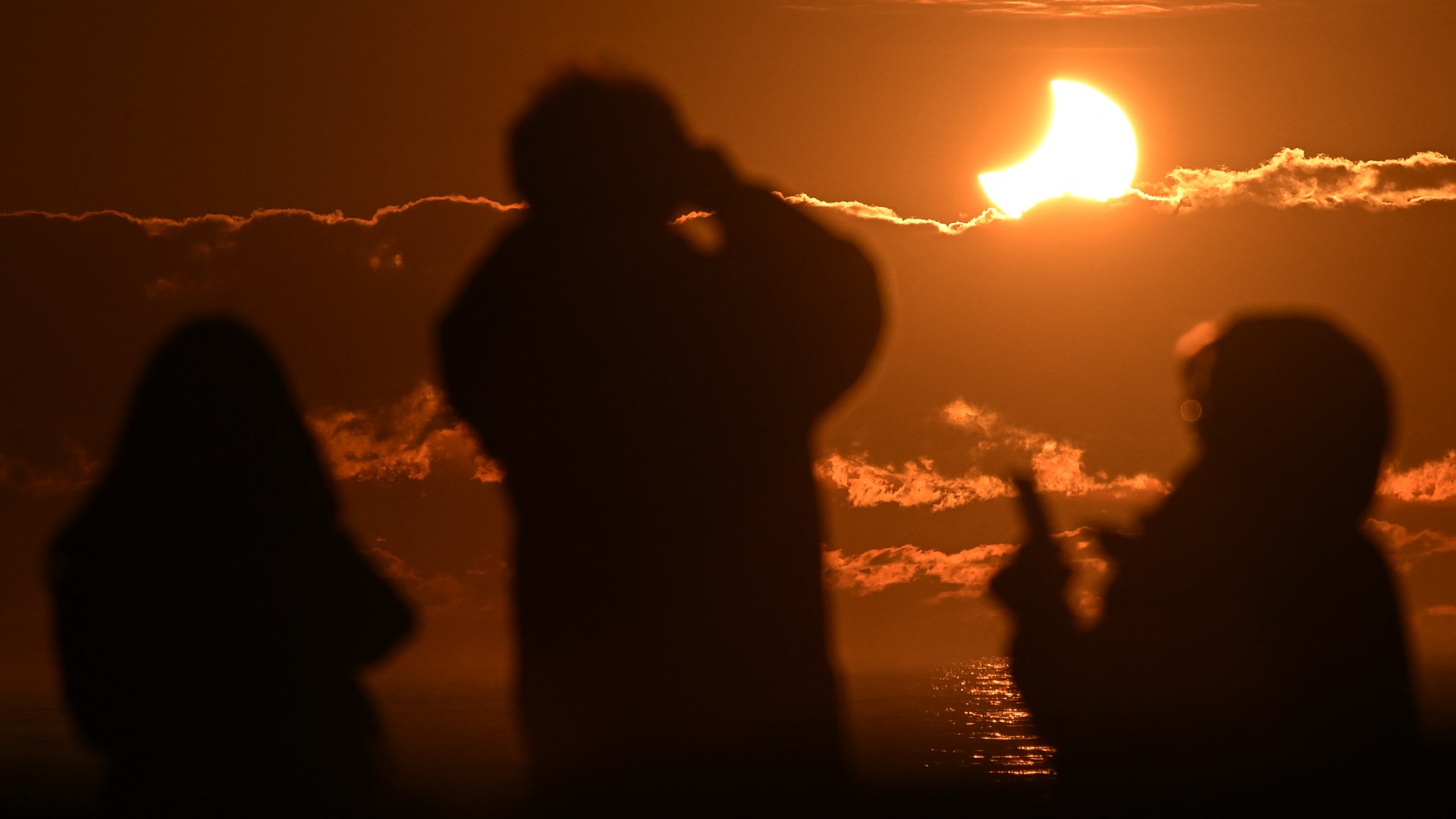
BRITAIN is set to witness its biggest solar eclipse in over a quarter of a century. On Wednesday, August 12, the Moon will pass in front of the Sun, plunging the UK into early-evening twilight. August’s eclipse will be the most significant visible from British shores since the famous total eclipse of 1999 Credit: AFP The further west and south-west you travel in the UK, the bigger and better the eclipse you will get Credit: Getty It will be the most significant eclipse visible from British shores since the famous total eclipse of 1999, with up to 96% of the solar disc covered. But because the event takes place in the early evening – peaking between 7pm and 7.15pm – planning where to stand is crucial. Sign up for The Sun newsletter Thank you! The best places in the UK to witness the eclipse The eclipse’s path of “totality” – where the Sun is 100% blocked – crosses Greenland, Iceland, and Spain. While Britain misses out on complete darkness, western coastal areas will experience the deepest partial eclipse. So, the further west and south-west you travel, the bigger and better the eclipse you will get. The Isles of Scilly off the Cornish coast will see the largest coverage in Britain at 96.5%. Land’s End in Cornwall comes in a close second at 95.8%, followed by Lizard Point at 95.6%. Western Wales and Northern Ireland also get front-row seats. Most read in The Sun Strumble Head in Pembrokeshire will reach around 94% coverage, while Belfast hits over 93%. Eastern and northern regions will see slightly less coverage, though the views will remain spectacular. London and Manchester will experience around 91.4% coverage, and Edinburgh 90.7%. Even in the Shetland Islands, the far north-eastern tip of the UK, the Moon will still cover nearly 88% of the Sun. The best places to spot the eclipse where you live Obviously, heading west might not be a feasible plan. But even if you’re in the eastern reaches of the UK, there are a number of steps you can take to make sure your view of the eclipse is unobscured. Because peak eclipse occurs around 7.10pm, the Sun will be sitting low in the west-northwest sky, roughly 10 to 14 degrees above the horizon. As such, street-level views in built-up areas may easily be blocked by houses, trees, or fences. To secure the best vantage point near you, look for high ground or open spaces facing west-northwest. Head to elevated local spots like your nearest hill ridge; getting above the tree line should give you an uninterrupted view across the landscape. If you live in a town or city, seek out accessible high vantage points like rooftop bars, high residential balconies, multi-storey car parks, or office tower viewing platforms facing west, which can offer clear lines of sight above neighbouring roofs. In more rural locations, west-facing beaches, coastal headlands, lake shores, and wide-open fields can offer flat, wide views all the way to the horizon. How to view the eclipse safely Looking directly at the Sun can cause permanent eye damage, even when 96% of it is covered. Because totality does not occur anywhere in the UK, there is no moment during this event when it is safe to look at the Sun with the naked eye. Safe eclipse glasses must feature the official ISO 12312-2 code printed on the inside of the frame, which guarantees they filter out 99.999% of visible light Credit: AFP Regular sunglasses, no matter how dark or expensive they are, do not offer enough protection. But solar eclipse glasses are completely safe, provided they meet official international safety standards. Safe eclipse glasses must feature the official ISO 12312-2 code printed on the inside of the frame, which guarantees they filter out 99.999% of visible light, along with harmful ultraviolet (UV) and infrared radiation. Only purchase glasses from recognised astronomy suppliers, science centres, or reputable opticians, and avoid unbranded, ultra-cheap pairs on online marketplaces, as counterfeit safety labels are common. The holes of a colander act as pinhole lenses, projecting dozens of crescent-shaped shadows Credit: AFP Check your glasses before use; if the lenses are scratched, creased, punctured, or coming away from the cardboard frame, throw them away. Because the UK only sees a partial eclipse, your eclipse glasses must stay firmly over your eyes for every second you look directly at the Sun. Other safe viewing options include: Kitchen colanders: Hold a standard metal or plastic kitchen colander a few inches above a sheet of white paper with your back to the Sun. The holes act as pinhole lenses, projecting dozens of crescent-shaped shadows onto the paper below. Tree leaves: Nature provides its own projection screen. Stand under a leafy tree and look at the shadows cast on the pavement. The tiny gaps between leaves act as natural pinhole projectors, dotting the ground with mini crescent suns. Pinhole card projectors: Poke a small pinhole in a piece of cardboard. With your back turned to the Sun, let light pass through the hole onto a second piece of card held in front of you to safely watch the Moon move across the Sun. If you plan to use binoculars, a telescope, or a camera, never look through them, even while wearing ordinary eclipse glasses. The concentrated sunlight passed through lenses will melt the filter paper and cause instant eye damage. You must buy purpose-built ISO-certified solar filters designed specifically to fit over the front objective lenses of your optical device. Comment now
Solar Eclipse 2026 – where are the best places in the UK to witness the eclipse?
Full Article
Original Source
Read the full article at Thesun →KhanList aggregates and links to publicly available news content. We do not host full articles from third-party sources. Always verify important information with original sources.