
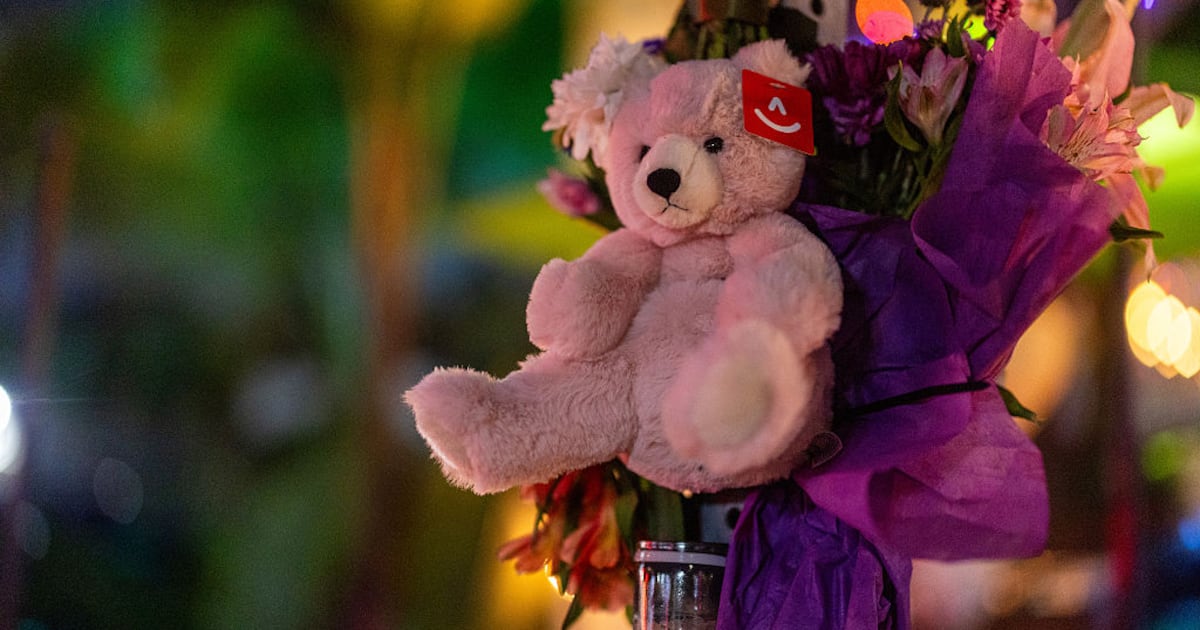
Soft toys, illuminations, large-scale floral tributes and “highly conspicuous materials” will be banned from roadside memorials to crash victims under a new policy covering much of south Dublin.Shrines and monuments to those killed in collisions have for decades been erected at the side of roads across the State by bereaved families of those killed in crashes. Most often, however, they are informally installed without consultation with councils or road authorities.The Department of Transport and Transport Infrastructure Ireland (TII) last year issued regulations to local authorities banning such memorials on motorways and dual carriageways and directing they “should not be permitted” on roads with a speed limit over 60km/h.Local authorities were also directed to develop their own roadside memorial policies that would conform with government road safety strategies. However, the department and TII were not prescriptive as to the type or appearance of memorials that could be permitted in any local authority area.READ MOREDún Laoghaire-Rathdown County Council’s draft roadside memorial policy, to be presented to councillors for approval on Monday, outlines the department and TII regulations, but also includes a list of “prohibited elements” which cannot be used in memorials specifically in the south Dublin area.These include reflective, fluorescent or “highly conspicuous materials”, illumination “of any kind”, floral tributes exceeding an area of 1sqm, “large permanent physical structures”, and “soft toys”.The memorials cannot exceed 60cm in height, should be “modest in scale” and “shall not resemble gravestones or burial plots”. The council said it reserves the right to “remove excess or deteriorated tributes where a safety concern arises or where reasonable complaints are received”.Existing memorials will “generally not be affected by this policy unless they give rise to road safety concerns, obstruct maintenance activities, or require replacement”.[ Damning findings of report on Garda roads policing ‘heartbreaking’ for victims’ families, campaigners sayOpens in new window ]The council said it “recognises and respects the deeply personal and emotional significance of roadside memorials for families and friends wishing to commemorate loved ones as a result of road traffic collisions”.However, it “also has a statutory duty to manage and maintain public roads in a manner that prioritises the safety of all road users”, it said.“This policy seeks to balance compassion for bereaved families with the council’s responsibility to safeguard road users and those who may visit or maintain roadside memorials. The safety of all road users, including pedestrians, cyclists, motorists and council staff is the overriding consideration in the assessment of roadside memorials.”Applications for memorials can be made to the council, and “road safety considerations shall be the determining factor in all decisions” it said. “Unauthorised memorials erected without prior written consent may be removed by the council.”[ Mayo council tells dead man’s family to remove roadside memorialsOpens in new window ]Alternatives to permitted roadside memorials could also be considered by the council, including tree planting and donations to road safety charities, it said. In a submission to the council, the Irish Road Victims Association said it “fully acknowledged that memorials placed in unsafe locations, or which introduce hazards to road users, cannot be supported”. However, it said roadside memorials “can, when appropriately managed, contribute to greater driver awareness and behaviour change. This reflects how accident ‘black spots’ have historically been recognised, where the location itself becomes part of road safety awareness.”
Soft toy ban among new restrictions for roadside crash memorials in south Dublin
Full Article
Original Source
Read the full article at Irishtimes →KhanList aggregates and links to publicly available news content. We do not host full articles from third-party sources. Always verify important information with original sources.