
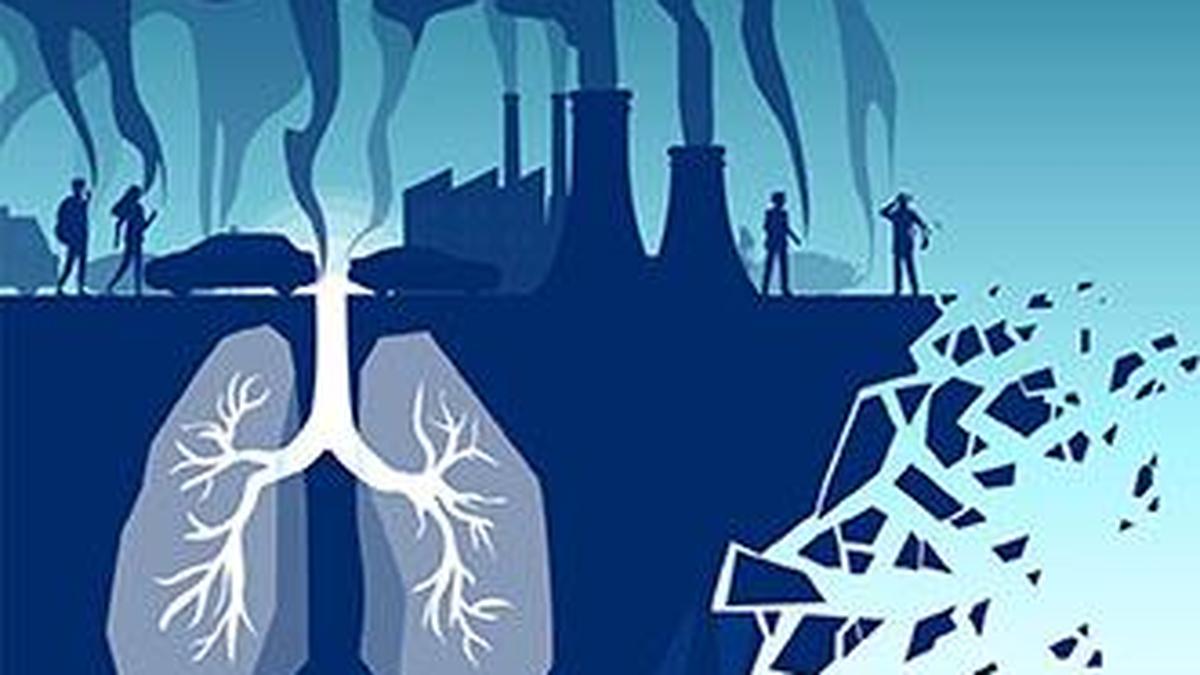
Prolonged exposure to indoor cooking fuel smoke or second-hand smoke carries considerable risk for lung cancer, as does long-term exposure to occupational carcinogens. Image used for representational purposes only | Photo Credit: Getty Images A lung cancer diagnosis has a way of stopping a conversation cold. Families go quiet. Plans get shelved. The assumption, almost universal, is that the outcome is already decided. Often, that assumption is wrong. When the disease is found early, meaningful treatment is possible, curative intent included. The gap between what people believe about lung cancer and what medicine can actually offer has never been wider.Myth 1: A lung cancer diagnosis is always a death sentenceWhere does this belief come from? In India, most patients present in advanced stage, and because of this, the treatment options decrease exponentially. The outcomes families witness reinforce a fatalism that’s hard to shake. Late detection is the problem, not an inherent quality of the disease itself. Lung cancer found at an early, localised stage is genuinely treatable. Surgery with curative intent is possible. The question that matters most is how soon the disease gets diagnosed.Myth 2: Only smokers get lung cancerSmoking is the most well-known risk factor, and for good reason. But the picture is more complicated. Prolonged exposure to indoor cooking fuel smoke or second-hand smoke carries considerable risk, as does long-term exposure to occupational carcinogens. Registry data from India has shown a steady rise in cases among women and adults who have never smoked. Adenocarcinoma, now the most commonly diagnosed lung cancer subtype in India, occurs frequently in this group. It also tends to carry specific genetic mutations that respond well to targeted treatment. Any respiratory symptom that doesn’t resolve deserves attention, irrespective of smoking history.Myth 3: The warning signs will always be clearThis is the myth that probably causes the most harm. Lung cancer is often silent early on, and when symptoms surface, they look like something else entirely. A cough that has outstayed its welcome. Recurring chest infections. Unexplained weight loss, or breathlessness that keeps getting worse. Any of these, persisting beyond three weeks, should prompt clinical evaluation. Some features call for more urgency: coughing up blood, a voice that turns persistently hoarse, chest pain that doesn’t shift. Attributing such signs to the weather or getting older is understandable, but it is also how early lung cancer gets missed.Why early detection changes everythingThe stage at diagnosis is an important factor in how lung cancer plays out. Finding it early and getting it surgically removal with curative intent becomes a real possibility. This is where screening comes into the picture. Low-dose CT scanning picks up small nodules in the lung before a patient feels anything, creating a window for treatment that wouldn’t otherwise exist. Indian health economic research has confirmed this approach as cost-effective for those at highest risk. If you have a long smoking history and are above a certain age, it’s worth asking your doctor about screening. Treatment can transform outcomesThe treatment landscape for lung cancer has shifted considerably. Molecular testing can now identify specific mutations within a tumour. EGFR and ALK alterations are among the most clinically significant, and therapies designed to target them have extended survival in ways that weren’t possible with chemotherapy alone. For patients whose tumours don’t carry targetable mutations, immunotherapy has opened up another avenue. These are part of standard oncology care in India today. A patient diagnosed now is working with a very different set of possibilities from someone diagnosed a decade ago.Who should act and whenAnyone with a long smoking history, a close family member who has had lung cancer, or years of exposure to air pollutants at work or at home has reason to discuss their risk with a doctor. That conversation doesn’t need to wait for symptoms. When symptoms do appear, they shouldn’t be left to resolve on their own; in someone already carrying these risks, investigation is the right call.A diagnosis of lung cancer is not, in itself, what limits a patient’s options. Time is. The treatments available today are genuinely different from what existed a decade ago, and outcomes for many patients reflect that. But none of it matters if the disease is found late. The most important thing anyone can do is take symptoms seriously and act on them early. (Dr. Rajesh Shinde is director – GI (HPB–colorectal) & thoracic surgical oncology Apollo Cancer Centre – Western Region Apollo Hospitals, Navi Mumbai. drrajesh_sh@apollohospitals.com) Published - August 24, 2026 12:57 pm IST
Smoking isn’t the only risk factor: busting myths around lung cancer
Full Article
Original Source
Read the full article at Thehindu →KhanList aggregates and links to publicly available news content. We do not host full articles from third-party sources. Always verify important information with original sources.