
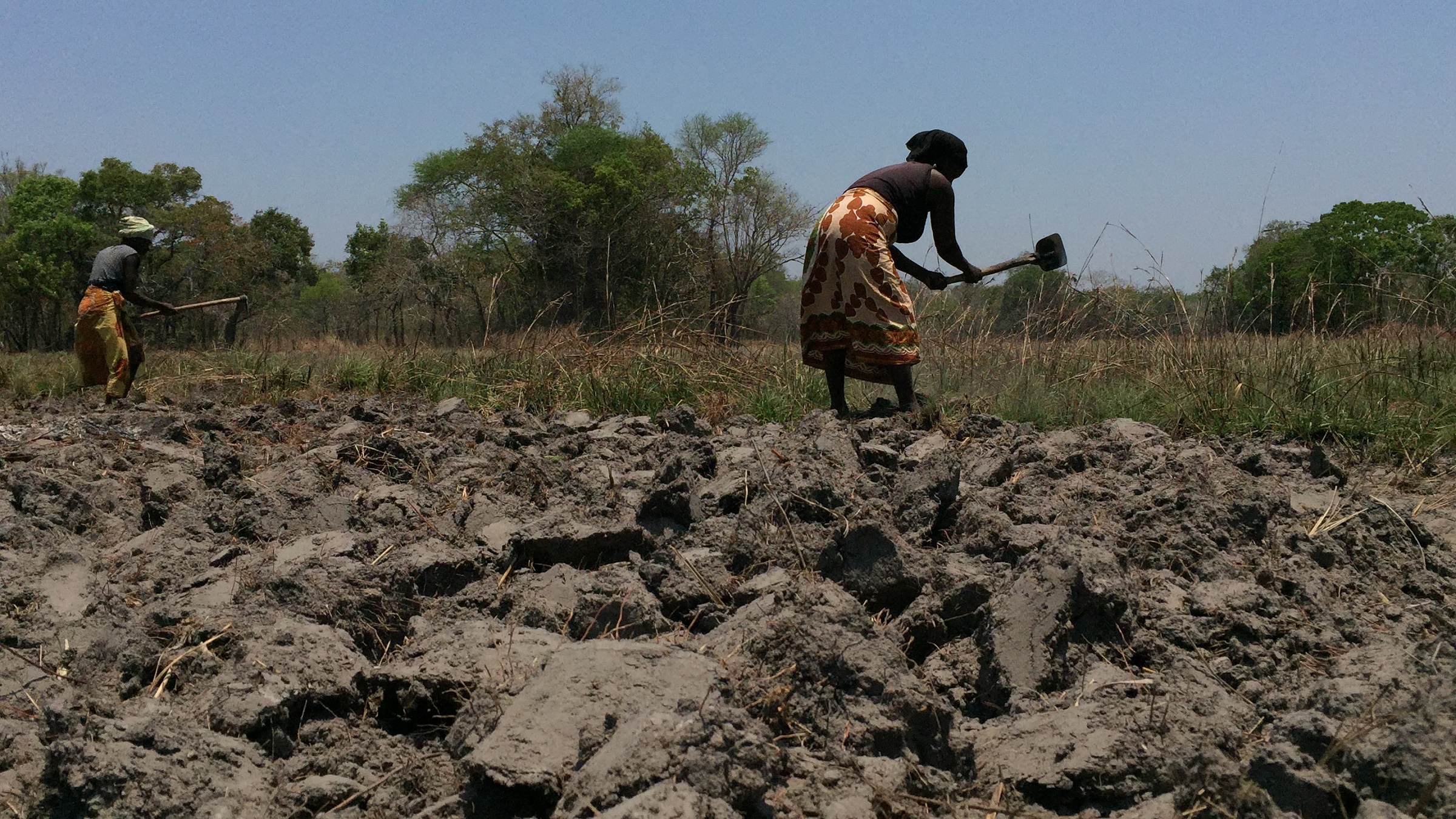
Smallholder farmers produce significant percentages of the world’s food supply, including rice, cassava, cocoa, coffee and much more.This year’s historic El Niño is already adversely impacting smallholders in nations across the globe, with farmers in tropical and subtropical countries particularly hard hit by extreme heat, drought and deluge.As crops fail in coming months, millions of smallholders could be pushed into acute hunger and dire poverty, resulting in an increase in disease and other health problems, even leading to increases in child labor and workers’ rights violations.Experts warn that short-term and long-term smallholder support is urgently needed from governments and agrifood companies. Larger structural changes to food supply chains are also required in the face of escalating climate change. Smallholder farmers across the globe are bracing for, or already feeling, the effects of a historically strong El Niño. This event — forecast to peak in December with lasting impacts deep into 2027 — has brought warnings of shocks to global food prices and food security. The record-breaking 2026-2027 El Niño could drive an additional 49 million people into acute hunger, according to the United Nations, with southern Africa and Central America likely hardest hit. Expectations are that supplies of key staples such as rice and corn and commodities like cocoa, coffee and palm oil will be deeply reduced. Millions of smallholder farmers who grow the food we consume are on the frontline of these impacts, experts say. Palm oil suppliers in Indonesia, for example, are already reporting losses due to a prolonged El Niño-linked drought, while in Sudan long delayed rains are raising risk of widespread famine. In Central America, Guatemalan farmers are seeing sharp reductions in crops meant for home food consumption. The governments of El Salvador, Honduras and Panama have all issued El Niño emergency declarations, as have Bolivia and Peru in South America. “Fairtrade producers that we’re talking to are already seeing impacts,” Amanda Archila, CEO of Fairtrade America, told Mongabay in a video interview. “You’re already seeing clear signs of a dramatic increase in the number of food insecure smallholders.” Key cash crops could be far more deeply impacted over the coming months. The current El Niño is exposing a fundamental weakness in global food systems, according to Sumit Roy, assistant general manager of the palm oil programme at Solidaridad, an international NGO. “Climate risks are concentrated at the farm level, while the resources to manage them remain concentrated further downstream,” Roy told Mongabay in a video Interview. As a result, “smallholders are facing the maximum brunt with limited access to finance, resources or technical support.” “There has been a lot of talk over the last 20 years of risks to the future of cocoa and coffee and bananas and other tropical commodities,” Archila said. “We are actually seeing that be borne out in real time.” This global map shows where and when dryer or wetter conditions have prevailed averaged over past El Niños; however, no two events ever play out in exactly the same way. The current El Niño is already the strongest on record. Image courtesy of the Climate Hazards Center-University of California at Santa Barbara and NOAA. ‘Extremely devastating’ The smallholder harms likely to come from the current record El Niño can be roughly extrapolated from past events. The most recent El Niño of 2023-2024, for example, brought a prolonged drought to southern Africa, which hammered maize production — a crucial crop linked to food security across the region. Smallholder farms there are predominantly rain fed; when those rains didn’t come, it triggered mass crop failures. In Zambia, the 2023-2024 drought led to harvest reductions of around 1.76 million metric tons, with more than one million farming households impacted. “Zambia recorded over 40% crop failure,” said Agrey Wapamesa, a consultant at the International Water Management Institute, a research organization. “The impacts of El Niño have been extremely devastating in the region,” agreed Hambulo Ngoma, a researcher with the International Maize and Wheat Improvement Center. He believes that this year’s El Niño — dubbed a “super” and “Godzilla event” by the world’s media — could be worse than those in the past. 2027 projections already point to a large scale regional drought across southern Africa. “I wish the preparation [for the current El Niño] actually began long ago, because when we speak of the 2023-2024 El Niño, it was a disaster,” for Zambia and other southern African countries, Wapamesa told Mongabay in a phone interview. A threat to Latin America’s smallholders also looms. Carlos Isaza, head of Solidaridad’s coffee program in Colombia, recalls the effects of the 1997-1998 El Niño, which brought crop yield declines of up to 60%. “That year was terrible economically and socially here in Colombia’s coffee region,” Isaza told Mongabay in a video interview. The 2015-2016 El Niño also reduced Colombia’s coffee harvests by around 50%, he noted. His team’s surveys suggest losses of around 20-30% so far this year, with more bad news expected in the coming months. The mechanisms for crop failures are clear: Increased temperatures and drought due to escalating climate change, and intensified every few years by naturally occurring El Niños, harm both the coffee plants and the beans, reducing their quality, while also driving a proliferation of pests. “Farmers suffer a lot,” Isaza said. Maize crop in Zambia. Maize is a staple food in southern Africa, but is hit hard by drought. During the 2023-2024 El Niño, Zambia’s production fell by 1.76 million metric tons and impacted smallholder farmers. Image by CIMMYT via Flickr (CC BY-NC-SA 2.0). Impacts on health As in past years, the 2026-2027 El Niño will bring heightened health risks for smallholder farmers and their families, threats that include prolonged working hours in dangerous extreme heat; limited access to clean, drinkable water; as well as increased infectious disease. Byomkesh Talukdar, assistant professor in the Department of Global Health at Florida International University in the U.S., warns that, based on past events, the El Niño now unfolding will not only bring food insecurity, but also exposure to disease, including malaria and dengue. “It is going to have impacts overall on farmers’ health, especially those who are living in tropical countries, and also to some extent subtropical countries,” Talukdar said. “Governments should take [this year’s event] seriously.” Talukdar said. “If governments don’t take any immediate action, [this El Niño] could trigger a cascading effect of consecutive crop failures. And that can impact farmers’ health, and also farmers’ communities, and also children’s health.” Vulnerable groups — including women-led households, people with disabilities and poorer farm communities — are among the hardest hit, Wapamesa said. “When you look at their productive assets, their finances, and social protection services, they were highly affected,” Wapamesa said, referencing the 2023-2024 event in Zambia. Climate change and the extreme weather it brings lead to economic deprivation, which in turn can trigger increased child labor and workers’ rights violations. Research by UNICEF, for example, found that in 2024 El Niño’s heat waves and flooding led to school closures, leaving children vulnerable to child labor. “Whether it’s palm oil, whether it’s other crops, when there is a climatic event happening, when there are extreme events happening, it exposes … social challenges and issues,” Roy said. A farmer waters crops in Indonesia amid haze caused by peat fires. Wildfires are rapidly increasing due to climate change, and typically peak in El Niño years. Breathing the smoke from such fires poses serious health hazards. Image by Aulia Erlangga/CIFOR via Flickr (CC BY-NC-ND 2.0). Need for proactive government and agribusiness responses Reducing El Niño harm requires both short-term preparations to support smallholders and long-term adaptation in the face of escalating climate change, experts say. Ngoma highlights the need to improve El Niño early-warning systems that prepare farmers for looming drought or other extremes. He was part of a trial project that reached more than one million farmers across southern Africa with a digital campaign to disseminate information ahead of the 2023-2024 event. That, he said, helped farmers plan which crops to plant based on expected meteorological conditions. Another key preparation: Nations and transnational companies can support smallholders via crop diversification efforts, both by helping them plant alternative drought-resistant crops and by exploring and incentivizing alternative revenue streams. Ngoma said that this sort of aid should come alongside early warnings. His research on El Niño crop impacts in Zambia found maize, legumes and oil seeds like soy were the most drought effected there and required aid. For some commodity crops — like coffee and cacao — employing longer-range agroforestry techniques, such as the planting of hardy shade trees, can be beneficial, experts said. Solidaridad’s Isaza noted that shade trees substantially reduce yield losses on coffee farms, based on research in Colombia. In the short term, mulch application can help maintain soil moisture, while utilization of beneficial bacteria can protect bananas. Coffee agroforestry in Nicaragua. While such techniques can help, smallholder farmers there say rainfall prospects are bleak due to the intensifying El Niño. Adding to the farmers’ problems are rising synthetic fertilizer prices — a global supply chain crisis brought on by the U.S.-Israel war with Iran. Image courtesy of Solidaridad. “Investing in climate-proofing … [for] small horticultural systems in particular is very important,” Ngoma said. This includes investments in irrigation systems and rainwater harvesting. Both Ngoma and Wapamesa urged that governments and food commodities companies shift from a reactive response to an anticipatory response as climate change escalates and El Niños intensify. “I think a lot more needs to be done beyond just the usual talk of ‘there’s an El Niño coming and you have to prepare,’” Ngoma said. “A lot more support” is needed. That support must not only come during El Niño years, but over the long-term to help smallholders prepare for an evolving climate, experts said. Farmers often understand “how to improve soil health, manage their crops, [and] adapt to changing weather patterns, but they don’t have the resources to do it,” Archila said. For the time being, “the cost of managing these climate crises are completely borne by smallholder producers, with … that risk [largely invisible to] big consumer goods companies,” she added. Roy pointed to a recent report that called on agrifood companies to invest in solutions like regenerative and climate-smart farming to help smallholders adapt to climate change, an effort that would also cut carbon emissions across commodity supply chains. “We are asking companies to invest in reducing their Scope Three emissions, [those that occur in a company’s value chain], and invest in the smallholder farmers, so that mitigation measures reach them,” Roy said. “Climate finance … doesn’t reach the smallholder at all. Both the mitigation finance and adaptation finance [don’t] reach them.” Experts offer a pragmatic rationale for the urgency expressed in their pleas to act in support of smallholders: In a recent opinion piece in The New York Times, author and journalist David Wallace-Wells warned that our current “monster El Niño will give us … a brief preview of a hotter and more chaotic world,” one likely to permanently arrive by 2035. The current event, he wrote, “will also offer a test of how well prepared and adapted [we are for] that future.” Farmers being trained in biochar production to help soils retain moisture. A raft of effective measures can be employed to make smallholder farms more climate and drought resilient, experts say, but need significant government and agribusiness financial and logistical support to implement them. Image courtesy of Solidaridad. Banner image: Farmers tend cropland in Mozambique. The 2015-2016 El Niño brought prolonged drought to southern Africa, reducing crop yields and impacting food security for millions of people. As climate change-induced drought intensifies, repeated annual crop losses lead to long-term economic hardships, impacting mental health including depression and anxiety, a set of conditions that has led to higher suicide rates among farmers in southern Africa. Image by Leopoldino Jeronimo/Kepa via Flickr (CC BY-NC 2.0). Citation: Wapamesa, A., Sichalwe, D., & Ukwiremye, C. (2026). From the 2023/2024 drought disaster to 2026/2027 El Nino preparedness: Lessons for strengthening smallholder farmer resilience in Zambia. doi:10.2139/ssrn.7022138 FEEDBACK: Use this form to send a message to the author of this post. If you want to post a public comment, you can do that at the bottom of the page. Cite this articleSean Mowbray (2026). Smallholder farmers struggle on El Niño frontline; will the world help?. Mongabay Conservation news. DOI: https://doi.org/10.66709/news-335745 Credits Topics
Smallholder farmers struggle on El Niño frontline; will the world help?
Full Article
Original Source
Read the full article at News →KhanList aggregates and links to publicly available news content. We do not host full articles from third-party sources. Always verify important information with original sources.