
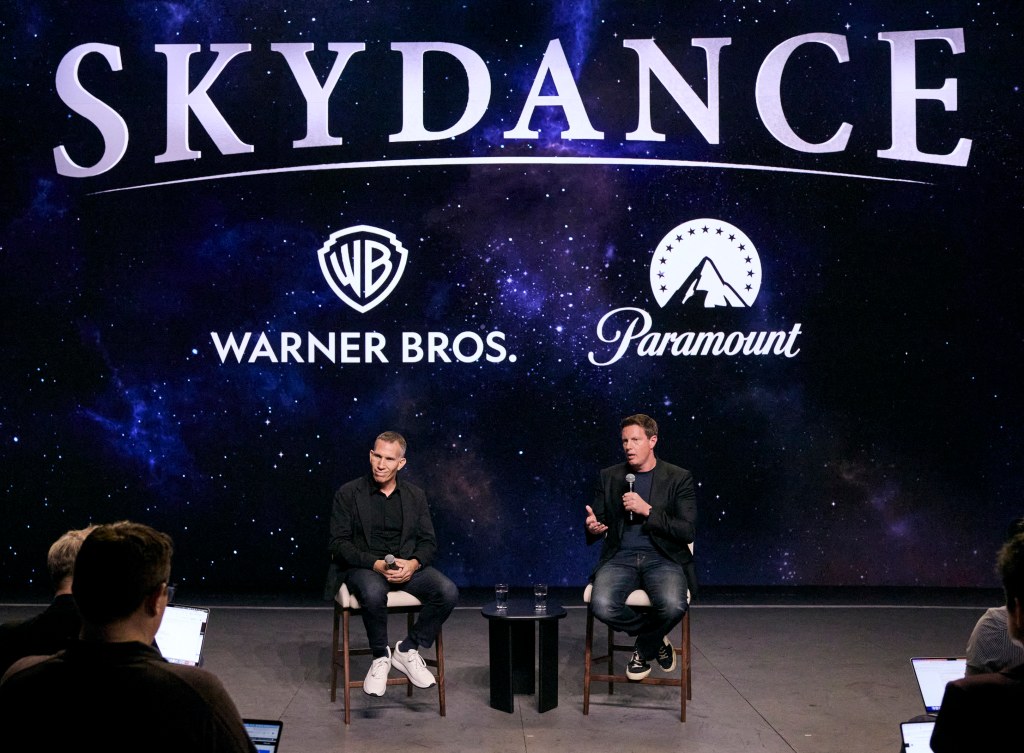
Skydance’s highly anticipated Q3 earnings hit today, its first quarterly report since clinching the $81-billion acquisition of Warner Bros. Discovery on Oct. 6. The numbers show $73 billion in net income on revenue of about $7 billion for Paramount Skydance alone. Since the merger didn’t close until the current fourth quarter, most numbers won’t be consolidated with WBD until early next year. Paramount+ revenue grew 21%, its fastest quarterly growth this year, with ARPU up approximately 14%. Studios revenue grew 23% and TV Media achieved a 34% adjusted EBITDA margin. The numbers are and a call set for 5 pm ET will be Wall Street’s first look at the powerhouse that controls two major Hollywood studios, streaming platforms and a giant linear TV portfolio. Skydance’s report did outline key targets and highlights of newly merged company: at least $6 billion of synergies within three years; reducing its net leverage ratio to 3.0x by the end of 2029 and reaching investment-grade credit metrics; and launching a bundled offering of HBO Max and Paramount+ in early 2027. At Paramount Skydance, DTC revenue growth improved 11% year-over-year to $2.5 billion, led by qccelerating Paramount+ revenue growth of 21%. DTC profit was $225 million. Watch on Deadline Studios revenue increased 23% to $1.5 billion, reflecting a strong quarter for secondary market licensing and content produced for third parties. Profit $129 million. TV Media revenue declined 7% to $3 billion. Advertising revenue fell 8% year-over-year, affiliate revenue was down 5% year-over-year, consistent with continued pay TV subscriber erosion. Profit in the sector was $1 billion. The company, led by David Ellison and co-CEO Ynon Kreiz, has said it expects to generate a combined $70 billion in annual revenue. It also launches with well over $80 billion in debt. Some Wall Streeters fear the leverage may be crippling. Others are more sanguine but note little margin for error. “They have not done a lot to lay out the strategy. How do you integrate WBD? What does this company look like?” asked Rich Greenfield of Lightshed Parters on CNBC. Questions posed by him and others over the past month include: How do you protect the linear networks? Are executives ready to do battle as they head into challenging negotiations with distributors? How will they bring the debt down? Are they willing to sell assets? Can they creatively reduce leverage? What’s coming in terms of transaction related write-downs, restructuring and deal costs? What about NFL risk. The opt-out is 2029, but there’s technically a 2027 change in control provision the League could trigger. Leverage and integration risks are high, said TD Cowen analyst Doug Creutz in a recent note. “The strategic case for owning Skydance here is scale in content, and on that measure, the combination has no peer,” says a more upbeat Daniel Turnos of StoneX. “We also do not believe that they will default either, which is the biggest fear today.” Skydance has committed to releasing 30 films annually, increasing to 32 films, over a five-year settlement period with State Attorneys General who had sued to block the merger. It is targeting $30 billion in combined content spending, has the most diverse film and television library of any studio, the largest theatrical output in the industry, and more than 200 million streaming subscribers, he noted. Since the deal close Oct. 6, the company has been setting its management team and announced major reshuffling of the decks with high profile appointments, new teams across the sprawling media empire, and surprising ousters – including of DC Studios’ James Gunn and Peter Safran announced earlier today. In a letter to shareholders today that included the numbers, Ellison and Kreiz promised that, “Growing our business and paying down debt are our top priorities, and we strongly believe we can achieve both simultaneously. We expect to reduce net leverage to 3.0x by the end of 2029, reaching investment grade credit metrics within approximately three years of closing. To get there, we expect to ramp our annual free cash flow to more than $10 billion in 2030. One-time cash costs to achieve the synergies are expected to be roughly $1.5 to $2 billion in 2027 and roughly $4 billion throughout our transformation, 60% to 70% of which will impact 2027 and 2028, and have been contemplated in our financial and leverage outlook.” “Until we reach our leverage target, we will use excess cash, beyond our reinvestment into the business and our current dividend, to repay debt,” they said, adding, “We came together to build something bigger, bolder and better, with the stories, the technology and the scale to win. We’ll move quickly over the coming months and share more with investors, partners and consumers at an Investor Day in the first half of 2027. There is still a lot to work through, but our vision is clear, and we are steadfast in our operational goals and financial commitments. We are confident in our plan, excited for what’s ahead and just getting started.”
Skydance Floats First Earnings Report As Hollywood Mega-Studio: Sizing Up The New Empire
Full Article
Original Source
Read the full article at Deadline →KhanList aggregates and links to publicly available news content. We do not host full articles from third-party sources. Always verify important information with original sources.