
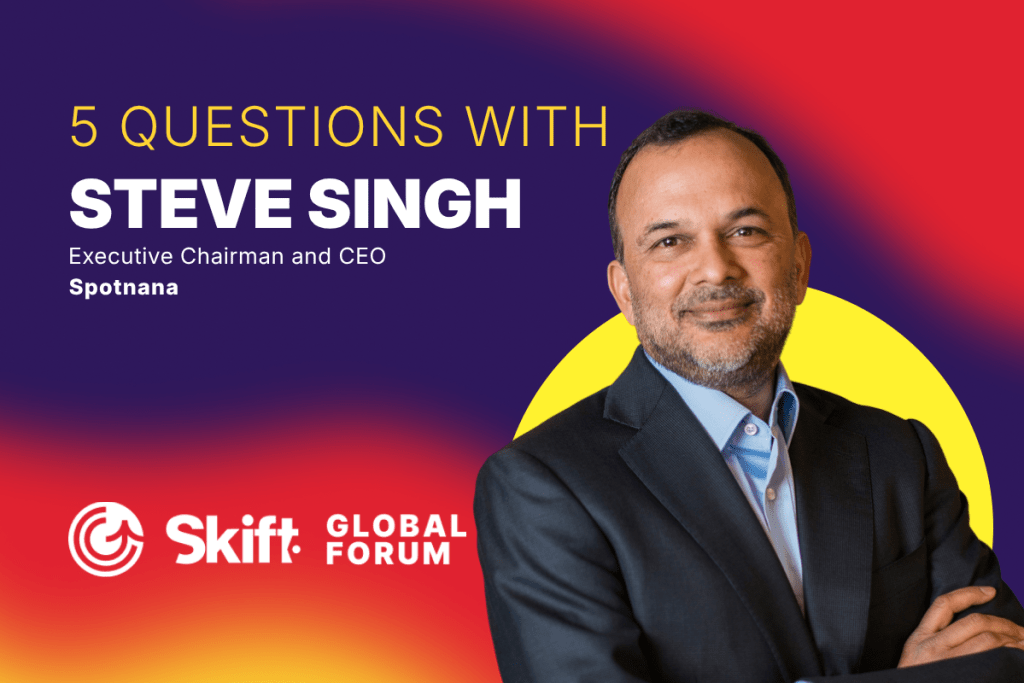
Skift Take The industry pours its attention into search and booking. Steve Singh thinks the money is in what happens after. Spotnana's AI now handles cancellations and refunds, and he believes servicing costs can fall by half. He makes the case at Skift Global Forum. Ask most travel companies where the value is and they’ll point to discovery and the sale. Steve Singh points past it, to servicing, the unglamorous work that starts once the trip is booked. The Spotnana executive chairman and CEO, who joins Skift Global Forum on September 22–24, 2026, argues that AI is quietly rebuilding the economics of that after-purchase work. Ahead of his session in New York City, Singh lays out why he thinks servicing, not search, is where trust and margin are won. The Half Nobody Talks About Skift: What is one area that the travel industry doesn’t discuss or pay attention to enough? Singh: Servicing. We talk endlessly about search, distribution, and booking. What really matters is what happens after the trip is purchased. Spotnana is seeing tremendous savings in labor costs across our customers and partners due to the combination of AI and investments in automating servicing workflows across a wide range of content sources. I believe we can reduce servicing costs by 50% or more while making traveler experiences dramatically better through servicing that is much more personalized and proactive. The Half Nobody Talks About Where servicing is heading Steve Singh’s case: the work after booking is moving from people to AI, and the cost is falling with it Before Routine work sits with human agents Human agents: cancellations, unticketed flights, refunds AI Most of the servicing queue is manual and repetitive With AI agents Routine work shifts to AI Humans: high-value service AI agents: routine servicing, automated Humans move to the interactions where a personal touch matters 50%+ the servicing-cost reduction Singh believes is possible, alongside a more personalized and proactive experience Singh’s argument: the industry obsesses over search, distribution, and booking, but the value now sits in servicing. Automate the routine after-purchase work and the cost falls while the experience improves. Skift: What’s a behavior shift you’re seeing in your own data right now that would surprise people outside your company? Singh: It’s surprising how much of what landed in a travel agent’s queue a few years ago doesn’t need a human agent anymore. Spotnana now has AI agents handling cancelled segments, unticketed flights, and refunds, for example, and we can see how the need for humans to handle routine tasks is decreasing. Human agents can now focus more of their time on higher value services, where a human touch makes all the difference. Skift: How are you thinking about how the traveler/customer relationship has evolved, and what companies need to do to maintain it? Singh: As technology evolves, travelers have higher expectations that they should be able to ask anyone for assistance throughout their journey. This is a key reason we have worked with leading travel providers to build direct connections that synchronize booking changes across systems, so a change made anywhere is reflected everywhere. Anyone can sell a ticket. The hard part is delivering service, and service is where trust is earned or lost. The traveler grades all of us on every interaction. The companies that build the best relationships with customers will be the ones that make all aspects of a traveler’s journey as seamless as possible. Curation and the Conversational Front End Skift: The customer journey keeps getting longer and more fragmented. How has your thinking changed about traveler choice and how your company curates products and offerings? Singh: Travelers put their trust in shopping experiences that offer the best content at the best available prices. This is why we have built direct connections to airlines, hotel chains, and other travel providers. From the very beginning we embraced the reality that the world was moving to a fragmented content landscape, and we designed our travel platform to be designed to make any source of content bookable and serviceable. Curation is coming up more as a design consideration as the travel industry shifts to conversational AI booking experiences where only a small handful of offers are presented to the traveler. Coming back to the theme of trust, our strategy is to solve for the traveler. We want to ensure we present the travel options a traveler would have selected at least 95% of the time if they had reviewed the full list of available options. Skift: As AI starts deciding who gets recommended and who doesn’t, what have you had to do differently to earn a spot in that recommendation? Singh: One of the great benefits of conversational AI booking experiences is that travelers can use natural language to describe what they want. Rather than being constrained by the fields in a form, they can run a search for a hotel room that is on a high floor, includes a view of the ocean, and is at a hotel that offers early check-in. This means that the bar is now higher for every travel provider to deliver rich product information with accurate details on rates, fares, ancillary services, and amenities. In general we find direct integrations are the best source of this information. The Tensions Under the Strategy Servicing as the real margin: Singh’s claim is that after-purchase work, not search, is where cost and trust concentrate, and that AI can cut servicing costs by half. It reframes where a travel company should invest, and the test is whether a 50% reduction holds outside a managed-travel platform built for it. Automating the queue: routine tasks like cancellations and refunds are moving from human agents to AI. The upside is humans freed for high-value service, and the open question is whether “higher value work” absorbs those agents or quietly shrinks the headcount. The 95% curation bar: Singh wants to present the options a traveler would have chosen 95% of the time from the full list. It’s a precise, testable standard, and worth pressing on who audits that number and what the missing 5% costs the traveler who falls into it. Service as the differentiator: “anyone can sell a ticket, the hard part is delivering service.” If service is where trust is won, that raises whether the advantage sits with the platform that automates it best or the brand the traveler actually remembers. Hear from Steve Singh alongside Sierra’s Bret Taylor, Booking Holdings’ Glenn Fogel, Expedia Group’s Ariane Gorin, and more of the industry’s top leaders, live at Skift Global Forum, September 22–24 in New York, now days away.
Skift Global Forum Preview: What Happens After the Booking? Spotnana CEO Has a Number
Full Article
Original Source
Read the full article at Skift →KhanList aggregates and links to publicly available news content. We do not host full articles from third-party sources. Always verify important information with original sources.