
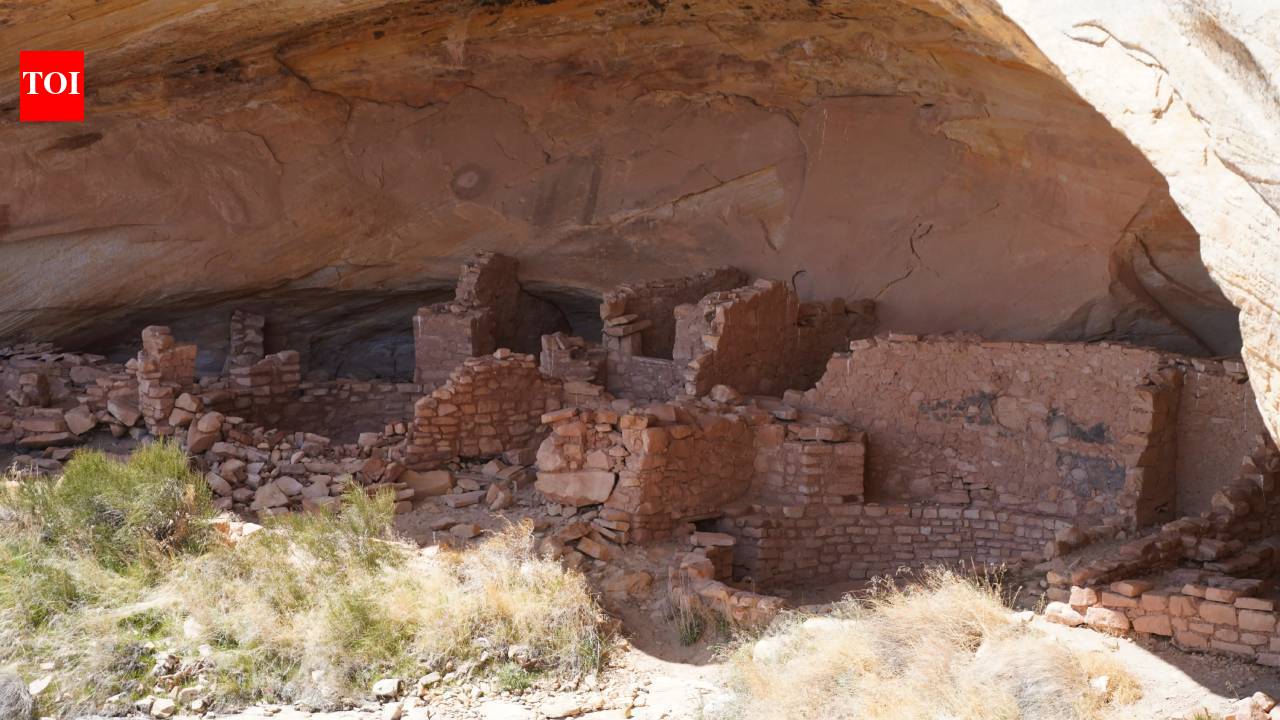
Six Tribal Nations have filed federal lawsuits challenging Trump's efforts to revoke protections for two Utah national monuments. (Photo: AP)For generations, the canyons, mesas and ancient landmarks of Utah have held deep cultural and spiritual meaning for Native American communities. They are not just stretches of protected wilderness but places where ancestors lived, ceremonies were performed, medicines were gathered and traditions were passed down.Now, six Tribal Nations are taking their fight to court to protect these ancestral lands after US President Donald Trump renewed efforts to revoke protections for two major national monuments in Utah.The Tribal Nations have filed two federal lawsuits challenging the administration's latest actions concerning Bears Ears and Grand Staircase-Escalante National Monuments. They argue that the moves violate federal law, undermine Tribal sovereignty and threaten places that remain central to their identities.According to Native News Online, the lawsuits were filed on November 18, 2026, in the US District Court for the District of Columbia. The Native American Rights Fund (NARF) brought the cases on behalf of the six Tribal Nations.Why six Tribal Nations have taken the fight to courtThe legal challenge is divided into two cases, each focusing on one of the national monuments.The first lawsuit has been filed on behalf of the Pueblo of Zuni, Ute Mountain Ute Tribe and Hopi Tribe. It challenges Trump's latest attempt to revoke protections for Bears Ears National Monument. It also questions the administration's reported move to dismantle the Bears Ears Commission, a body that gives Tribal Nations a formal role in decisions concerning the monument's stewardship.The second lawsuit represents the Kaibab Band of Paiute Indians, Paiute Indian Tribe of Utah and Ute Mountain Ute Tribe. It challenges the administration's attempt to revoke protections for Grand Staircase-Escalante National Monument.Together, the two cases seek to protect more than two million acres of land that the Tribal Nations consider sacred and essential to their histories, cultures and religious practices.'These lands are an unbroken record of who we are'Bears Ears National Monument holds ancestral dwellings, ceremonial sites and burial grounds considered sacred by Native American communities. (Photo: Reuters)For the Pueblo of Zuni, Bears Ears is far more than a landscape of striking rock formations and canyons. It holds the physical traces of generations who came before them.Zuni Head Councilman Anthony Sanchez explained the deep connection his people share with the monument, pointing to its ancestral dwellings, ceremonial sites, burial grounds and gathering places.“Bears Ears’ canyons and mesas hold the dwellings, ceremonial sites, burial grounds, and gathering places of our ancestors,” Sanchez said. “These lands are an unbroken record of who we are and where we come from. It is our sovereign right as Tribal Nations to steward this land for generations to come.”Hopi Tribe Vice Chairman Mikah Kewanimptewa also stressed that the importance of Bears Ears cannot be measured by its scenic beauty alone. The landscape contains ancestral rock markings, artefacts and landmarks that preserve the history of his people.“Bears Ears National Monument is more than a scenic backdrop,” Kewanimptewa said. “Our history is inextricably woven into the landscape, recorded in ancestral rock markings, artifacts, and landmarks. These are sacred lands, not exploration sites for mining and extraction.”Why Grand Staircase-Escalante matters to Native American communitiesTribal leaders say Grand Staircase-Escalante is essential to their cultural traditions, religious practices and connection to ancestral lands. (Photo: AP)The concerns extend beyond Bears Ears. Grand Staircase-Escalante also holds generations of cultural and religious connections for Native communities.For the Kaibab Band of Paiute Indians, the area contains traditional medicines, cultural resources and places connected to their history. Chairman Roland Maldonado said protecting the monument was tied to the responsibility of preserving these resources for future generations.“These sacred lands hold our plant medicines, cultural resources, and histories that Tribal Nations are required to protect for the next generation,” Maldonado said. “Grand Staircase is inseparable from our culture, history, and identity, and we will continue to defend Tribal lands and protect the integral cultural resources within Grand Staircase-Escalante.”Paiute Indian Tribe of Utah Chairwoman Laurel Yellowhorse also described the monument as a place where members of her community continue to practise their religious and cultural traditions.“Grand Staircase is a land like nowhere else for Paiute people,” Yellowhorse said. “It’s where our citizens travel to pray and to gather plants and medicines necessary for religious ceremonies. These are sacred lands, not potential mining sites.”What is behind the legal battle over the monuments?The dispute is rooted in the Antiquities Act of 1906, a federal law that allows US presidents to designate national monuments to protect historic landmarks, structures and other objects of historic or scientific interest.NARF argues that while the law gives presidents the authority to establish national monuments, it does not give them the power to revoke protections for monuments that have already been designated. The organisation maintains that such authority belongs to Congress.The lawsuits also challenge the administration's reported attempt to abolish the Bears Ears Tribal Commission and remove the federal government's obligation to consult the commission on the monument's management.NARF Deputy Director Matthew L. Campbell accused the administration of disregarding Tribal sovereignty and acting against federal law.“Once again, the Trump administration is trying to revoke these National Monuments, this time by disregarding Tribal sovereignty and again in violation of federal law,” Campbell said.He added that the Antiquities Act authorises presidents to declare national monuments but does not expressly give them the power to revoke existing ones. “The court should block implementation of these unlawful directives,” he said.The legal argument will now be placed before the federal court, which will be asked to intervene and prevent the administration from implementing the challenged actions.Trump had targeted the monuments in 2017 as wellThis is not the first time the two monuments have faced efforts to reduce or remove their protections.Trump attempted to scale back protections for Bears Ears and Grand Staircase-Escalante through presidential proclamations in 2017. His administration's latest actions in 2026 have brought the dispute back into the spotlight.The current lawsuits seek to challenge those renewed efforts and protect the Tribal Nations' role in decisions affecting their ancestral lands.For the communities involved, the issue goes beyond environmental conservation or government land-management policy. It concerns the protection of burial grounds, ceremonial sites, traditional medicines and cultural resources that connect present generations to their ancestors.The six Tribal Nations say they have lived on, travelled across and cared for these lands since time immemorial. Their legal battle is also about ensuring that future generations can continue to visit these places, practise their traditions and maintain their connection to their homelands.The Pueblo of Zuni is represented in the Bears Ears case by NARF along with the law firm Sonosky, Chambers, Sachse, Mielke & Brownell, LLP.The two lawsuits now seek judicial intervention to stop the administration's proposed actions and preserve protections for the monuments, as well as the Tribal stewardship arrangements associated with them.
Six Tribal Nations sue Trump administration over Utah monuments' protections
Full Article
Original Source
Read the full article at Timesofindia →KhanList aggregates and links to publicly available news content. We do not host full articles from third-party sources. Always verify important information with original sources.