
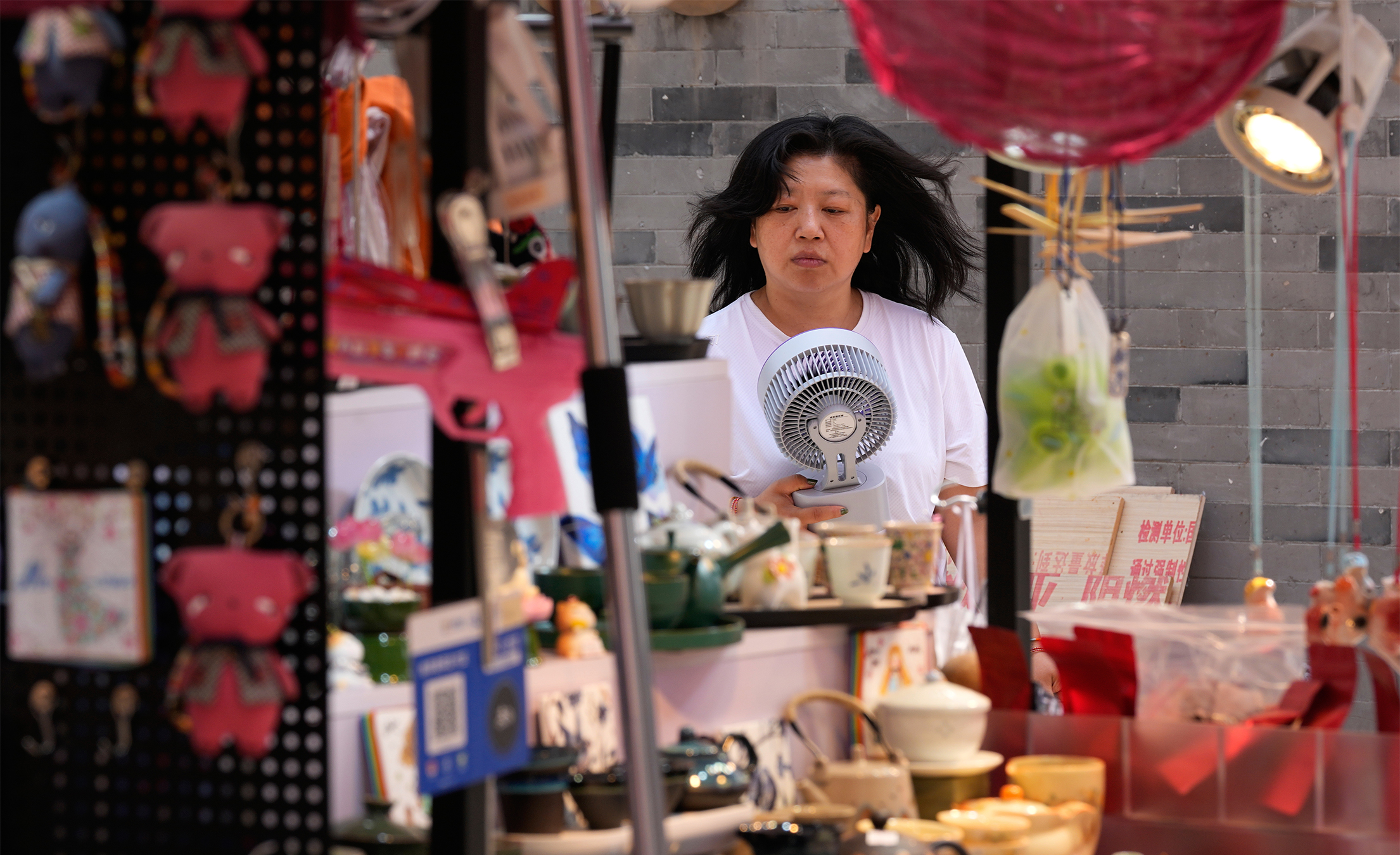
This year’s extreme weather has been linked to El Niño, which, according to weather experts, could be one of the strongest ever recorded.Record-breaking temperatures were recorded in South Korea and Hong Kong, and mercury exceeded 40°C in Japan and China.Apart from heatstroke risks, higher temperatures during El Niño can accelerate the life cycle of Aedes mosquitoes, which transmit dengue, and shorten the time for the virus to replicate, experts warn. SEOUL — A record-breaking heatwave swept through a broad swath of Asia earlier this month, causing deaths and heat-related illnesses. This year’s extreme weather has been linked to El Niño, which, according to weather experts, could be one of the strongest ever recorded. The “super” El Niño, which officially arrived in June, is expected to intensify over the rest of the year, bringing prolonged warmer weather, droughts and adverse health risks to people in the region. Here’s what you need to know about the extreme weather: How hot has it been in Asia? Very hot. On Aug. 2, the mercury in Yangsan, a city in South Korea, hit 42.5° Celsius (108.5° Fahrenheit), the highest mark since official records began in 1904. Parts of South Korea got so hot that potatoes were literally “boiled,” while still in the ground. In late July, temperatures exceeded 40°C (104°F) in several prefectures in Japan, as well as in central and western regions of China. On Aug. 9, the Hong Kong Observatory logged 39.8°C (103°F), the city’s highest reading since it introduced automatic weather stations in the 1980s. Southeast Asia also reported weather anomalies. Vietnamese officials said thermal readings from July 11 to Aug. 10 showed the mercury at 39-40°C (102-104°F), “exceeding records” in many parts of the country. Meanwhile, “areas of rainfall deficit” were observed in the Philippines, Cambodia, Laos, Thailand, Vietnam, Malaysia and Indonesia. An officer from the Korea Meteorological Administration shows a weather forecast map of temperatures during a heatwave in South Korea on Aug. 7, 2026. Image by AP Photo/Lee Jin-man. What exactly is El Niño’s role? While El Niño is a naturally occurring phenomenon, human-made climate change can intensify its impacts, further pushing record-breaking temperatures. Under normal conditions, strong trade winds push warm surface water to the western Pacific Ocean, providing fuel for Asia’s summer monsoons, said Justin Sentian, professor of atmospheric science at Universiti Malaysia Sabah. However, El Niño weakens the winds, preventing the warm water in the east from flowing west. This “left Southeast Asia and East Asia trapped beneath a heavy, descending mass of high-pressure air,” the scientist told Mongabay via email. The sinking air then blocked summer storms from forming and left the region without the protective cover from monsoon clouds that reflect sunlight, causing “unmitigated solar energy” to directly strike the Earth’s surface in Asia, he said. What have been the health impacts? Heatstroke, the most well-known risk during a heatwave, has “a high-case fatality rate,” according to the World Health Organization (WHO). In South Korea, as of Aug. 18, there had been 3,445 heat-related illness cases and 31 deaths, according to the Ministry of the Interior and Safety. More than 80% of those who died were 60 or older, the Disease Control and Prevention Agency said. Japanese authorities said on July 22 that within a week, 14 people died due to suspected heatstroke, and over 10,800 people were hospitalized after showing heatstroke symptoms. More than 60% of those hospitalized were aged 65 and older. People walk near the Sensoji Buddhist temple in Tokyo’s Asakusa district on a hot and sunny day on Aug. 7, 2026. Image by AP Photo/Eugene Hoshiko. However, younger people can also be adversely affected. Fiji rugby player Saimoni Vunilagi, 26, collapsed on Aug. 3 after a training session in Fukuoka with signs of heatstroke, according to media reports. He died four days later. High temperatures can also be fatal to animals. Three lions at a Tokyo zoo died of suspected heatstroke. In South Korea, as of Aug. 18, the heatwave had killed nearly 1.2 million livestock, from poultry to pigs, as well as about 2.83 million farmed fish. What are other health risks? The WHO warns that heat stress can also “exacerbate underlying illnesses including cardiovascular disease, diabetes, mental health, asthma, and can increase the risk of accidents and transmission of some infectious diseases.” While dengue fever is usually associated with rainy seasons in Southeast Asia, health experts in Malaysia and Singapore have raised the alarm that El Niño weather patterns can raise the risk of the deadly mosquito-borne disease. Higher temperatures during El Niño can accelerate the life cycle of Aedes mosquitoes, which transmit dengue, and shorten the time for the virus to replicate, experts warn. Malaysia has seen an uptick in dengue cases this year, from over 33,000 in June to around 55,800 in August — both figures surpassing last year’s numbers during the same periods. An Asian tiger mosquito (Aedes albopictus) is known to transmit the dengue virus. Image courtesy of Pablo Cabrera/CDC. According to a 2025 study published in Nature Communications, El Niño may cause a 39% to 81.7% increase in cumulative dengue cases around the world between 2020 and 2099. There are also concerns about respiratory illnesses as an El Niño-induced drought fuels widespread wildfires across Indonesia, sending haze into nearby communities and across the border into Malaysia and potentially Singapore. Are heatwaves here to stay? Unfortunately, yes. “Deadly heatwaves are almost certain to be more frequent as Earth becomes warmer,” Yi Ming, a climate scientist at Boston College in the U.S., told Mongabay. El Niño events will make the situation worse, he said, warning that this year’s El Niño will reach its peak strength in the fall and winter. Bin Wang, an emeritus professor of atmospheric sciences at the University of Hawaii at Manoa in the U.S., said that while Southeast Asia is likely to be drier, southern China, western Japan and the southern tip of the Korean Peninsula tend to receive more rainfall in El Niño years. Geoje, on the southern coast of South Korea, was hit with more than 950 millimeters (37 inches) of rain from Aug. 15 to Aug. 17 — an amount equal to two-thirds of last year’s entire precipitation that fell on the city. East Asia may have more precipitation next year, Wang said. “It is very likely that the summer following a very strong El Niño — for instance, the summer of 2027 — the meiyu in China, baiu in Japan, and changma in Korea will be excessively strong,” he said, using the words that mean monsoon in each language. What can be done to alleviate the heatwave impacts? Some cities have turned to nature to mitigate the effects of the climate crisis. Seoul planted more than 30 million trees between 2014 and 2021 under an ambitious project to fight the urban heat island and air pollution. Roadside trees in the South Korean capital can lower temperatures by up to 1.09°C (1.96°F), according to a study by the Seoul Institute, a municipal government think tank. In the early 2000s, Seoul removed a highway and restored Cheonggyecheon, a stream that had been covered with concrete. The project was credited with not only reducing temperatures by up to 5.9°C (10.6°F) but also slashing air pollution and enhancing biodiversity. Singapore has adopted urban planning methods that aim to maximize wind flow, shade space and urban greenery. Well-placed trees can cool temperatures by up to 9°C (16.2°F), according to the Urban Redevelopment Authority. Green rooftops in Singapore. This sort of UHI mitigation can often only be accomplished by those wealthy enough to afford it. Image by Chuttersnap via Unsplash. The city-state plans to expand rooftop greenery from 143 hectares (353 acres) in 2026 to 200 hectares (494 acres) by 2030. According to the Taiwan Forestry Research Institute, urban parks can lower temperatures by 2°C (3.6°F) in Taipei. The Ministry of Environment plans to increase the number of native trees in Greater Taipei, with the stated goal of enabling commuters to reach their workplaces without walking through long stretches of exposed pavement. Banner image: A vendor cools herself with a portable electric fan as she waits for customers at her souvenir store in Beijing, China, on June 2, 2026. Image by AP Photo/Andy Wong. Urban heat islands have solutions; many tropical cities can’t afford them Tropics take the brunt as hotter oceans drive large-scale humid heat waves: Study Global warming hits hardest for those who can’t escape it Citation: Tian, Y., Xu, Y., Liang, Y., Zhou, Z., Susong, K. M., Chen, Y., … Tian, H. (2025). Rising dengue risk with increasing El Niño–Southern Oscillation amplitude and teleconnections. Nature Communications, 16(1), 8629. doi:10.1038/s41467-025-63655-0 Credits Topics
Six things to know about Asia’s heatwave and the health impacts
Full Article
Original Source
Read the full article at News →KhanList aggregates and links to publicly available news content. We do not host full articles from third-party sources. Always verify important information with original sources.