
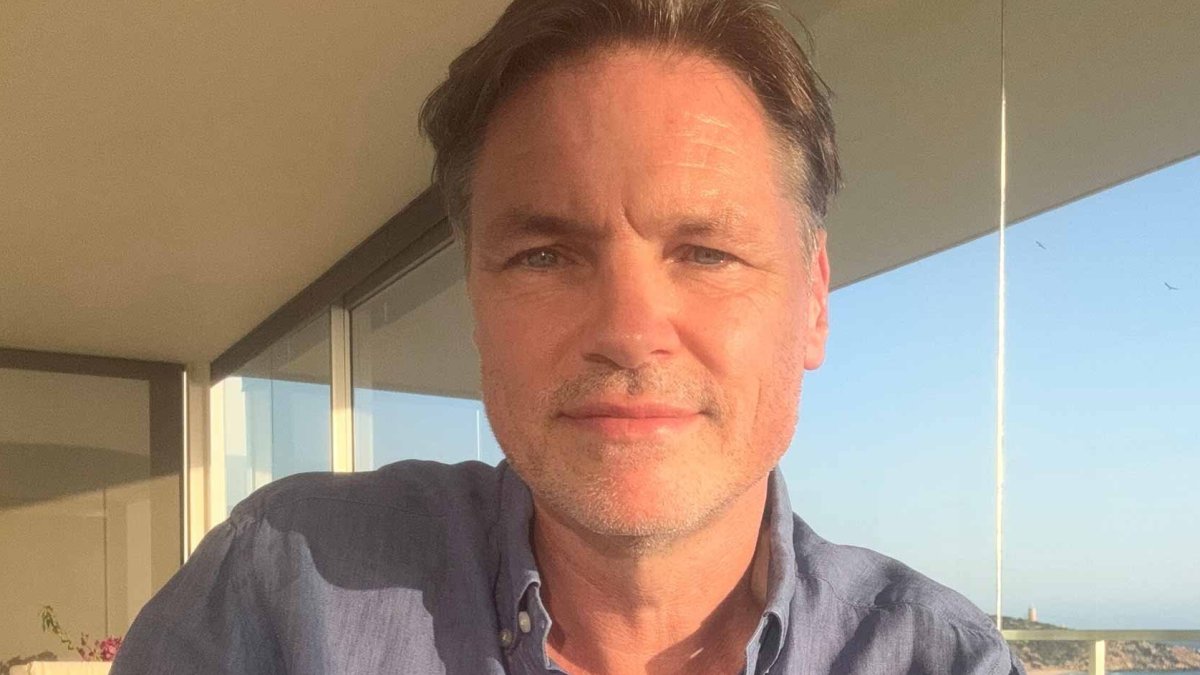
With men accounting for three-quarters of suicides in the UK, according to data from the Office for National Statistics (ONS), mental health professionals are warning of a “crisis point culture” that’s preventing thousands from seeking professional help when they need it. Dr Peter Meades is an expert integrative psychotherapist with more than 25 years’ experience in both the NHS and private practice, and understands the challenges men face. After years on the front line, he was moved to write a book: I’m Fine (But Not Really). “I wasn’t comfortable with taking everything I’ve learned in my career and not doing anything with it, because I’ve always been concerned about the low numbers of men seeking help. “I thought it would be useful to share a little about what goes on behind the therapy door with men who might never ask for help, or can’t afford to,” says Meades. Shorts Here, Meades details what he’s learned about men from his years in the therapist chair, and what’s surprised him along the way. Men ask for help at breaking point – but they can be just as emotionally open as women Seven in 10 men say they’d only consider therapy once they reach breaking point, despite two-thirds (65 per cent) saying they have struggled with their mental health in the past three years, according to a recent survey of 2,500 British men by the British Association for Counselling and Psychotherapy (BACP). I’ve met so many men who have lived with distress for months or years before seeking help, often coming for help only when a relationship is failing, work has become unmanageable, or their usual ways of coping have stopped working. I think women have become better at asking for help, and they tend to seek help sooner. I’ve met men who admit they’ve had thoughts of ending their lives that they’ve never verbalised before. However, despite what mainstream culture may tell you about men and their emotions, one of the most interesting things that more than 25 years in the consulting room has taught me is that men can be every bit as emotionally open, vulnerable, reflective and motivated to change as women. For many men, tuning in to or expressing emotion doesn’t feel easy, natural or comfortable. Men want to talk, but what really matters is whether they feel safe enough, and free enough from judgement, to get there. For some men it’s easier to deny how troubled they really are than risk opening up to another person. ‘Being a man’ doesn’t mean what it used to Men grow up with very particular messages about what it means to be a man long before they’ve had the chance to discover or decide for themselves. “Man up!” “Don’t be soft!” “Stop being so emotional!” These statements suggest that a man’s worth is measured by toughness, achievement, and dominance, while qualities such as tenderness, fear, vulnerability, or sadness are unacceptable and should be pushed aside. Masculinity changes enormously across different cultures and across generations. What was valued as “manly” for our grandfathers may not fit for us so well today. Even within one lifetime, masculinity shifts and evolves. The role you play as a son is not the same as the role you take on as a partner, father, friend or uncle. Yet the roots of the scripts from early life run deep and often stay with us, shaping behaviour long after they’ve outlived their use. For many men, asking for help still feels like admitting defeat From the start of my career as a therapist, I’ve seen how hard it can be for many men to ask for help or even to talk about what’s really going on. Too many struggle on in silence. Many men have learnt that competence means going it alone, and working things out for themselves. The shame and embarrassment of needing help can itself become part of the therapeutic work. I think the stigma around talking to a therapist has definitely reduced, certainly, in the last decade or so. When I started working with clients years ago, patients would shuffle in secretly, hoping no one saw them. There was such embarrassment about being seen asking for help or talking, and I do think a lot of the stigma around talking has reduced, but for some, it still exists. The biggest red flag that shows a man is in mental distress In men, distress often looks like kind of silent withdrawal from life. Isolating themselves from friends, reducing the things that they used to find enjoyable, engaging in more risky behaviours like drinking more, gambling, and scrolling until 2 o’clock in the morning. It’s often subtle for partners and friends to spot. But one big red flag is withdrawing from your social network. I think that’s often a really telling thing. If you have a male friend who’s avoiding meeting up or talking and seems increasingly isolated, I think that’s someone to pay attention to. Men are not immune to comparison culture Something I’ve really noticed in younger men I’ve worked with is how much they get sucked into comparison culture and measure their worth, body, and status against other men. Comparison isn’t new; years ago, people compared themselves to others in their local community, down the pub, or in church. But now, you can wake up in the morning and immediately compare your body and your looks with thousands of other images of men, and they’re not even necessarily real men on social media. A lot of them are highly edited, but it has led to some men thinking their body doesn’t look “right”. The kind of male “ideal” body type has changed to be more chiselled, toned and with perfect hair and teeth, which I think has resulted in a lot of anxiety and men who don’t naturally have these attributes turning to more radical means to achieve that, with things like plastic surgery. We underestimate the psychological turmoil of male midlife I do not think it’s fair to compare men’s and women’s midlife experience, as we know that menopause has a significant psychological and physical impact on women. But men do experience midlife changes too, and these are often overlooked. There are significant changes in midlife, physically and mentally, and the physical changes can be really hard for men, especially men who invest a lot in the way their body looks. When they then encounter things like injury or disability or illness, it can have a massive effect psychologically. Ageing, changing relationships, children leaving home, changes in work and status, ageing parents and an increasing awareness of mortality can all converge at midlife. Yet we have remarkably little language for this transition in men. It can raise much deeper questions about identity, purpose, meaning and what the rest of life is for. I’m Fine (But Not Really) by Dr Peter Meades is out now (published by Robinson books)
Six things I’ve learned about men after 25 years as a therapist
Full Article
Original Source
Read the full article at Inews →KhanList aggregates and links to publicly available news content. We do not host full articles from third-party sources. Always verify important information with original sources.