
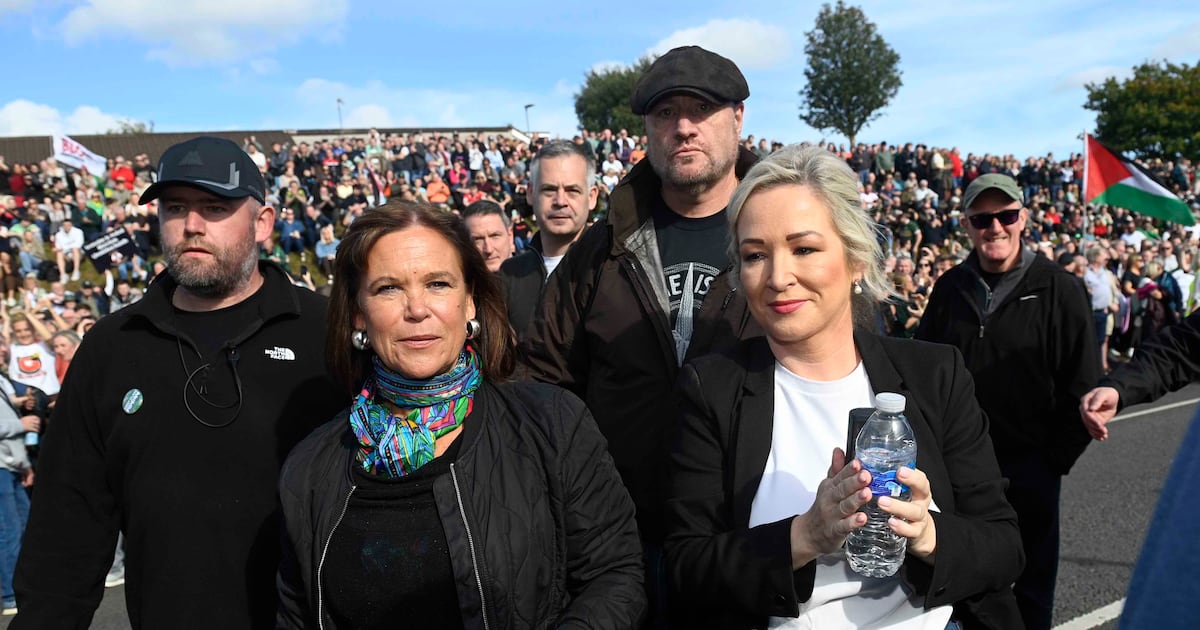
The recent scenes on Garvaghy Road carried grim echoes of the darkest days of the conflict to a community for whom the acute and lasting trauma never really went away. Older generations thought this was a past that belonged only in their own harrowing memories and grainy archival television footage. Now they are forced to hear it, see it play out again on the smartphones of their children and grandchildren as they followed updates about the dispute on TikTok. The reaction to the prospect of the Orange Order’s march was visceral distress and genuine sense of panic not just locally, but in communities across Northern society. This was reflected in the unusual united front formed by a broad spectrum of nationalist politicians, including Sinn Féin, the Social Democratic and Labour Party (SDLP), People Before Profit and Aontú.READ MOREThe ins and outs of the legal status of the Garvaghy Road parade will play out in court in the coming days and weeks, while the police are now investigating “unlawful protests” that blocked the marchers. And in parallel, a distinctly political dimension is now beginning to play out at Stormont.[ Back on the Garvaghy Road, people are wary and rather worried ]Unionist politicians have seized on the opportunity to make political capital from the dispute. They have cited the presence of Sinn Féin ministers, including First Minister Michelle O’Neill, as evidence that senior party figures broke the law by taking part in an unlawful protest.Yesterday, O’Neill confirmed she has been called for police interview in relation to the protest. She has defended her presence, explaining she was “proud to stand with the residents” on the basis that “when the law is wrong, I will stand firmly against it.”Democratic Unionist Party (DUP) leader Gavin Robinson warned: “We have lawmakers acting as law breakers and they need to face the consequences for their actions.” “The stakes are high” and they could “get even higher” for Stormont, he said, seeming to float the prospect of the DUP walking away from powersharing at Stormont. In the Stormont chamber this week, the DUP demanded that O’Neill commit to resigning as First Minister if she is found to have breached the ministerial code or the law. The more hardline Traditional Unionist Voice tabled no confidence motions in O’Neill and other Sinn Féin ministers. These are likely to be debated next week.Unionist politicians’ decision to pursue O’Neill in this way share all the same hallmarks of their decision to back Brexit. It is a knee-jerk response devoid of long-term strategy and it plays straight into Sinn Féin’s hands.The DUP has been in a strategic tailspin since the Brexit vote. The 2022 Assembly election saw the party lose its prized place as the largest party at Stormont to Sinn Féin. Recent months have seen it incur further reputational damage. Former leader Jeffrey Donaldson has been convicted of sexual offences against children. A serving DUP MP was charged with an alleged assault of a woman – he denies it and is contesting the charge. Another DUP MP is being investigated by a Westminster watchdog in relation to an alleged spending breach. He denies this, and the party has dismissed it as a “politicised complaint”.The DUP has slumped repeatedly in recent polls. The May 2027 Assembly election now looms large on the horizon. The party faces the prospect of losing seats if these trends continue. In this context, the DUP’s attempts to capitalise politically on Drumcree are an attempt to reverse this decline by riling up their grassroots. However, in doing so, it is handing a gift to Sinn Féin. Sinn Féin’s response to Drumcree was not opportunistic – it reflected a principled stance and genuine desire to show leadership within, and solidarity for, the local community. However, it is also true that events there suit the party very well. Sinn Féin has also been struggling in opinion polls. The most recent poll for the Belfast Telegraph showed the party at a five-year slump. It ran a highly emotive campaign about the historic significance of electing a nationalist First Minister in 2022, but struggled to deliver meaningful change during the ensuing Assembly term. It has become painfully clear that the First Minister position is symbolic. The party has also suffered the consequences of choosing its ministerial departments unwisely. It selected finance and economy at a time when it still expected getting into government in Dublin and was keen to show its competency on economic matters to impress southern voters. Instead, these departments have struggled to be relevant to voters’ day-to-day lives – and least not to the degree that might have been possible had Sinn Féin selected health, education or communities instead.The SDLP leader of the opposition, Matthew O’Toole, has carved out a reputation in this Assembly term for doggedly holding ministers of all parties in the executive to account for their failure to deliver. Sinn Féin ministers often seem to struggle when confronted with this level of systematic scrutiny. The behaviour of unionist parties recently means Sinn Féin can now fight next year’s Assembly election on the basis that a vote for the party is a vote to stand with O’Neill against political unionism.The DUP’s veiled threats to bring down Stormont are working in Sinn Féin’s favour. Many Sinn Féin members continue to be, at best, ambivalent about the party’s presence at the executive table. A senior figure in the party once explained his misgivings to me about the Stormont strategy – amounting to Sinn Féin telling voters “look at how good we are at administering British rule in our own country”. Some feel Sinn Féin’s presence at the Stormont executive legitimises partition and the “Northern Ireland” state. The end of Stormont would add to the wider argument that Northern Ireland is unworkable and a united Ireland is the only way forward. However, Sinn Féin strategists are also aware that pulling down Stormont would be seen as opportunistic by some voters. If the DUP triggers a collapse, Sinn Féin would be quite content for them to take the flak for the decision instead. Similarly, if O’Neill or any other Sinn Féin leadership figures are found to have behaved unlawfully in relation to Drumcree, this would be seen as a badge of honour by many nationalist voters, who would consider it as being part of Northern nationalism’s proud civil rights tradition.This is why O’Neill appeared so unruffled in the face of unionist attacks in the Stormont chamber this week. If anything, her defiant responses appeared almost to goad the DUP into walking out of Stormont. She will be aware that unionists have much to lose from their political attacks, while she has much to gain. She is much more comfortable facing criticism about her attendance at Drumcree than being grilled about Sinn Féin’s track record of delivery.The fault lines on which the 2027 Stormont election will be fought have been drawn. In the eight months left until that election, expect fractious scenes to continue at Stormont. A parliament that already struggles with delivery will likely drag to a halt and see squabbling prioritised over policy. The people who suffer the effects of such performative antics are those who languish on hospital waiting lists, struggle to afford the cost of living or to access disability services while sectarian charades at Stormont continue.Siobhán Fenton is the author of Ourselves Alone: Sinn Féin Behind Closed Doors
Siobhán Fenton: Sinn Féin might have an ulterior motive for its actions at Drumcree
Full Article
Original Source
Read the full article at Irishtimes →KhanList aggregates and links to publicly available news content. We do not host full articles from third-party sources. Always verify important information with original sources.