
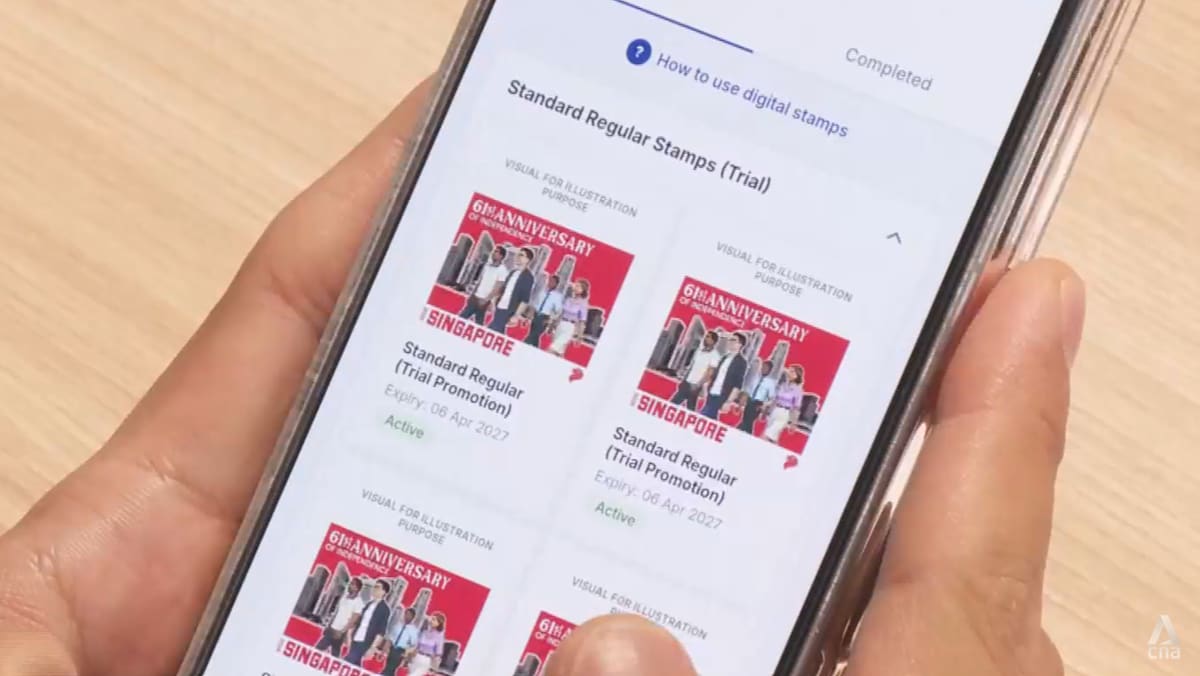
SINGAPORE: Singapore Post (SingPost) said on Thursday (Oct 8) that it is trialling the use of digital stamps for domestic mail over six months, offering a new way to send mail.The digital stamps, which SingPost said are the first of their kind in Asia, offer customers "another convenient way to pay for postage".To use a digital stamp, a customer first purchases one through the SingPost app. Each stamp comes with a unique code.The customer then writes the stamp's code on their envelope before mailing it. No physical stamps or labels are required. Digital stamps can only be used for basic domestic mail, which includes letters, postcards and printed paper items in an envelope. A man demonstrates how to post an envelope with a digital stamp. As part of the trial, SingPost is offering a set of five stamps for S$1 (US$0.78) for standard regular mail and a set of five stamps for S$1.50 for standard large mail.The first stamps available are digital versions of physical stamps issued this year to commemorate two occasions: the 61st anniversary of Singapore's independence and World Post Day 2026.All digital stamps purchased during the trial are valid until Apr 6, 2027. The trial follows the full roll-out of the SingPost@MyBlock initiative across more than 20,000 buildings, which allows customers to post letters and small parcels directly from their residential blocks."Singaporeans are highly comfortable with digital services and they are increasingly expecting everyday tasks to be available through their phones", said SingPost head of customer experience Gan Heng."So now the customers can just buy the digital stamp and be able to post that letter without leaving their neighbourhood, and for many, even without leaving their block," Mr Gan told CNA.Additional reporting by Eugene Chow.
SingPost introduces digital stamps in six-month trial
Full Article
Original Source
Read the full article at Channelnewsasia →KhanList aggregates and links to publicly available news content. We do not host full articles from third-party sources. Always verify important information with original sources.