
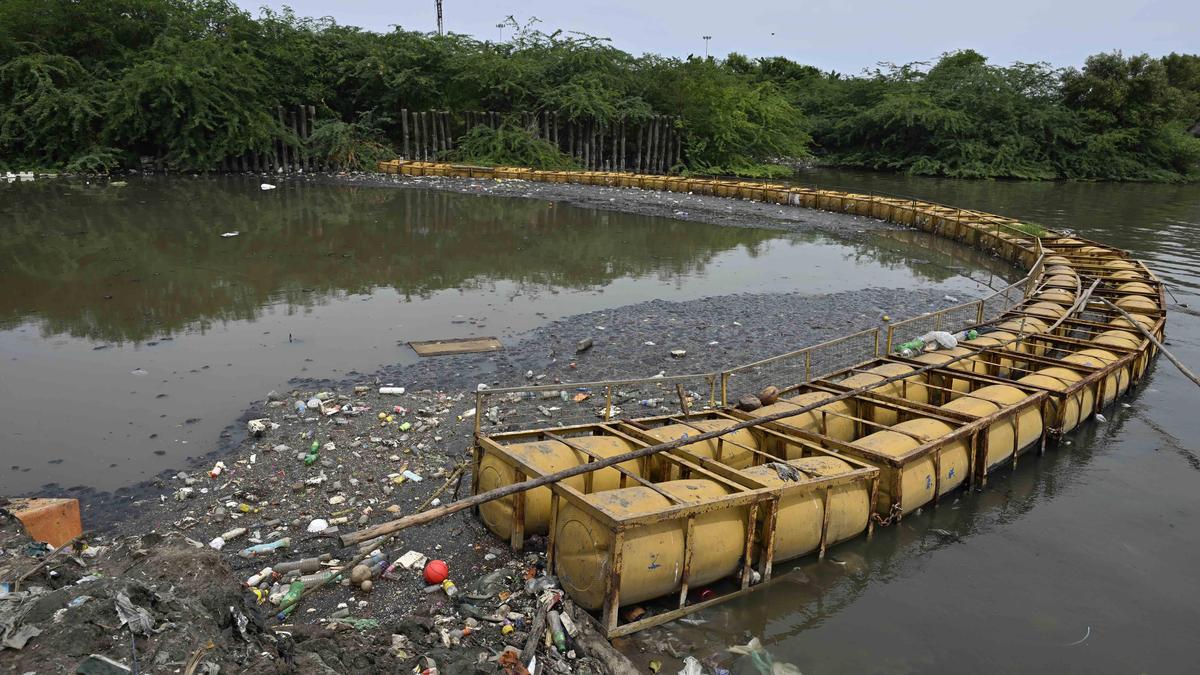
A large quantity of single-use plastic waste flowing through the Uppar drain, choking the Thengaithittu backwaters in Puducherry. | Photo Credit: S.S.Kumar Large quantities of single-use plastic waste flowing through the Uppar drain and two major storm-water drains in the city are polluting the Ariyankuppam River and the Thengaithittu backwaters, choking mangroves and threatening the fragile ecosystem.Disposable plastic bags, bottles, food wrappers, tetra packets, disposable cups, sachets and thermocol materials move through the drain with wastewater and stormwater runoff, particularly during rain, before accumulating in the slow-moving backwater channels located south of Pondy Marina. The debris gets trapped in mangroves, affecting the wetland habitat and leaving huge mounds of visible waste along boating routes.Boating through the mangroves and backwaters has become a major draw for tourists to Puducherry, with an estimated 2,000 to 3,000 tourists visiting on a weekend for boating and other eco-tourism activities. A large quantity of single-use plastic waste flowing through the Uppar drain, choking the Thengaithittu backwaters in Puducherry. | Photo Credit: S.S. Kumar However, visitors are increasingly confronted with plastic debris trapped along the banks and in mangrove vegetation, undermining the experience and raising concerns over the condition of the fragile ecosystem.According to Aurofilio Schiavina, a coastal management expert, “The plastic from the Uppar drain and two major drains in Murungapakkam is choking the mangroves and harming the mangrove ecosystem. The plastic waste is also a very big nuisance for the small, artisanal fishermen who fish in the backwaters for their livelihood. When they cast a net to catch fish, there is more plastic waste than fish in their nets. These fishermen spend more time having to clean their nets than cleaning fish.”He added that the operators of tourist boats are also facing many problems, as plastic waste gets stuck in the propellers of boats. This is a safety issue. There is a need for monitoring and collective quantitative and qualitative data on plastic waste pollution in the Thengaithittu backwaters to understand the amount of plastic waste that gets into the backwaters. Without proper monitoring and data collection it is difficult to design solutions to manage this problem.Sooner or later, the authorities will have to start cleaning up and restoring the backwaters, just as it is happening in the Adyar and Cooum estuaries in Chennai. The sooner we start collecting data the better it will be for finding a solution, he said.According to Sunaina Mandeen, a member of PondyCan, a civil society organisation, “Can no one see the ugliness of plastic floating everywhere - choking our canals and waterways? Have we become blind to it, or are we still capable of outrage? Vasudhaiva Kutumbakam is not a slogan. It is something to be lived. The Government must act, but so must people. No one is exempt from responsibility for this environmental crime.”R. Selvanathan of the Meenavan Kappom People’s Movement, Puducherry, demanded that all solid waste accumulated in the area should be immediately removed on an emergency basis. A permanent trash barrier or floating boom should be installed at the Vambakeerapalayam estuary and its connecting areas to prevent plastic and solid waste from entering the sea, he said.“A joint inspection should be carried out by the Public Works Department, Local Administration Department, Puducherry Pollution Control Committee (PPCC), and Fisheries Department, covering all major estuaries in Puducherry as well as key canals and waterways connected to the sea. Based on the findings, the government should come out with a time-bound action plan to completely control pollution in estuarine areas,” Mr. Selvanathan said.According to T.P. Raghunath of Svarnim Puducherry, a unit of Sri Aurobindo Society, “Repeated beach clean-ups will remain ineffective unless enforcement targets plastic production, sale and dumping at the source. Single-use plastic production and inflow continue in Puducherry. The authorities should identify the shops selling it, stop them and penalise them. Addressing waste only at the tail-end has no point; watershed management has to begin at the source.”“Puducherry has banned the use of single-use plastic items, but despite that, multi-layer packaging such as tetra packs are available in the market. People should stop using single-use plastics. As many as 36 industries involved in the manufacture of single-use plastics in Puducherry have been sealed so far. But plastics continue to make their way to Puducherry from other States. We have planned to conduct intensive raids every month to enforce the ban,” said an official of the Puducherry Pollution Control Committee (PPCC) Published - September 06, 2026 02:25 pm IST
Single-use plastic waste pollutes Ariyankuppam River and Thengaithittu backwaters
Full Article
Original Source
Read the full article at Thehindu →KhanList aggregates and links to publicly available news content. We do not host full articles from third-party sources. Always verify important information with original sources.