
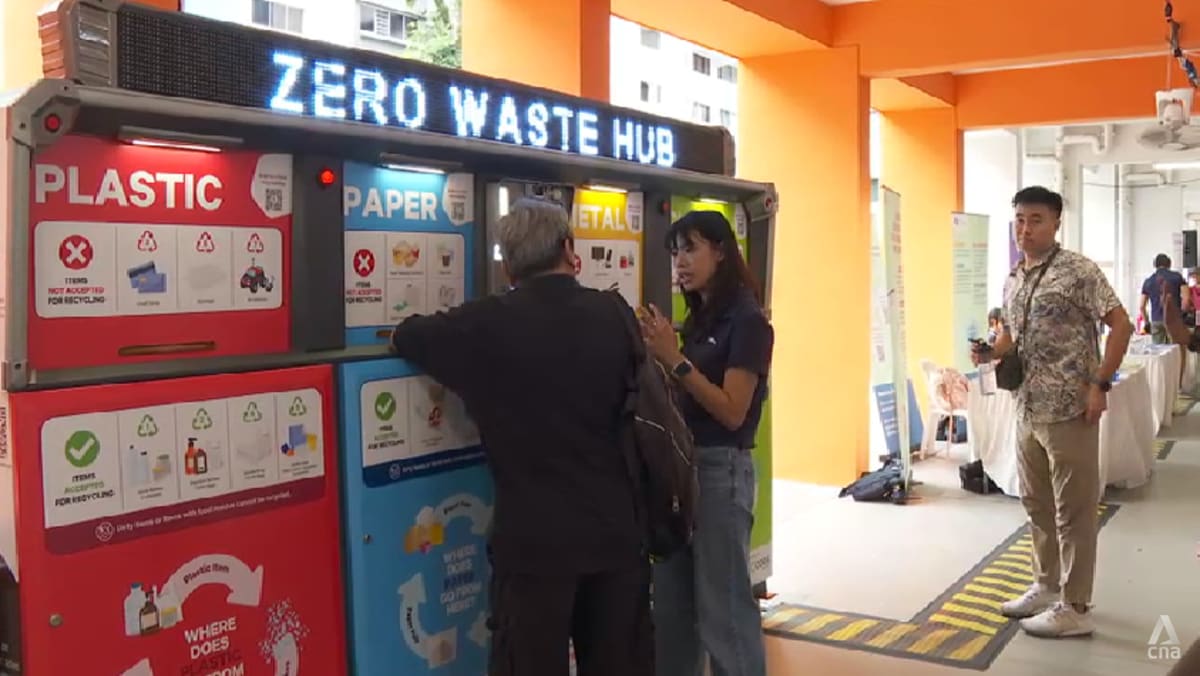
Singapore The hub in Yishun has separate recycling bins for plastic, paper, metal and glass, collection points for secondhand clothes and electronic waste, and a station for residents to refill household detergent using their own containers. Residents use Singapore's first Zero Waste Hub at Block 841 Yishun Street 81. (Image: CNA) New: You can now listen to articles. This audio is generated by an AI tool. SINGAPORE: Residents in Nee Soon South can now sort their recyclables, donate secondhand clothes and refill household detergent at a single location, with the launch of Singapore's first community Zero Waste Hub. Located at Block 841 Yishun Street 81, near Khatib MRT station, the hub aims to make sustainable living more convenient while reducing contamination in recyclables.It is the first of eight such hubs planned across Singapore by 2028, with a second set to open at Fernvale Community Club in Jalan Kayu by the end of this year. Unlike the blue recycling bins commonly seen in neighbourhoods, which accept different types of recyclables together, the new hub has separate bins for plastic, paper, metal and glass. Each bin comes with instructions on what can and cannot be recycled. The hub also has collection bins for pre-loved clothes, bags, shoes and accessories, as well as a drop box for electronic waste. Another station allows residents to refill plant-based household detergent, which is suitable for people with eczema, using their own containers at S$3 (US$2.30) per litre. The segregated recycling system aims to tackle contamination, a persistent challenge in Singapore's recycling efforts. About 40 per cent of recyclables collected through Singapore's blue recycling bins are contaminated. In contrast, earlier Zero Waste Hub pilot sites in Queenstown and Pioneer, where residents were encouraged to segregate their recyclables, recorded contamination rates of below 5 per cent. Residents must sort their recyclables into separate bins for plastic, paper, metal and glass. (Image: CNA) “The blue recycling bins can be very demoralising for residents," said Ms Lee Hui Ying, adviser to Nee Soon GRC. “The morale is so affected when you have good recycling intentions, but when you dump (your items) into a blue recycling bin and they get contaminated.” ENCOURAGING RESIDENTS TO RECYCLE The Zero Waste Hub initiative is a partnership between non-governmental organisation Zero Waste SG and Income Insurance. Ahead of the Yishun launch on Sunday (Nov 15), organisers visited 13 residential blocks in Nee Soon South to gather feedback. More than 80 per cent of residents surveyed said they were already recycling, while more than half were either segregating their waste or willing to start doing so. However, some residents were unsure how or where to sort their recyclables, given that the blue recycling bins accept different types of materials together. Ms Lee said the new hub offers residents an accessible way to adopt segregated recycling, although continued outreach would be needed to help more people make the switch. Residents can refill household detergent and dishwashing liquid at the Zero Waste Hub using their own containers. (Image: CNA) “We want to bring recycling habits and practices closer to home for our residents. (The hub) is an important step to encourage recycling and make it a part of everybody’s daily life,” she added. Residents register once and can use their personal QR code or phone number when depositing recyclables, allowing organisers to track participation, usage and the amount of materials collected. The data can help assess the hub’s effectiveness and inform plans for wider adoption across Singapore.BEYOND RECYCLING Organisers also hope to develop the hub into a space for broader sustainability activities, including initiatives that encourage residents to reuse and share resources. The neighbourhood already has a monthly flea market where residents can pass on unwanted items to others who may need them, Ms Lee noted as an example of how such initiatives can encourage reuse. A Return Right reverse vending machines is also available at the Zero Waste Hub for residents to return used plastic bottles and metal cans. (Image: CNA) There are also plans to explore resource-sharing initiatives, such as a library where residents could borrow household tools that they only need occasionally – such as drills – instead of buying their own. Income Insurance CEO Andrew Yeo said organisers would monitor how residents respond to the initiative and make adjustments along the way to encourage greater participation.“Because this is about building new habits, we need to actually take in how the residents are taking to such an initiative, what are the necessary pivots along the way,” he said.Zero Waste SG executive director Lionel Dorai added that changing residents' mindsets and building lasting recycling habits would be key to the initiative's long-term success.“At the end of the day, what we are trying to push for is habitual change on the ground. Mentality is the most important ... so if we can get that right, then I think a lot of things will move along the way,” he said.
Singapore's first Zero Waste Hub opens in Nee Soon South, 7 more planned by 2028
Full Article
Original Source
Read the full article at Channelnewsasia →KhanList aggregates and links to publicly available news content. We do not host full articles from third-party sources. Always verify important information with original sources.