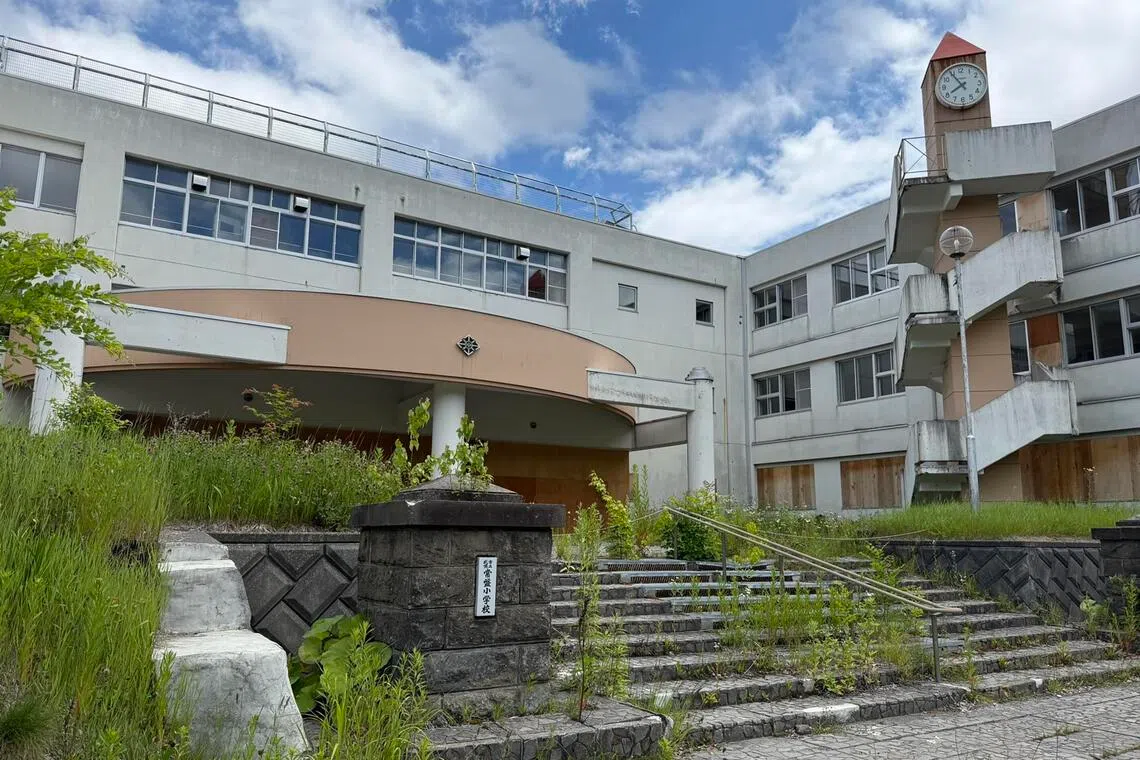
TOKYO – A Singapore-based private school operator has scrapped plans to open an international school in Sapporo, citing concerns over child safety and operational risks after suffering an intense anti-immigration backlash fuelled by xenophobic rhetoric and misinformation.The decision by Global Indian Education (GIE), part of the Singapore-headquartered Global Schools Group (GSG), marks the end of a contentious chapter that pitted Sapporo’s global ambitions against a simmering culture war over Japan’s shift towards a multicultural society.Sapporo city officials said on July 29 that GIE had submitted its formal notice of withdrawal six days earlier, citing “risks to school operations”.“The district held immense potential in arts, culture and education, and we wanted to move forward with strong enthusiasm,” GIE said in its filing to the Sapporo city government.“We weighed the diverse opinions, both for and against, carefully during our internal assessments. However, we have concluded it would be impossible to proceed, as we cannot rule out the continued risk of protests and the spread of misinformation,” it said.The Straits Times has approached GSG for further comment.GSG’s pullout from Sapporo, the capital of Japan’s northernmost prefecture Hokkaido, comes despite its strong international track record, operating 64 schools across 11 countries. In Japan, it already runs six campuses – four in Tokyo, one in Osaka, and one in Tsukuba, a science hub north-east of Tokyo.GIE’s plans in the central Japan city of Hamamatsu remain on track. It will open two campuses progressively between 2027 and 2029 at the former Kita Elementary School and former Nishi Library, which will accommodate a total of 500 students.Like Sapporo, Hamamatsu has actively sought to attract highly skilled foreign talent, particularly in tech.Cities across Japan share the growing understanding that a foreigner-friendly environment, including access to infrastructure such as international schools and multilingual medical care, is vital to boosting their global appeal and competitiveness.While the foreign population in Sapporo, Japan’s fifth-most populous city, is growing, it remains disproportionately small compared with other cities. Foreign residents accounted for a record 1.29 per cent of its 1.96 million inhabitants as at June 2026, far below the national proportion of 3.26 per cent. It lags behind not only the four more populous cities – Tokyo (6.1 per cent in the central 23 wards), Yokohama (3.8 per cent), Osaka (7.7 per cent) and Nagoya (4.8 per cent) – but also other cities that have drawn positive attention for their foreigner policies like Fukuoka (3.7 per cent), Hamamatsu (4 per cent), and Tsukuba (5.7 per cent).“There is naturally going to be a lot more local understanding in places where foreigners are already a visible, integral part of society,” Hyunjoo Naomi Chi, a professor of immigration policy at Hokkaido University’s Graduate School of Public Policy, told ST.But the collapse of GIE’s plan highlights the gap between Sapporo’s local realities and its ambitions as a Finance and Asset Management Special Zone to lure foreign capital.Sapporo was given the designation in June 2024 – later updated to specify a focus on green transformation and artificial intelligence – by the national government alongside Tokyo, Osaka and Fukuoka. The move allows these cities to offer perks such as deregulation and tax incentives to lure foreign capital and talent. In April 2025, it became Japan’s first major municipality to enact a “community coexistence” ordinance aimed at fostering diversity. However, unlike cities such as Kawasaki and Osaka which have imposed punitive measures against hate speech, Sapporo has not gone that far.While immigration experts argue that penalties are necessary to ensure people know their boundaries, Sapporo officials have defended their approach. During interviews in June, they told ST that the city wished to respect freedom of expression and diverse viewpoints, adding that local discrimination was not so severe that it warrants punitive measures.The GIE controversy centred on the defunct Tokiwa Elementary School, which closed in 2021 after 111 years as a textbook casualty of Japan’s deepening demographic winter. Originally appraised at 47.1 million yen (S$337,100), the property’s value was reassessed down to 22.2 million yen in 2024 after failing to attract bidders.In July 2025, GIE beat four other applicants to win the public tender to acquire the plot with a bid of 25 million yen, with plans to develop the site into an international school with an International Baccalaureate curriculum.Despite the suburban district being a 45-minute commute from central Sapporo, GIE was optimistic about future demand, projecting enrolment of 650 students from pre-school to high-schoolers by 2033.Detailed public filings showed plans for an inclusive student body that mirrors its other domestic campuses: in Osaka, 54.7 per cent are Japanese, while in Tsukuba, locals make up 82 per cent.However, GIE suffered nearly a year of relentless hostility. Social media was flooded with fake news that the school was a “Trojan horse for mass immigration”. Sensationalist posts warned that “Indians will swarm the area” and that “local residents, especially women, will no longer be safe walking alone at night”.The online harassment also translated into physical intimidation. Nationalist protesters, many without ties to the quiet suburb, descended on Tokiwa with megaphones while claiming they were “not anti-immigrant but against immigration policy”. In September 2025, they harangued residents who attended a GIE town hall meeting.By November 2025, 90 petitions had flooded the Sapporo City Assembly demanding that the project be cancelled. Municipal lawmakers unanimously rejected the petitions in May 2026, noting in a rare show of multipartisan unity that the complaints were built on falsehoods.Yet despite the project clearing the legislative hurdles, the hostility and persistence of the protesters as well as the continuing spread of sensationalist misinformation online ultimately led GIE to capitulate.“It is extremely regrettable that the company withdrew because we were unable to sufficiently convey accurate information to the public,” Daisuke Sato, a manager in Sapporo’s international division, was quoted as saying at a July 29 news conference.A Sapporo official, who asked not to be named as he was not cleared to speak with the media, told ST that it was a shame that GIE decided to withdraw its plans.“Achieving a multicultural society involves taking into account diverse perspectives and presents complex challenges,” the official said, but added that the setback does not undermine Sapporo’s resolve to becoming a global, multicultural city.Sapporo will now enter negotiations with the runner-up bidder, a local social welfare organisation planning to convert the site into an employment support facility for people with disabilities.Yet the broader signal being sent to global investors and talent is stark. In some of Japan’s regional hubs, persistent protests and online intimidation can be potently weaponised by a vocal minority to browbeat foreigners, whom municipal governments are ill-equipped to shield.
Singapore school operator drops Sapporo plans as immigration backlash raises child safety concerns
Full Article
Original Source
Read the full article at Straitstimes →KhanList aggregates and links to publicly available news content. We do not host full articles from third-party sources. Always verify important information with original sources.