
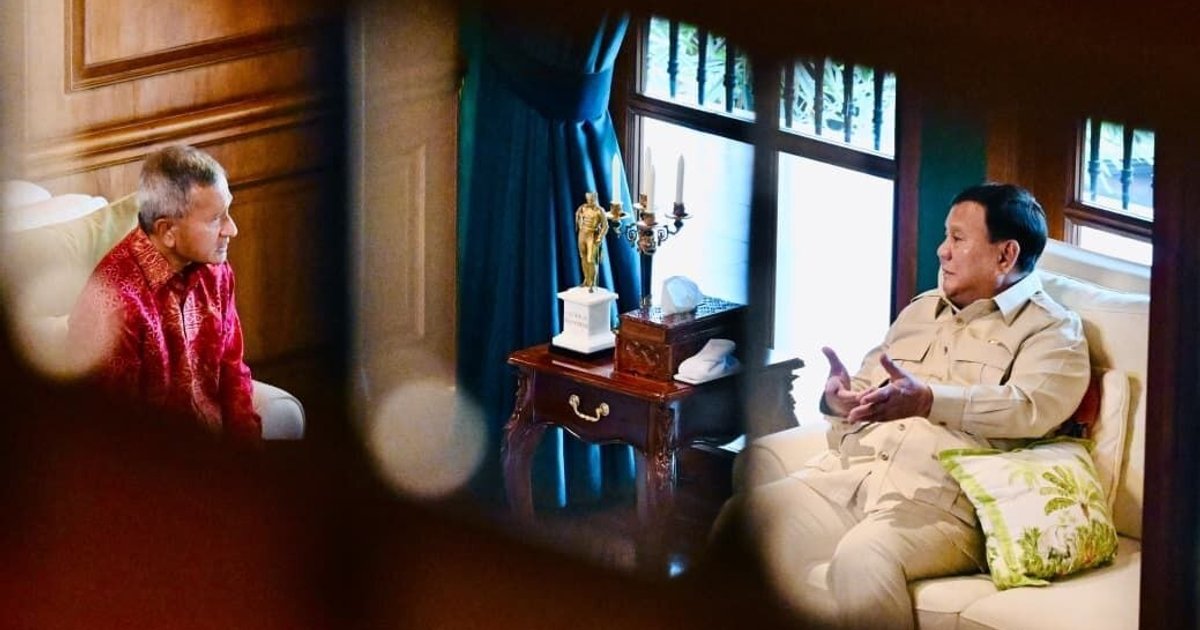
JAKARTA – High-level communication between Prime Minister Lawrence Wong and Indonesian President Prabowo Subianto has set the “political commitment on both sides to do what is necessary”, Singapore Foreign Minister Vivian Balakrishnan said on Oct 28, as the two neighbours seek to manage differences over energy supplies and other bilateral issues.Speaking to reporters in Jakarta after meeting Prabowo earlier in the day, Balakrishnan said his visit had involved “good conversations, honest conversations, sincere conversations” and produced constructive approaches, some of which were already being implemented.“I’m not at liberty to discuss the details,” he said when asked about his meeting with Prabowo.“But first, let me give you the assurance that communication has occurred at the highest level between my prime minister and with President Prabowo,” he said.He added that both sides now had to implement their plans and “execute that commitment”.The meeting came as the two neighbours grappled with questions over gas supplies and plans for cross-border electricity exports, while stepping up cooperation to tackle forest and land fires in Indonesia – which have sent thick haze across parts of the region and prompted calls for stronger action to prevent the problem from recurring.Indonesia’s Cabinet Secretary Teddy Indra Wijaya said earlier on Oct 28 that Balakrishnan had requested an audience with Prabowo. The Presidential Secretariat also said that Prabowo remained committed to maintaining good relations and strengthening communication with neighbouring countries.Managing differences with ‘cool heads’Balakrishnan said Singapore and Indonesia, as permanent neighbours, would always be interdependent and face common challenges, including the haze and pandemics.He acknowledged that differences in priorities and approaches were inevitable, sometimes accompanied by political disagreements.“But precisely at a moment like this, it’s important for cool heads to prevail,” he said, stressing the need for direct, honest and constructive conversations.After arriving in Jakarta on Oct 27 for a three-day visit, Balakrishnan held his first official talks with Indonesian Foreign Minister Arrmanatha Nasir, who took office on Oct 1.Both ministers reaffirmed the strength of bilateral relations and stressed the importance of open dialogue and mutual respect.“We want Indonesia to succeed, and we want this because our futures are intertwined. Singapore’s success also depends on a prosperous, stable, peaceful Indonesia,” he said during his Oct 27 talks.The two ministers also agreed on Oct 27 to establish a joint task force to hold companies accountable for forest and land fires that cause transboundary haze, as well as a hotline at the ministerial and senior official levels to strengthen communication.Balakrishnan said the haze problem had persisted in South-east Asia for almost three decades, calling it “far too long” and stressing the need to find solutions.Energy and cooperationAsked whether Singapore and Indonesia had reached a consensus on contractual obligations following the gas export cuts, Balakrishnan said both countries shared a commitment to honouring contracts.“If you carefully parse the statements which have been made by Mr Wong, Minister Tan, as well as the Indonesian ministers, you will realise that in fact there is a common commitment to the sanctity of contract, and that’s good,” he said, referring to PM Wong and Minister for Energy, Trade and Industry (Energy and Industry) Tan See Leng.He said honouring contracts was important to the credibility and competitiveness of both economies.“Look at actions, not just at words,” he added, saying contracts were generally respected in the region.PM Wong said on Oct 25 that Singapore expected all parties to honour their contractual commitments, while Indonesia’s Energy and Mineral Resources Minister Bahlil Lahadalia said the reductions did not breach existing agreements.Indonesia began cutting natural gas exports to Singapore on Oct 24 by 31 million standard cubic feet per day, or about 8 per cent of its piped gas exports, to prioritise domestic electricity needs in Batam, Bintan and Sumatra.Singapore’s Energy Market Authority said the reduction amounted to 17 billion British thermal units per day over 18 days, equivalent to less than 2 per cent of Singapore’s daily gas demand.The authority said Singapore had sufficient supplies, with its gas importer ready to bring in more liquefied natural gas (LNG) if needed.Existing gas import contracts with Indonesia are due to expire at the end of 2028.Balakrishnan said Singapore was managing the disruption from a position of strength, having diversified its energy sources and developed LNG terminals.He also pointed to plans being explored for strategic oil storage with Saudi Arabia and overseas visits by Singapore ministers to secure essential supplies.“The pattern is about securing essential supplies to keep Singapore going, whatever happens,” he said.Separately, Indonesia is reviewing plans to export low-carbon electricity to Singapore, with pricing negotiations yet to be resolved.Bahlil said on Oct 26 that Jakarta was reviewing the plans to prioritise domestic needs. Singapore has granted conditional licences to six Indonesian electricity import projects with a combined capacity of 3 gigawatts.Balakrishnan said governments had a responsibility to secure essential supplies, including energy, for their populations.He said he was not particularly fond of the term “resource nationalism”, noting that governments had to look after their own people.But he said domestic priorities and regional cooperation could go hand in hand, with cross-border energy contracts helping to attract investment, expand infrastructure and lower costs.“Working together and looking after your own needs. It’s not either or. It’s not a binary,” he said.He cited the Asean Power Grid and regional energy investment as ways to strengthen energy security, particularly as artificial intelligence and data centres drive up electricity demand.Looking to 2027Singapore and Indonesia will mark 60 years of diplomatic relations in 2027, when Singapore will also chair Asean.During their Oct 27 talks, Arrmanatha pledged Indonesia’s support for Singapore’s Asean chairmanship.Both ministers also agreed to build on the outcomes of the Singapore-Indonesia Leaders’ Retreat in July, when PM Wong and Prabowo witnessed the signing of 26 agreements spanning economic, energy, defence, digital, environmental and other areas of cooperation.Singapore has been Indonesia’s largest source of foreign direct investment since 2014, with investments reaching US$17.4 billion (S$22.6 billion) in 2025.Looking ahead to Singapore’s Asean chairmanship, Balakrishnan said the Republic would seek to deepen regional integration and strengthen partnerships to build resilience against disruptions to essential supplies.“Given the state of the world, I think this has become even more urgent, more essential,” he said.
Singapore, Indonesia committed at highest level to resolving bilateral issues: Vivian Balakrishnan
Full Article
Original Source
Read the full article at Straitstimes →KhanList aggregates and links to publicly available news content. We do not host full articles from third-party sources. Always verify important information with original sources.