
SINGAPORE: Telecommunications operator Simba could face fines, suspension or cancellation of its licence over alleged unauthorised spectrum use and other regulatory breaches, according to new details of an ongoing investigation disclosed by its Australian parent company Tuas on Monday (Oct 26).In a filing to the Australian Securities Exchange (ASX), Tuas said the Infocomm Media Development Authority (IMDA) had issued Simba a notice to show cause, setting out six allegations involving unauthorised spectrum use, breaches of telecommunications regulations and concerns about the company's governance and compliance practices.These include allegations that Simba's unauthorised use of radio frequency bands was intentional and approved by its senior management, and that the telco deliberately failed to fully comply with an order to produce documents.The filing also outlined potential regulatory actions being considered by IMDA, including financial penalties and the suspension or cancellation of Simba's spectrum rights or telecommunications licence. IMDA previously disclosed in May that it was investigating Simba over possible unauthorised spectrum use, prompting it to suspend its review of the telco's proposed S$1.43 billion (US$1.11 billion) acquisition of rival operator M1. The deal was subsequently terminated.ALLEGED UNAUTHORISED SPECTRUM USE AT MORE THAN 100 SITESAccording to Monday's filing, IMDA alleged that Simba deployed dynamic spectrum sharing technology at about 133 sites for intermittent periods in 2022 and 2023.This allowed the telco to use the 2100 megahertz (MHz) frequency band for both 4G and 5G services, even though it was authorised to use the band only for 5G.Dynamic spectrum sharing is a technology that allows different generations of mobile networks, such as 4G and 5G, to share the same frequency band.IMDA also alleged that Simba used spectrum in the 2340MHz to 2360MHz band at about 92 sites for intermittent periods between 2023 and 2026, despite not having authorisation to do so.The regulator alleged that both instances of unauthorised spectrum use were intentional and approved by Simba's senior management.Separately, IMDA alleged that Simba deployed 5G indoor radio access network equipment at two locations in 2023 before receiving authorisation to do so. Approval was only granted on Nov 14 that year.The regulator also alleged that Simba did not fully comply with an order to produce documents, and that its failure to do so was deliberate and intentional.IMDA further raised concerns about deficiencies in Simba's governance and compliance culture, which it considers should be addressed through additional regulatory obligations.POSSIBLE FINES AND LICENCE CANCELLATIONIMDA could impose financial penalties of up to 10 per cent of the annual turnover of the relevant part of Simba's business or S$1 million, whichever is higher.Other possible actions include suspending or cancelling Simba's spectrum rights or telecommunications licence, shortening its licence period, or imposing additional regulatory obligations to address governance deficiencies.Simba has until Nov 16 to respond to the show cause notice.Tuas noted that IMDA has not reached any conclusions on whether regulatory action should be taken against Simba or what form such action might take."Simba intends to respond to the Show Cause Notice," the company said."As the matter remains under consideration by the regulator and no findings have been made or confirmed, Tuas does not intend to provide further comment on the matters raised in this announcement."INVESTIGATION LED TO COLLAPSE OF M1 DEALIMDA first disclosed its investigation into Simba in May, saying it had uncovered possible unauthorised spectrum use by the telco.The regulator suspended its review of Simba's proposed S$1.43 billion acquisition of M1, saying the findings of its investigation could be material to its assessment of the deal.The proposed acquisition, which would have consolidated two of Singapore's four mobile network operators, was subsequently terminated after the deadline for its completion passed.Monday's filing sets out more specific allegations, including that certain instances of unauthorised spectrum use were intentional and approved by senior management.Radio frequency spectrum refers to the electromagnetic waves used to carry wireless communications, including mobile phone calls and data.IMDA regulates the allocation and assignment of spectrum to telecommunications operators, which are authorised to use specific frequency bands for their services.These rules are intended to prevent interference between wireless services and ensure that operators use spectrum in accordance with their assigned rights and licence conditions.
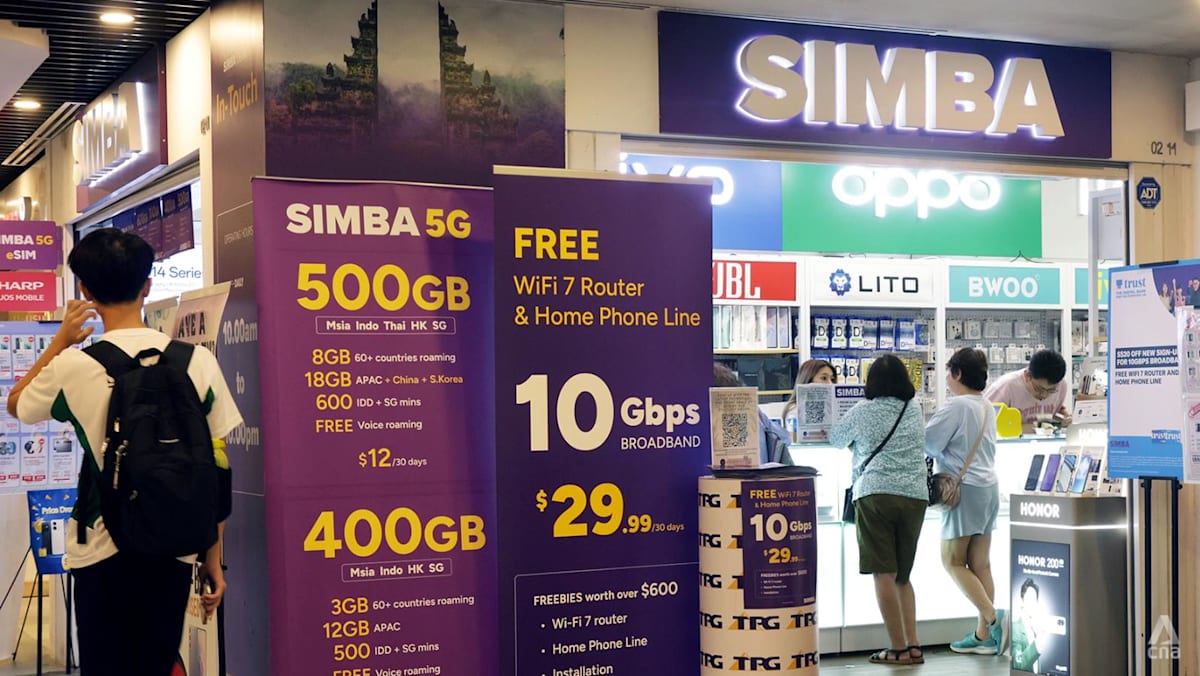
Simba faces possible fines, licence cancellation over allegations of intentional spectrum misuse
Full Article
Original Source
Read the full article at Channelnewsasia →KhanList aggregates and links to publicly available news content. We do not host full articles from third-party sources. Always verify important information with original sources.