
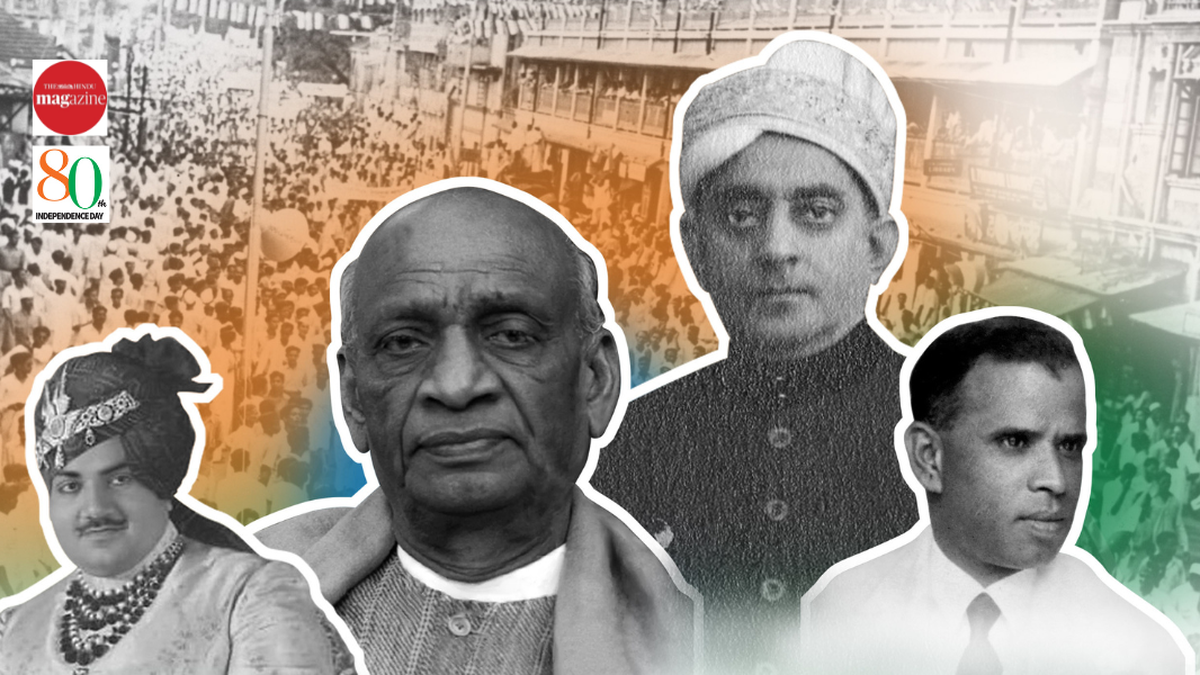
The recent images of police brutality against students during the non-violent Cockroach Janata Party-led protests shocked and mobilised a nation supposedly too apathetic to care. They also raised a question: how did we become subjects rather than citizens, governed by a state that inflicts violence on the very population it claims to serve? To understand why freedoms are so contested, we must first understand how our nation won its independence.We like to imagine history as a slow march of ants, patiently accumulating sand until they build a mound. But history is just as often a boot coming down in a sudden stamp, compressing decades of change in weeks. Josy Joseph’s Birth of a Nation: The Twenty-One Days That Made India is a thriller disguised as history, capturing three frenetic weeks between July 25 and August 14, 1947, when bureaucrats, princes, ministers, and spies raced against time to prevent Balkanisation and accomplish “nothing less than the creation of an independent nation.” The book is the product of a decade-long excavation: Joseph and a research team pored over declassified State Department records, royal private papers, and MI5 files to construct a meticulously dated timeline.Struggle for a united IndiaIn the summer of 1947, freedom had at least three competing definitions: “the Congress, determined to create a republic,” the Muslim League “hell-bent on an independent Pakistan,” and the powerful princely states, “a third front determined to be independent of both.” When power is at stake, ideology bends easily; hence one of history’s ironies: both the Hindu Mahasabha and the Muslim League, which were bitter rivals, endorsed the princely states’ right to resist integration.Between the podiums and the flag hoisting, many battles were being fought that summer. Sir Conrad Corfield, private secretary to the Viceroy, ordered the organised destruction of confidential files carrying the princes’ secrets and scandals — his one last act to protect his old clients from the country about to inherit them. Trying to prevent him and the fragmentation of India was the States Department, hurriedly assembled under Sardar Vallabhbhai Patel and V.P. Menon. “[Their] objective was to create a united India while minimising the chaos — a process that meant coaxing, cajoling, threatening, and, if needed, confronting rulers and pushing them into accession,” writes Joseph.Menon, a former mine worker who served as constitutional adviser to the Viceroy, knew that asking the princes for everything would be rejected, so he asked for almost nothing: just Defence, External Affairs, and Communications, leaving their wealth and internal rule untouched. Menon (and many like him) may rarely appear in the 1947 textbook version, but his impact was immeasurable. As Joseph says, the standard narrative of Independence centres on “the Gandhian non-violent movement” and the spotlight is on the “towering personalities of that period.” What gets lost in the process are “the remarkable stories” of those who worked “in the shadows cast by these titans” to build a united India. Here, he pulls a new cast of shadow players from beneath the familiar titans of 1947.Unfinished task of freedomDefiance, that summer, wore many disguises. There was scale in Hyderabad, a state so massive — “larger than England and Scotland combined” — that its independence alone could have redrawn the subcontinent. In Junagadh, there was deception, as the Dewan publicly courted Delhi while privately signing the accession to Pakistan, a fact revealed only on the morning of the 15th. In Jodhpur, there was brinkmanship: the Maharaja pulled a pen-pistol on Menon before accepting Delhi’s terms over Jinnah’s. And in Travancore, it took an assassination attempt on Dewan C.P. Ramaswami Aiyar to crumple a sovereignty project that had, until July 25, seemed unstoppable.Even the Northeast carried its own unfinishedness into the new republic, from a Naga accord that broke almost as soon as it was signed to a Tripura absorbing refugees while its own succession stayed uncertain. In short, “India was being born amid unfinished arguments. The princes were still bargaining for privilege, the provinces were already bleeding, the hill peoples were demanding to be heard before being absorbed.”At the stroke of the midnight hour, Joseph writes that “some danced on the streets; others hid behind shuttered doors. It was a night of hope and uncertainty, of joy and of fear.” The incompleteness held even then. Minutes after Jawaharlal Nehru delivered his famous ‘tryst with destiny’ address, Lord Mountbatten opened an envelope expecting to find the new cabinet’s names. Only a blank sheet of paper stared back — a republic still waiting to take shape.Nearly eight decades on, the thrones have vanished, but the reflex that built them — the instinct to centralise, to govern subjects rather than raise citizens — has outlasted them. As the book reminds us, a republic is hard-won; its preservation depends on understanding its roots. Birth of a Nation: The Twenty-One Days That Made India Josy Joseph₹795WestlandThe reviewer is a journalist, writer, and editor
Silent architects of the Republic | Review of Josy Joseph’s Birth of a Nation
Full Article
Original Source
Read the full article at Thehindu →KhanList aggregates and links to publicly available news content. We do not host full articles from third-party sources. Always verify important information with original sources.