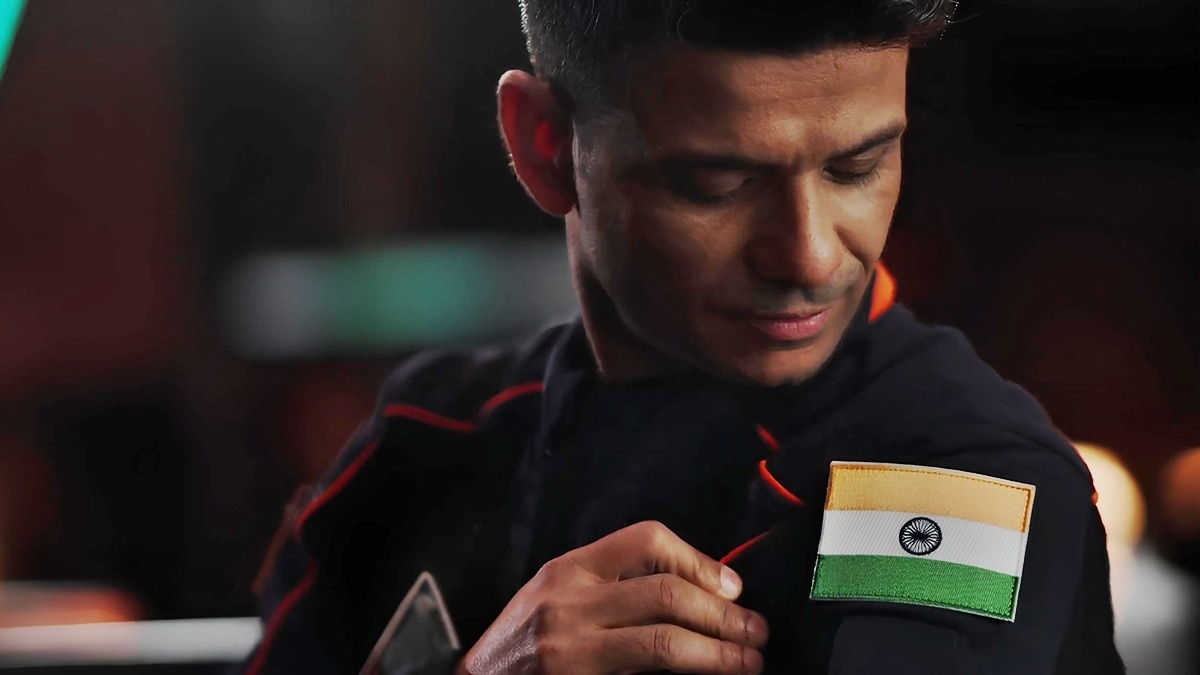
On a podcast with Raj Shamani, astronaut Shubhanshu Shukla recalled tearing up as India came into view from the ISS. The moment highlighted both the emotional pull of home and the strange effects of microgravity.Indian astronaut Shubhanshu Shukla has shared one of the most emotional moments of his journey to space, revealing how his eyes welled up the first time he saw India from the International Space Station, only to realise that tears were missing. He was talking on a podcast with Raj Shamani.Speaking in the podcast, Shukla recalled that the moment came nearly four days after arriving aboard the International Space Station (ISS) during his 2025 mission.The space station was travelling from south to north, moving over the Indian Ocean towards the Himalayas, when India slowly emerged into view. "It was coming out of the darkness of the Indian Ocean as the station entered the peninsular region," Shukla said.From nearly 400 kilometres above Earth, he was able to identify several major Indian cities, including Pune, Bengaluru, Hyderabad, Delhi and Lucknow, before tracing the India-Bangladesh border. In less than a minute, the space station had crossed the subcontinent and was already over the Himalayas. "I still get goosebumps recalling it," Shukla said. "I remember getting teary. My eyes filled with water and I instinctively started wiping them, but everything had dried. It was such an emotional moment, and then suddenly it also became a learning experience."The unusual experience is a result of microgravity.On Earth, gravity pulls tears down our cheeks. In space, however, there is no gravity to make tears fall. Instead, tears collect around the eyes and eyelids, forming a thin film or floating droplets.Astronauts often have to blink repeatedly or wipe the moisture away because it does not naturally drain.Shukla said he could feel that his eyes had become wet, but there were no tears rolling down his face.The phenomenon is also linked to the International Space Station's highly efficient life-support system, where about 98% of water and moisture is recycled.Everything from humidity in the cabin to astronauts' sweat, breath and even urine is purified and converted back into drinking water, making water one of the most carefully managed resources in orbit.For Shukla, however, the memory is about much more than science. Seeing India illuminated against the darkness of space was a deeply personal experience, one that briefly brought him to tears, even if those tears refused to fall.Shux is now preparing for India's crewed spaceflight mission Gaganyaan.- EndsPublished By: Sibu Kumar TripathiPublished On: Jul 23, 2026 11:06 IST
Shux recalls how he got teary looking at India, but tears disappeared
Full Article
Original Source
Read the full article at Indiatoday →KhanList aggregates and links to publicly available news content. We do not host full articles from third-party sources. Always verify important information with original sources.