
LP began crying uncontrollably when she learned that her immigration hearing had been moved up and transferred from the court in San Antonio, Texas, to a family detention center. Her mind raced: “They’re going to arrest me,” she thought. “What’s going to happen to my daughters?” The 30-year-old Venezuelan woman, who asked not to be identified for fear of reprisals, had six days to decide whether she would attend.She had been summoned to the South Texas Family Residential Center, better known as “Dilley” after the remote Texas town where it is located. The facility is an hour and 20 minutes by car from her home in San Antonio.In July, Congressman Joaquín Castro, together with 111 fellow lawmakers, sent a letter to the federal government demanding Dilley’s closure. “Children have reported that their food is often contaminated with worms and mold and that they feel sick after drinking tap water,” they wrote. They also cited families unable to sleep because the lights remain on throughout the night; inadequate and insufficient medical care; detention periods exceeding legal limits; and children who were “depressed” and unable to understand “why their lives suddenly went from spending their days at school learning and playing with their friends to being imprisoned at Dilley.”After the November 3 midterm elections, in which Democratic candidates won key statewide offices in Texas, more families like LP’s began receiving similar summonses directing them to the detention center, a complex built from tents and shipping containers. In her case, a hearing originally scheduled for 2028 was moved forward to early November 2026.The organizations consulted agree that the individuals summoned to appear in Dilley are people who are not in custody, who have regularly appeared in court, who do not have attorneys, and whose preliminary hearings had been held in San Antonio courts.Laura Flores-Dixit, an attorney with immigrant-rights group American Gateways, told EL PAÍS that she knows of families summoned to Dilley who live in Waco, Texas, nearly a five-hour drive away. Kristin Etter, director of legal services at the Texas Immigration Law Council, said their first thought on seeing these summonses was that they were “fraudulent.” They later met more families in the same situation and realized they were real. Alongside Florida, Texas is one of the states where local law enforcement agencies have been required by state law to cooperate with the administration of Donald Trump in the detention of immigrants. Laura Flores-Dixit condemns the fact that families must travel for hours on Texas highways to reach Dilley, exposing themselves to possible encounters with immigration agents: “You cannot have due process when someone is afraid to go to their hearing and be arrested on the way, or is afraid of being arrested when appearing in court.”Families summoned to Dilley have two options: fail to appear and automatically receive a deportation order in absentia, or comply with the summons and risk being detained at the facility.EL PAÍS asked both the Department of Homeland Security (DHS), which oversees Immigration and Customs Enforcement (ICE), and the Department of Justice (DOJ), which manages the immigration courts, about the hearings being held in Dilley. An ICE spokesperson confirmed that hearings are being held inside Dilley’s courtroom and that DHS “is working quickly and overtime to remove those foreigners to their final destinations: their homes.”A decisionLP tried to get an attorney to help change the hearing to a video appearance, but all of them told her that six days was not enough time to arrange the switch. She decided to report to Dilley.She did not sleep the night before. During the drive there, in a car driven by an acquaintance, intrusive thoughts consumed her. Upon arriving, a guard checked her name against a list. There were not many others marked the same way. She entered nervously.She was told to leave all her belongings — including her cellphone — in a locker. She waited until she was taken to a small room that contained nothing but a screen. A guard stood behind her, watching. The judge appeared on the monitor, asked her a series of questions, and instructed her to obtain a lawyer and update her asylum application with additional evidence.When she came out, three immigration agents were waiting: “Sit here,” they told her. “I thought it was all over at that point,” she said. The agents fitted her with an ankle monitor so they could track her location at all times: “I cannot move more than 70 miles from home.” In late November, just before the U.S. Thanksgiving holiday, LP must report to agents at an Immigration and Customs Enforcement (ICE) office. LP’s experience mirrors that of around 20 people who received the same type of summons to Dilley, according to accounts gathered by EL PAÍS from lawyers, activists and migrants who were called to appear there.“There is no other purpose here by the government than to terrorize and traumatize the families summoned,” said Etter. She believes that many families with children will fail to appear because they did not receive the notice in time, did not believe it was genuine, were terrified by the prospect of being detained in Dilley with their children, or could not afford to spend hundreds of dollars on an Uber ride to get there.“It is clearly designed both to intimidate and to guarantee a high number of deportations and rulings against those who do not appear,” she added. “It imposes an extraordinary logistical and psychological burden on people who are complying with the legal process.”However, Etter says that, so far, they have not encountered any families who were actually detained.The fearPastor Dianne García, whose church is in San Antonio, told EL PAÍS that after the Democrats’ victory in the midterm elections, she had hoped ICE would ease its targeting of the immigrant community, but that has not happened. Since Trump began his second term, the Excel spreadsheet on which she tracks members of her community who have been arrested or deported, as well as separated families and children left behind, has continued to grow. Measures such as holding immigration hearings in Dilley, she believes, have only made matters worse.LP feels the pressure has intensified over the past five months. Since then, she has stopped delivering food for Uber and no longer takes her daughters, aged 12, 8 and six, to the park, a restaurant or a shopping mall. They have shut themselves in: the girls go from home to school by bus — and back — and she goes from home to work without making any stops. LP says she now has “the same fear” she felt in Venezuela, where she was pursued and threatened by the military. “But I hope things change faster here than in Venezuela. That government is never going to fall,” she says, referring to the administration of Delcy Rodríguez, the Chavista leader who took charge of the country after the U.S. military operation in which Nicolás Maduro and his wife were arrested.Her next Dilley hearing is in early December. She has not yet found a lawyer nor managed to update her asylum claim. She says she is terrified by what may happen next: she believes she got lucky at the previous hearing, but fears that at the next one she could be detained in Dilley and separated from her daughters.Sign up for our weekly newsletter to get more English-language news coverage from EL PAÍS USA Edition
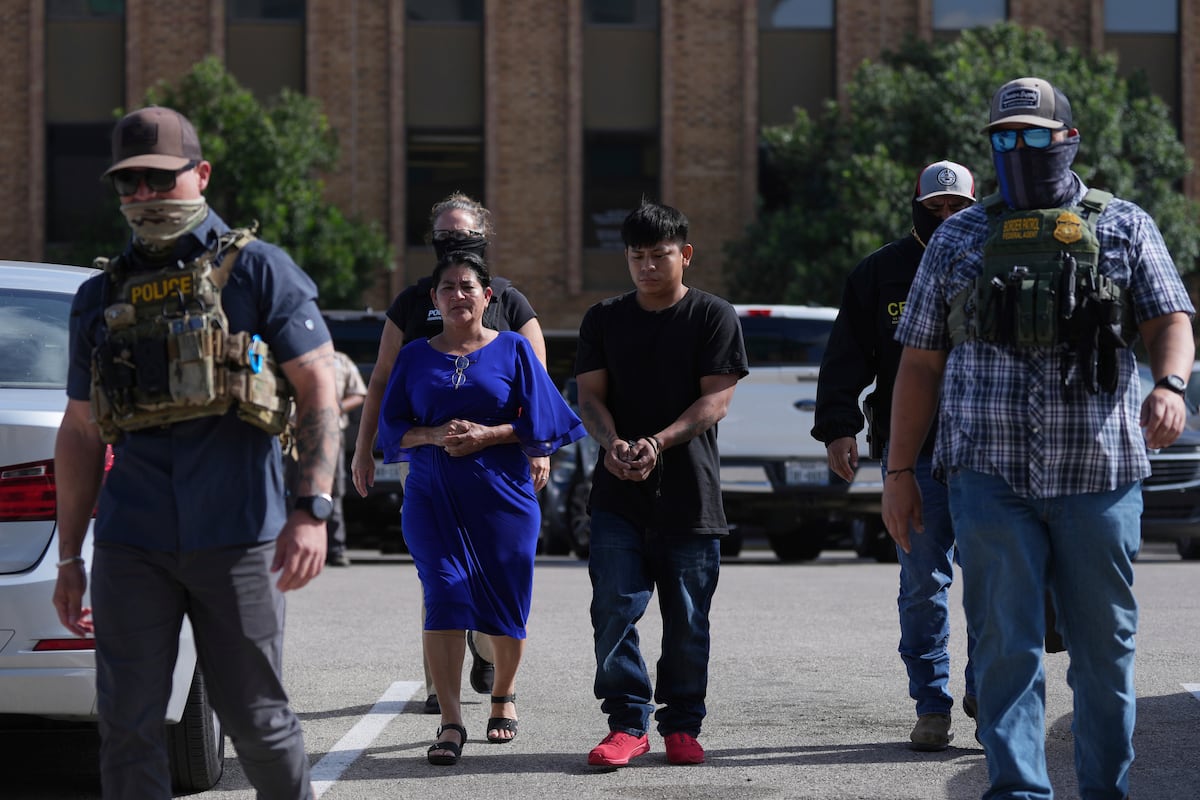
Show up or risk deportation: The dilemma facing dozens of migrant families summoned to a Texas detention center
Full Article
Original Source
Read the full article at English →KhanList aggregates and links to publicly available news content. We do not host full articles from third-party sources. Always verify important information with original sources.