
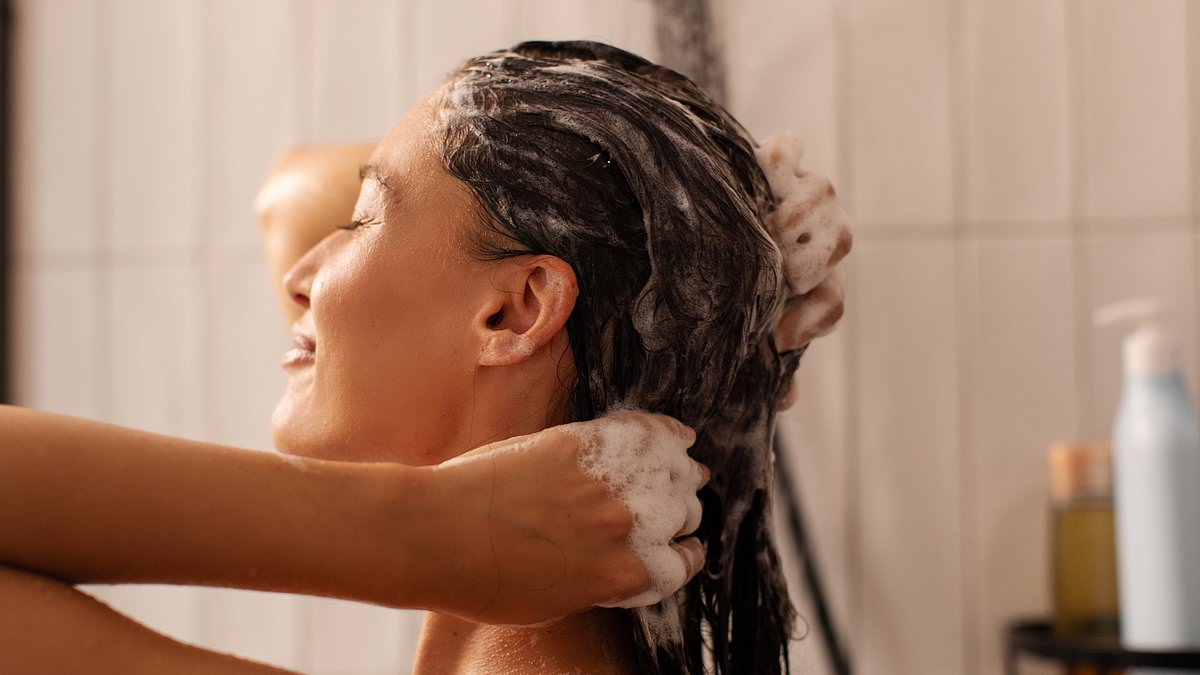
It's something most people do at least once a day without really thinking twice about it. But when you're in the shower, do you wash your hair, body, or face first?A furious debate has erupted on X, with users divided on what the ultimate shower routine should be. 'If you start your shower with shampoo, we can all just kinda assume you're probably cooked bc why the f*** are you doing that,' one user said in a viral tweet. Another argued: 'i do all hair stuff first and then finish with washing body to remove any excess hair product left on my skin bc it can clog pores and cause acne.'And one joked: 'Top to bottom gravity rules, it makes total sense.'Now, scientists have settled the debate once and for all – and it's bad news if you usually wash your body first.Speaking to the Daily Mail, Dr Primrose Freestone, a microbiologist at Leicester University, said: 'Washing and conditioning hair comes first. Then top down in terms of the face, the rest of the body ie arms and shoulders, back and the below the waist gets soaped and rinsed off.' It's something most people do at least once a day without really thinking twice about it. But when you're in the shower, do you wash your hair, body, or face first? (stock image)A furious debate has erupted on X, with users divided on what the ultimate shower routine should beDr Freestone – who could well be Britain's cleanest woman – follows a strict shower routine. 'Technically the body only needs to be washed once every other day,' she told the Daily Mail.'But if you are quite precious about your hygiene you do actually need to have a good wash every day.'Towels in the Freestone household are only ever used a single time before they are put straight into the wash at 60°C (140°F).Shower mats are only used for a week before they're also sent off for a hot wash, and even the shower head itself gets a weekly scrub with antibacterial hand wash.'The shower head gets colonised by everything that's in tap water,' the microbiologist explained.'Getting Legionella in your shower head is not a good idea at all.'While Dr Freestone thinks the correct shower routine is hair first, face next, and body last, not everyone is so convinced. In fact, Dr Matee Rajput, clinical director of KSL Clinic, claims that this order should be reversed. Dr Primrose Freestone is associate professor of Biological and Biomedical Sciences at the University of Leicester, and could well be Britain's cleanest woman 'Your shower routine should start with washing your body, then face, and finish with your hair,' he advised. 'Showering in this order prevents shampoo and conditioner residue from staying on your skin and scalp for a long time, which can clog pores and damage hair follicles.'While many people apply conditioner and then wash their body, Dr Rajput also says this should be avoided. He explained: 'Hair product residue left on the scalp too long can build up and block follicles, like pores on your face. 'This blockage prevents healthy hair growth and may eventually lead to thinning.'The news comes shortly after scientists weighed in on just how long we should really be spending under the stream of water.According to Dr Pablo Pereira–Doel, an environmental scientist from the University of Surrey, people having a body–only shower only need three minutes to get the job done.'Three minutes is a sensible target for a body shower, with two more if you're washing your hair,' he told the Daily Mail. 'This includes leisure water, meaning enjoyment under the shower.'Ultra–conscientious bathers who turn off the tap while lathering could get this down to just one minute for a quick body rinse, two minutes if you add shampoo and three minutes with conditioner, he said.
Should you wash your hair or body first in the shower? Scientists settle the debate - as it leaves social media divided
Full Article
Original Source
Read the full article at Dailymail →KhanList aggregates and links to publicly available news content. We do not host full articles from third-party sources. Always verify important information with original sources.