
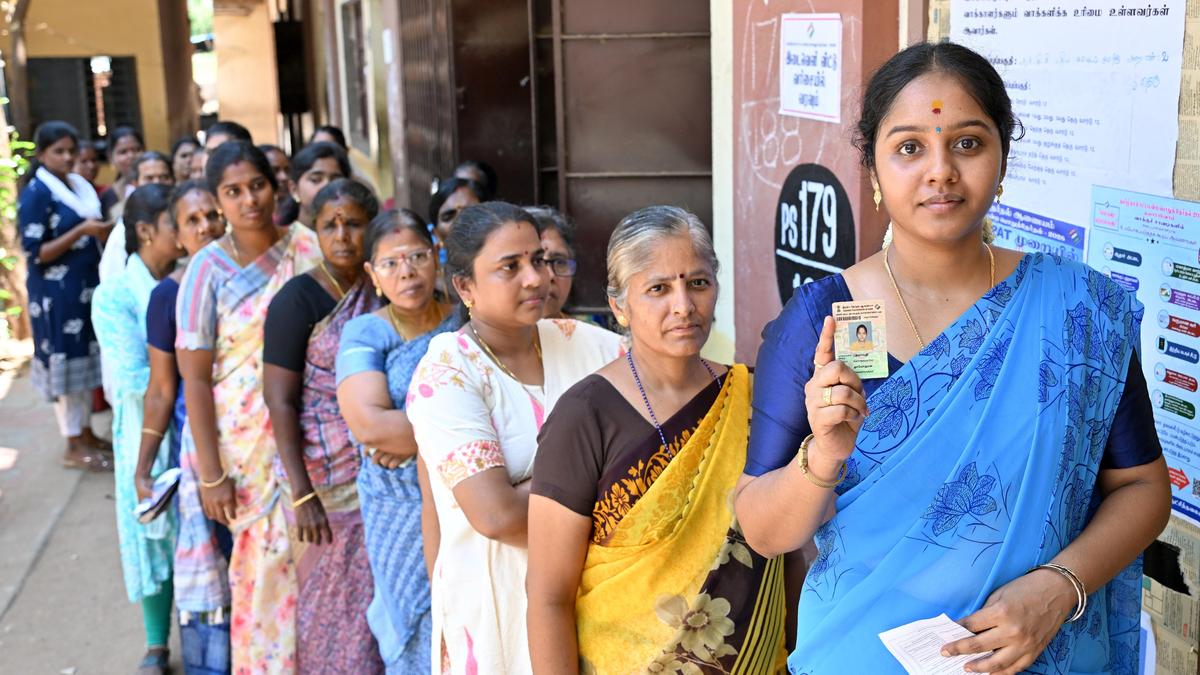
Even though it is not a fundamental right, courts have regarded the ‘right to vote’ as an inseparable part of democracy, anchoring their reasoning in the idea that it enables citizens to shape governance | Photo Credit: R. ASHOK On September 23, an Indian Express investigation revealed an unprecedented rift within the three-member Election Commission of India (EC), with Election Commissioners Sukhbir Singh Sandhu and Vivek Joshi recording 14 objections over 10 months against Chief Election Commissioner Gyanesh Kumar, regarding alleged unilateral changes to rules, voter additions/deletions, and centralised data access, without the Commission’s full approval.The report also found that 97 eligible voters from Goa were excluded from the electoral roll after the centralised ECINet software prevented ground-level Electoral Registration Officers (ERO) from reversing decisions. More concerningly, the consequences extend beyond the loss of voting rights. Reportedly, several State schemes use electoral rolls to establish eligibility, including the Goa Mediclaim Scheme. The scheme covers super-speciality treatments unavailable in government hospitals, such as dialysis, angioplasty, open-heart surgery, transplants, chemotherapy and cochlear implants, and is available only to State voters. This issue has once again cast a spotlight on the ‘right to vote’, the foundational processes of India’s electoral machinery, and the genesis of India’s ‘universal adult suffrage’ (UAS). Published - September 28, 2026 07:30 am IST
Should voting be a fundamental right?
Full Article
Original Source
Read the full article at Thehindu →KhanList aggregates and links to publicly available news content. We do not host full articles from third-party sources. Always verify important information with original sources.