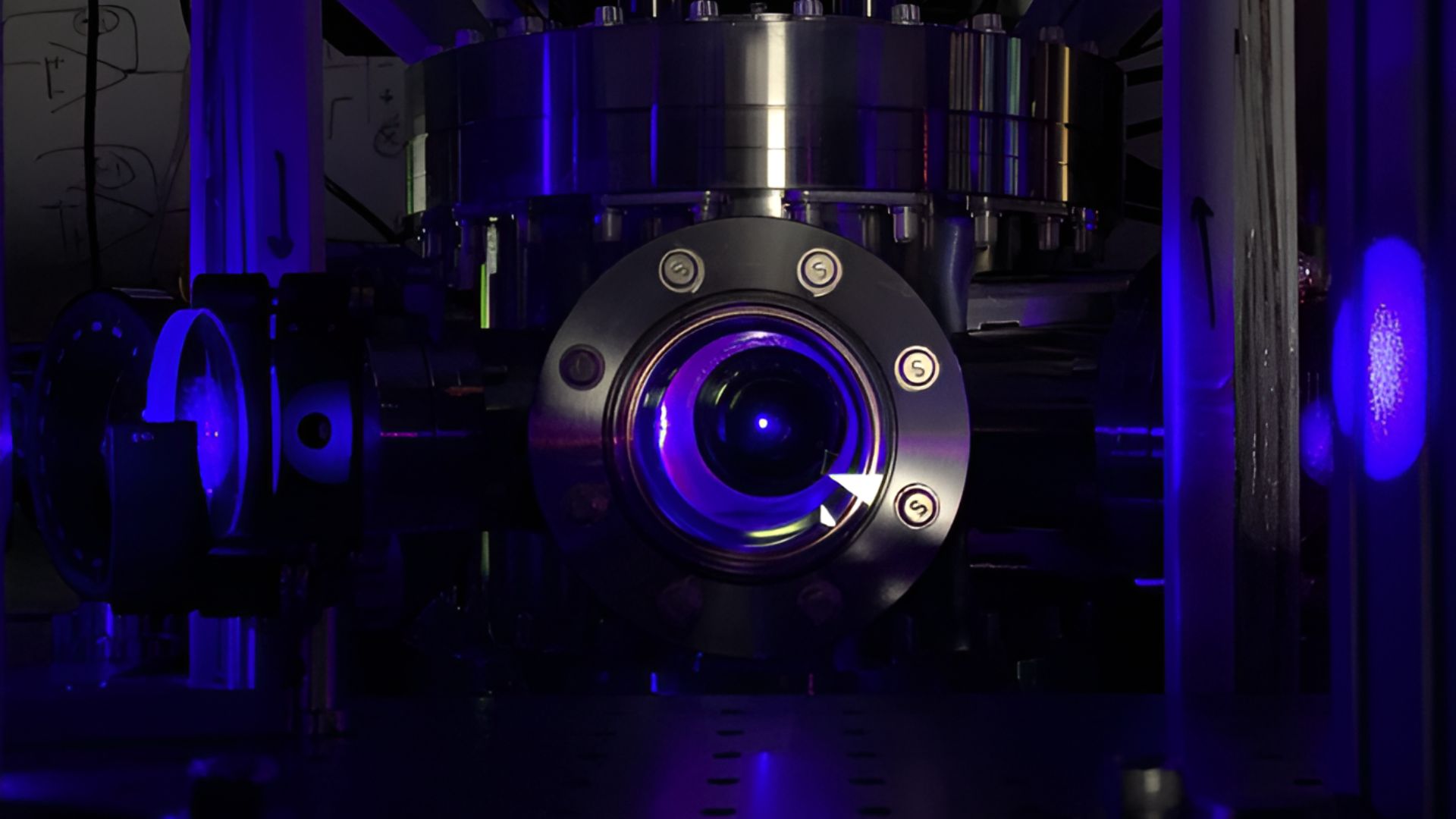
IonQ has secured a $28 million contract extension from the Defense Advanced Research Projects Agency (DARPA) to expand production of its optical atomic clocks, marking another step in the U.S. military’s push for more resilient timing technology. The award falls under DARPA’s It’s About Time program and calls for IonQ to manufacture and deliver 125 Evergreen-05 optical atomic clocks to U.S. government customers. The systems will support applications such as radar, secure communications, and precision geolocation, where highly accurate timing remains critical. Compact clock design The Evergreen-05 traces its origins to DARPA’s earlier Robust Optical Clock Network program. IonQ gained the technology after acquiring Vector Atomic in 2025, bringing advanced quantum timing and sensing capabilities into its portfolio. Reducing the size of optical atomic clocks has been a longstanding engineering challenge because laboratory-grade performance typically requires large, complex hardware. A compact design makes the technology practical for deployment on operational platforms. Unlike traditional laboratory-scale systems, the Evergreen-05 fits inside a five-liter enclosure roughly the size of a shoebox. Despite its compact footprint, the clock delivers timing stability of 50 femtoseconds at one second and can maintain nanosecond-level accuracy over a 10-day holdover period. IonQ projects that performance would translate to less than one second of timing error over 30 million years. Engineers also designed the platform for field deployment. The system occupies about one-seventy-fifth the volume of an active hydrogen maser while offering lower phase noise and stronger short-term stability. Its ruggedized package allows operation across land, maritime and airborne environments. Expanding manufacturing capacity Meeting the new production target will require a significant manufacturing expansion. IonQ plans to invest $15 million in dedicated production space, advanced manufacturing equipment, testing infrastructure and additional personnel to support clock assembly and qualification. Company executives said the investment will help transition the technology from limited production into larger-scale manufacturing for government customers. “We added Vector Atomic to the IonQ family because their clocks and sensors are the best in the world,” IonQ Chairman and CEO Niccolo de Masi said. He added that DARPA‘s latest investment reinforces the company’s decision to acquire the startup. DARPA first backed Vector Atomic in 2019, when the California startup was only a year old. That early funding helped the company demonstrate the underlying optical clock technology before its acquisition by IonQ. Scaling clock production Marty Boyd, director of IonQ’s timekeeping division and a Vector Atomic co-founder, credited DARPA’s long-term support with helping move the technology toward commercialization. “DARPA has been a partner every step of the way,” Boyd said. “That initial support was critical to prove the core concepts of our clock.” He said joining IonQ accelerated plans to scale commercial production, and the new contract provides an opportunity to expand manufacturing and deliver the technology to government users. Optical atomic clocks have attracted growing attention across the defense sector because they can maintain extremely precise timing even when GPS signals become unavailable or degraded. That capability could improve navigation, synchronization, and communications during military operations where traditional satellite-based timing cannot be relied upon.Recommended ArticlesGet the latest in engineering, tech, space & science - delivered daily to your inbox.Aamir is a seasoned tech journalist with experience at Exhibit Magazine, Republic World, and PR Newswire. With a deep love for all things tech and science, he has spent years decoding the latest innovations and exploring how they shape industries, lifestyles, and the future of humanity.
Shoebox-sized atomic clocks losing one sec in 30 million years win $28M DARPA deal
Full Article
Original Source
Read the full article at Interestingengineering →KhanList aggregates and links to publicly available news content. We do not host full articles from third-party sources. Always verify important information with original sources.