
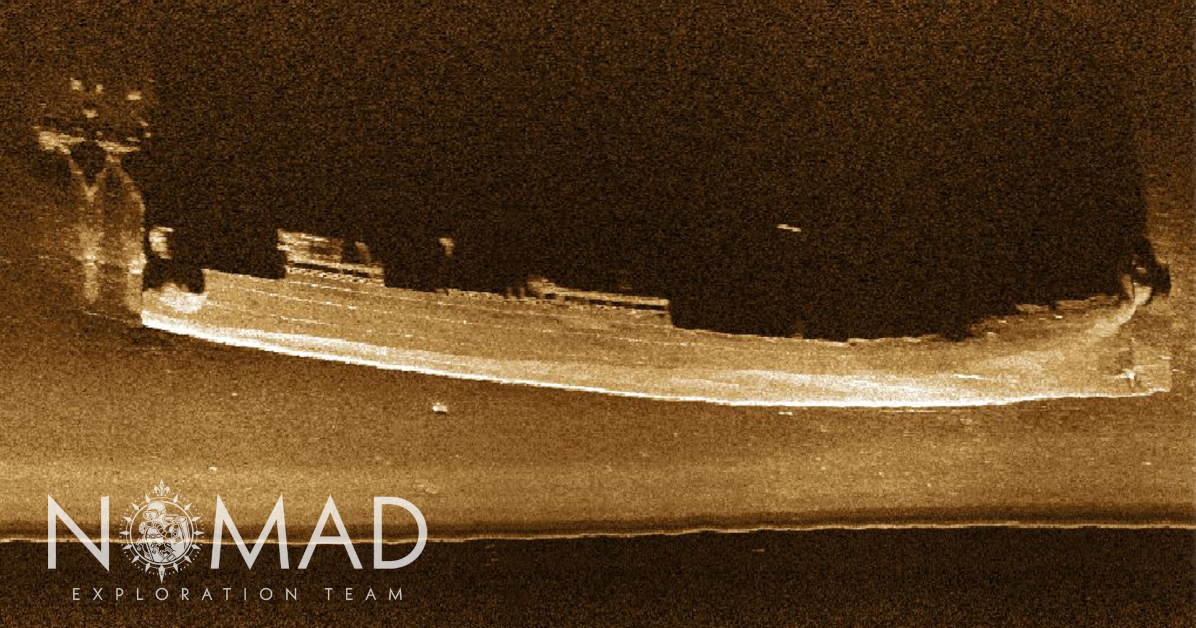
By Stephen Smith Managing Editor Stephen Smith is a managing editor for CBSNews.com based in New York. A Washington, D.C. native, Steve was previously an editorial producer for the Washington Post, and has also worked in Los Angeles, Boston and Tokyo. Read Full Bio October 29, 2026 / 6:39 AM EDT / CBS News Add CBS News on Google A German submarine slipped through frigid New England waters and covertly dropped off two Nazi spies in Maine on Nov. 29, 1944. Their assignment was to gather intelligence in the United States at the height of World War II.Just four days later, the same U-boat spotted a merchant ship in the area and fired a torpedo that struck its cargo hold. The vessel, a 400-foot Canadian steamship called SS Cornwallis, sank in just 10 minutes. Only five of the 48 people on board survived.Now, more than 80 years later, the wreckage of the Cornwallis has been found. After numerous expeditions over the years, the wreckage was located in July nearly 400 feet below the ocean's surface, the Nomad Exploration Team announced this week. Side scan sonar revealed the wreckage of SS Cornwallis nearly 400 feet below the ocean's surface, the Nomad Exploration Team said. Nomad Exploration Team The New Hampshire-based team said it had to contend with cold water, strong currents and remote locations to reach the massive vessel. Finally, side scan sonar revealed the wreck, and later dives confirmed the vessel's identity, the team said."For the team, finding the wreck was the culmination of years of persistence," said dive team member Danny Allan. "For the families and communities connected to the ship, it brings renewed attention to a largely forgotten tragedy."The Cornwallis' final voyageLaunched in 1921, the Cornwallis was a 5,458-ton steam merchant ship built in Vancouver, British Columbia. Originally called the Canadian Transporter, the ship was later renamed Cornwallis after transferring to Canadian National Steamships. Launched in 1921, the Cornwallis was a 5,458-ton steam merchant ship built in Vancouver, British Columbia. Nomad Exploration Team On Sept. 11, 1942, while anchored in Barbados, a German sub fired torpedoes at the Cornwallis, severely damaging the vessel. However, the ship only partially sank in shallow waters and was later repaired and put back in service. In November 1944, the ship left Barbados packed with a cargo of sugar and molasses, bound for St. John, New Brunswick. According to nautical historian Eric Wiberg, the Cornwallis was equipped with a 4-inch gun, a 12-pound gun and machine guns on the bridge. None of the weapons were ever fired.On Dec. 3, as the ship moved along the Maine coastline, it was spotted by the German submarine U-1230, commanded by Hans Hilbig. The U-boat fired a torpedo that struck near the Cornwallis' bow and the vessel plunged below the surface in less than 10 minutes.Only six of the 48 people aboard were able to reach life rafts, and one died of hypothermia. The five survivors were ultimately picked up by fishing boats, then transferred to a U.S. Navy ship that took them to Rockland, Maine."Underwater time capsule"The demise of the Cornwallis gained notoriety when it was revealed what the U-boat had done just a few days before. On Nov. 29, 1944, the same submarine landed two German agents, Erich Gimpel and William Colepaugh, near Hancock, Maine, to spy on the U.S. According to a 2018 Main Line Today article, Colepaugh was an American who traveled to Germany in 1944 to train in espionage. After being dropped off by the sub, the two agents ultimately made their way from Maine to New York City without being detected. After the Cornwallis was sunk off Maine, American authorities launched an investigation to determine whether the same submarine had landed enemy agents on U.S. soil. The FBI later learned that residents had seen strangers roaming through Hancock, Maine, around the time of the sinking of the merchant ship.Ultimately, the agents' mission came to a crashing halt in New York City. Colepaugh confessed to a friend, who contacted the FBI, and Gimpel was arrested just days later. Both men were sentenced to death by a military court, but their sentences were later commuted to life in prison. Erich Gimpel, right, of Germany, who was convicted together with William Colepaugh, unseen, as a Nazi spy, sits with his guard during a recess at his trial at Fort Jay, Governors Island, New York on March 14, 1945. AP Photo While U-1230 survived the war until it was scuttled in 1945, the location of the Cornwallis long remained a mystery – until now."Lying at nearly 400 feet, the Cornwallis is no longer the ship that sailed north with sugar and molasses," the Nomad Exploration Team wrote. "She is an underwater time capsule from one of the most unusual episodes of the war along the Maine coast." In: Shipwreck World War II Maine Shipwrecks and the tantalizing allure of the sea 07:43 Shipwrecks and the tantalizing allure of the sea (07:43)
Ship sunk by infamous Nazi sub in 1944 found off coast of Maine
Full Article
Original Source
Read the full article at Cbsnews →KhanList aggregates and links to publicly available news content. We do not host full articles from third-party sources. Always verify important information with original sources.