
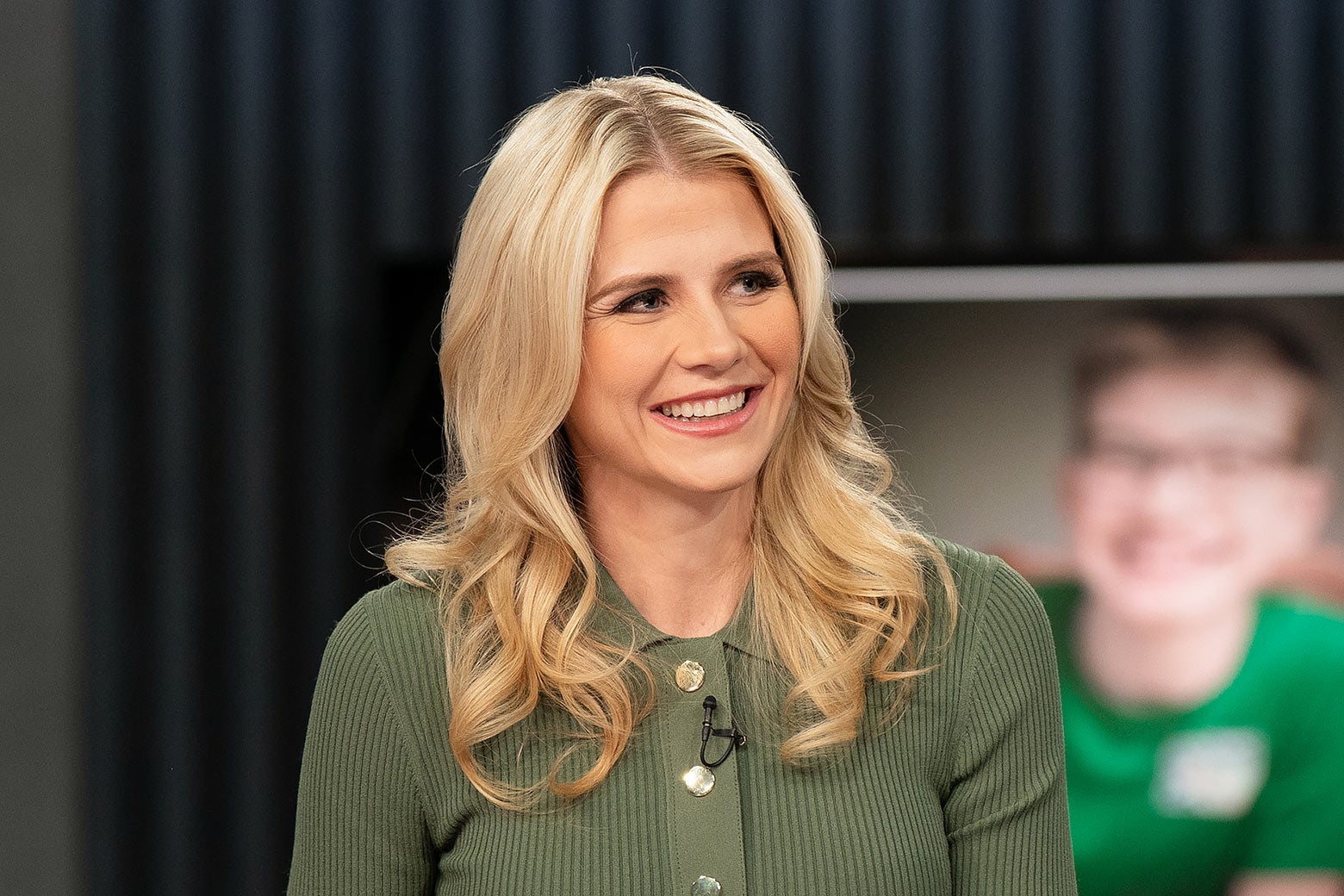
Crime Elizabeth Smart Has Taken Perhaps the Last Job You’d Ever Expect With her new show The Survivor Files, Smart has become a new kind of true-crime podcaster. Fox via Getty Images Sign up for the Slatest to get the most insightful analysis, criticism, and advice out there, delivered to your inbox daily. Elizabeth Smart has been telling her story for over a decade, in memoir, onstage, and recently, in a Netflix documentary. She doesn’t flinch from its horrific details: how the captors who kidnapped her in 2002—one who believed he was Mormon prophet and his wife—held her in the woods, where she was routinely tied up, starved, and sexually assaulted. This year, Smart took perhaps the last job you’d ever expect: true-crime podcast host. In The Survivor Files, she talks to other survivors of kidnapping and sexual violence, and they really dig into the details. Her show has all the trappings of true-crime podcasts you’ve heard before—911 tape-recordings, foreboding music—but here’s the difference: The women at the center of these crimes are telling us their experiences. We’re not just consuming their stories. We’re bearing witness, and hearing from them what came after. On a recent episode of Death, Sex & Money, host Anna Sale spoke to Smart about helping survivors take command of their own stories. This transcript has been edited and condensed for clarity. Anna Sale: On The Survivor Files, you talk to survivors whose stories have a lot in common with yours, and ones who experienced totally different crimes. Elizabeth Smart: Not everyone is going to feel like they have a connection to me, but I find it hard to believe that if you are a survivor, you wouldn’t find that with the other survivors I have on my new podcast. Someone is going to speak to you and you’re going to be like, I know how that feels. OK, I feel inspred to keep going. When someone shares that they’ve been raped with me, I’m not going turn to them and be like, “Well, what were you wearing? Why didn’t you scream? Why didn’t you report?” Hopefully it helps change all of that. I want to ask you as a peer, as an interviewer, what your experience has been in that role on the show. You said in the New York Times that you wanted to help your guests walk through, beat by beat, what happened—because if you don’t understand the depth of how dark it was, you said, how can you understand how incredibly bright they shine now? When you’re interviewing someone who has gone through a terrible trauma, how have you thought about asking them to retell it for a public audience, having been in that position over and over again yourself? When I sit down and I interview someone, I do try to think of myself, of how I’ve felt when people have asked me questions that I didn’t like or that I felt like could’ve been asked better. I try to approach the stories from that angle: How would I feel if I was asked this question? Is there a better way I could ask it, a way that would put them more at ease? I want this to be an empowering experience for them. I want them to feel pride in sharing their story, I don’t want it to be something that’s dragging them backwards. I want to ask you about retelling your story for the Netflix documentary. You are on camera and you are retelling the story of what happened. You retell it in a similar tone to how we’re talking now. I never worried for you in the way that you talked. I was struck that for the other people in your family, it seemed much more difficult for them to go back to that time on camera. Did you notice that too? A lot of them don’t talk about it. It was the hardest part of their life, and it was the worst time in their life. Unless it’s serving a purpose, who wants to continually live in the worst part of their life? So I mean, my sister, you know, she doesn’t go back down that path every day. She’s a schoolteacher, she works with special ed students every day. Everyone’s moved on with their life. I have moved on with my life, but in a direction where I feel like my story can serve a greater purpose. There’s a reason for it to be in my life still, whereas for the rest of my family, their jobs do not encompass the past. Their day-to-day lives do not involve my abduction. Regarding that greater purpose, what have you noticed has happened because you have been able to talk clearly and unblinkingly about what happened to you and about how your life looks now? What do you hope that it’s changing in the culture or changing for people who’ve been the victim of trauma or sexual violence? I wouldn’t say it’s just me. There have been people working in this field for many years longer than I’ve even been alive. But I just hope that by me sharing my story, I’m making the world a safer place for victims to come forward and disclose. There’s so much crossover between my experience and so many other people’s experiences. For example, my experience of kidnapping and abduction versus a survivor of domestic abuse. For years I was asked, “Why didn’t you run? Why didn’t you speak out?” And then I hear people say to domestic abuse victims, “You had a car, why didn’t you just drive away? You had a debit card, why didn’t you just do something?” I’ve heard them get asked those kinds of questions. And then for me, I can say, “I have experienced both being physically chained up but then also had so much fear and threats made against my life that they created mental chains around me.” With physical chains, you’re like, OK, I can see how I could get out of this. If I could reach the bolt cutters, I could cut through this. But those mental chains, they are invisible. Usually they’re built upon years and years of manipulation and threat and abuse. It’s not straightforward. So by me just being able to talk about that and talk about how my captors were able to manipulate me, how they were able to control me, then I’ve had survivors from this other world of domestic abuse be like, You know, I wasn’t kidnapped, but that’s exactly how I felt in my abusive relationship. From the outside it maybe looked like I could have just gotten in the car and driven away, but it wasn’t that clear-cut. Crime Sexual Assault Women Podcasts Podcasts
She’s the Most Famous Survivor of the 2000s. She’s Back With the Last Job You’d Ever Expect.
Full Article
Original Source
Read the full article at Slate →KhanList aggregates and links to publicly available news content. We do not host full articles from third-party sources. Always verify important information with original sources.