
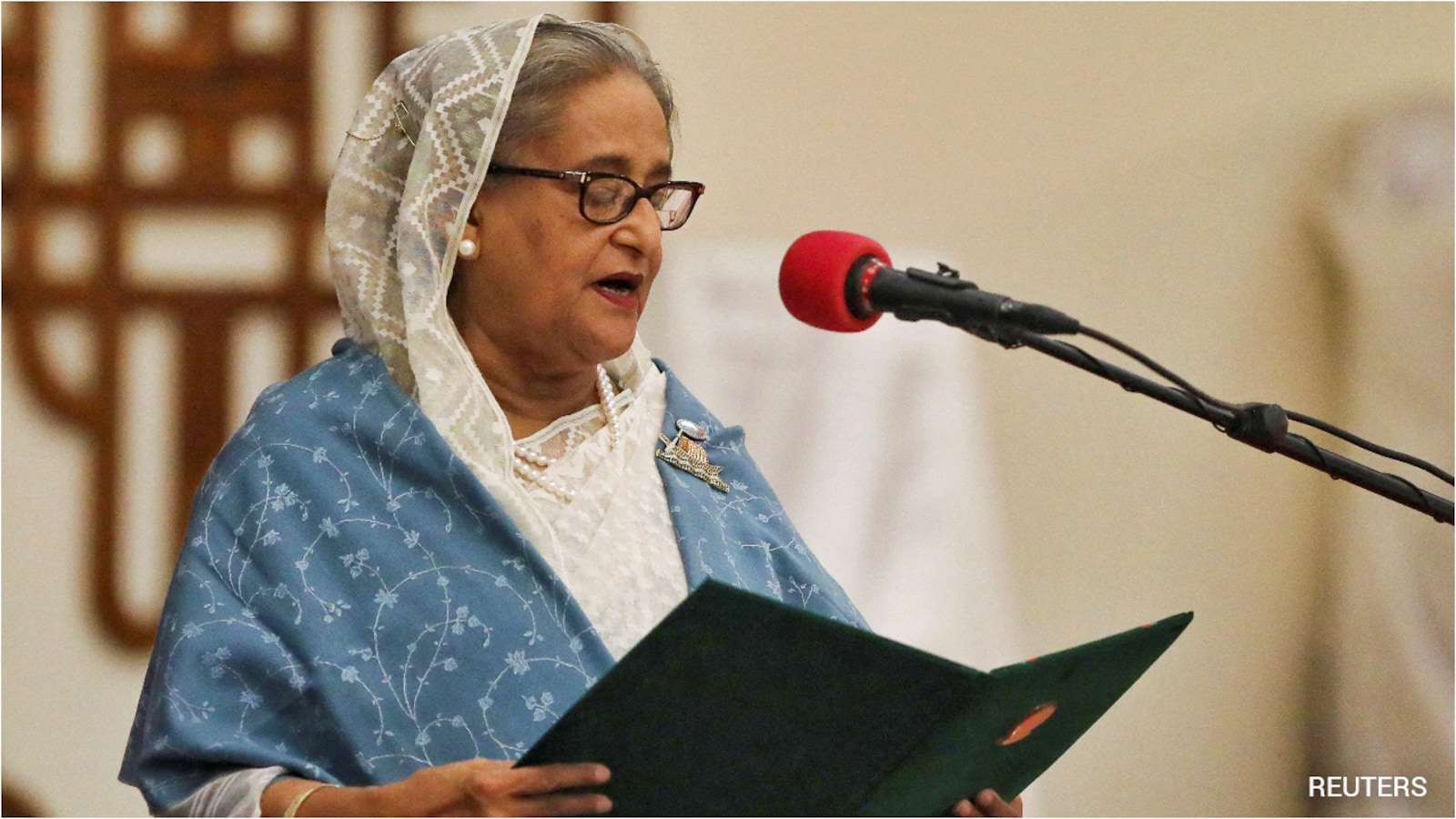
The date is set. The countdown has begun. Ousted Bangladesh Prime Minister Sheikh Hasina is set to return to her home country from exile in India on December 16. The day is no ordinary one. It coincides with the country's Victory Day celebrations, marking the 55th anniversary of the end of Liberation War with Pakistan.East Pakistan vs West PakistanThe partition of British India in 1947 into India and Pakistan not only gave birth to two independent nations but also sowed the seeds of further division and a struggle for Bengali rights.Pakistan gained independence as a country with two non-contiguous territories known as West Pakistan (today's Pakistan) and East Pakistan (today's Bangladesh). The Bengali Language Movement of 1952, demanding official recognition for the Bengali language in Pakistan, became an early flashpoint between the two territories.Economic disparity, the hegemony of the West Pakistani ruling elite over Pakistan, martial law, and a demeaning attitude towards Bengali culture and the Bengali population further soured relations between the two parts.The final nail in the coffin came in December 1970 when the Awami League, led by Sheikh Mujibur Rahman and based in East Pakistan, won the national elections but was prevented from forming a government primarily by the Pakistan People's Party (PPP).The 1971 WarTensions reached a breaking point by March 1971 and on the night of March 25, the Pakistani military launched Operation Searchlight, a brutal crackdown targeting students, intellectuals, political activists, and civilians in East Pakistan. This marked the beginning of the Bangladesh Liberation War.What followed was a nine-month war, which Bangladesh recognises as a "genocide", that led to massive violence and killings estimated at between three lakh and five lakh people. The Bangladesh government puts the figure at three million.Picture taken on December 15, 1971 of Indian army soldiers attacking Naya Chor, in Sind in support of bengali rebels of the liberation army during the Indo-Pakistani War of 1971. This war between East Pakistan and India against West Pakistan resulted in the secession of East Pakistan, becoming the independent nation of Bangladesh."In nine months, the occupation army killed approximately 3 million people, violated over two hundred thousand women, and forced 10 million people to cross the border and take shelter in India," a statement submitted by Stichting Basug (Bangladesh Support Group), a non-governmental organisation in special consultative status with the UN General Assembly in 2022 read.It is claimed that the Guinness Book of Records lists the Bangladesh Genocide as one of the top five genocides of the 20th century. It was one of the worst genocides of the World War II era, outstripping Rwanda (800,000 killed) and probably surpassing even Indonesia (1 million to 1.5 million killed in 1965-66)."The Pakistan Army used organised systematic rape as a weapon of war. Young girls and women were abducted and repeatedly gang-raped in special camps run by the Pakistani servicemen," the statement further read.As millions fled violence and poured into India, the Mukti Bahini, a potent guerrilla force and the face of Bengali resistance, was born. Then PM Indira Gandhi rose to the challenge and from September to November 1971, Gandhi along with Foreign Minister Swaran Singh, travelled across the Western world, attempting to build a consensus for a UN resolution condemning the Pakistani atrocities in Bangladesh."India not only gave sanctuary to the Bangladeshi government-in-exile but also trained and equipped the Mukti Bahini," the Congress party writes.On the night of December 3, the Indian Armed Forces launched a counter-strike in response to Pakistan's surprise attack on eight military airfields in western India."It attacked six airfields and two radar stations. So effective was this counter-attack that the back of the PAF was broken within the first 24 hours of the war, from which it never recovered. The IAF established air superiority by the second day of the war. Nearly 30 enemy aircraft were destroyed or damaged on the first day itself. Pakistan had 18 Sabre jets in what was then East Pakistan. All these were destroyed by the second day of the war, and the Pakistan Air Force was never again in evidence over the scene of battles in the eastern sector," the Congress party claims.In the days that followed, the IAF destroyed several ships of the Pakistan Navy. The conflict ended with the surrender of the Pakistani Army on December 16.Sheikh Hasina's ReturnSheikh Hasina has time and again said that she will return to Bangladesh. In a first, she has given a date which also marks the end of the Liberation War of 1971.The Bangladesh government, however, has made it clear that Hasina can only return "in handcuffs" as a "terrorist". Addressing the media, State Minister for Foreign Affairs Humayun Kobir repeated the terrorism charges against Hasina and said, "People of Bangladesh know only one form of terrorism-- the Awami terrorism sponsored by Sheikh Hasina... She is a convicted criminal -- a fugitive terrorist."
Sheikh Hasina To Return To Dhaka On Dec 16, 55th Anniversary Of Liberation War
Full Article
Original Source
Read the full article at Ndtv →KhanList aggregates and links to publicly available news content. We do not host full articles from third-party sources. Always verify important information with original sources.