
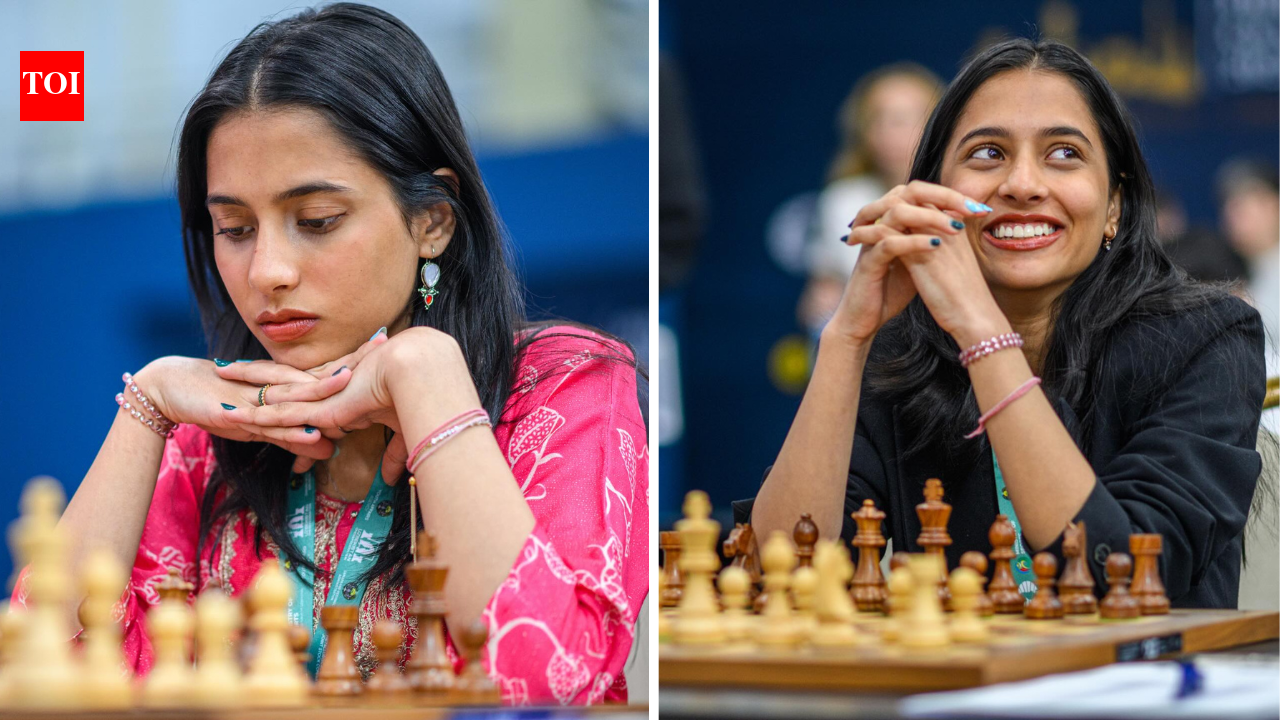
Image courtesy: Instagram/@divyachessAt five, Divya Deshmukh found chess so boring that she sometimes fell asleep during classes. Her first coach, Rahul Joshi, had to find creative ways to keep her interested. One of his tricks was to offer her homemade fried chips. Her parents had enrolled her in chess because they wanted her to take up a sport that was less physically demanding. Her elder sister played badminton, but Divya was still too small to hold the racket properly or reach the net. A chess academy near their home in Nagpur seemed like a suitable alternative.The little girl who initially had no interest in the game would eventually become the first Indian woman to win the FIDE Women's World Cup and the country's 88th Grandmaster. On November 13, 2026, at the age of 20, Divya received the Arjuna Award from President Droupadi Murmu at Rashtrapati Bhavan in New Delhi.She initially hated chess and fell asleep during classesImage courtesy: Instagram/@divyachessIn an interview with The Week in August 2025, Divya recalled how she began playing the game. “I was around five. My sister used to play badminton. She’s eight years older. As I was young, I was also tiny. I could not reach the net or hold the racket. There was a chess class nearby. My mom wanted me to play a sport that was not physical so that I didn’t get injured. That is how I started chess and I initially hated it. It was boring for me, like for any other five-year-old. My parents pushed me through it,” she said. She added: “And after a while, I just got the hang of it.”Her first coach, Rahul Joshi, used small rewards, including homemade fried chips, to keep her engaged. Joshi played an important role in her early development. In an interview with The Indian Express in March 2026, she also recalled how he pushed her to compete beyond her local academy. “He was the one who pushed me to play at the state championship and then the Nationals,” she said.She and her parents initially did not know that national-level competitions could lead to Asian and World Championships. Joshi helped them understand the competitive pathway and encouraged her to take the next steps.Chess was also part of her family historyDivya's connection to chess goes back another generation. Her maternal great-grandfather, Dr Durgaprasad Sharma, was a chess enthusiast who played the game with social reformer Vinoba Bhave at Pavnar Ashram in Maharashtra during the 1970s. Divya's mother, Dr Namrata Deshmukh, told TOI: “It's in her genes.” She recalled that her grandfather and Vinoba Bhave used to play chess every Saturday. Watching them play had made her interested in the game, and she later introduced Divya to it.Divya won her first national gold medal in 2012. In 2014, at eight, she became the youngest Under-10 world champion at the World Youth Chess Championship in Durban, South Africa.Her parents made sacrifices to support her careerDivya has often credited her family for helping her reach the highest levels of the sport. Her mother, a doctor, gave up her medical practice to support her daughter's training and tournament commitments. Her father, Dr Jitendra Deshmukh, also helped manage her travel and other arrangements. Speaking to TOI in July 2025, Namrata recalled that supporting a young child who was missing regular school classes to pursue chess had initially been a difficult decision.As Divya began travelling for tournaments and could not attend regular academic classes consistently, her parents enrolled her in open schooling, where she completed Class 12. Divya has also spoken about how each member of her family played a different role in her journey. In her interview with The Week, she said: “My family has had the biggest role. Each one of them has such specific roles. Without them, I wouldn’t have gotten here.”From a reluctant student to India's first Women's World Cup championDivya's progress through junior chess competitions eventually took her to the international stage. She won the Asian Continental Women's Championship in 2023 and was part of India's gold-medal-winning women's team at the 45th FIDE Chess Olympiad in Budapest in 2024. Her biggest breakthrough came at the FIDE Women's World Cup in Batumi, Georgia, in July 2025. At 19, she defeated fellow Indian Grandmaster Koneru Humpy in the final.The victory made her the first Indian woman to win the FIDE Women's World Cup. It also earned her the Grandmaster title, making her the fourth Indian woman and the country's 88th Grandmaster. Speaking after her World Cup victory, Divya said she hoped the achievement would encourage more girls to take up chess.Divya received the Arjuna Award from President MurmuImage courtesy: Instagram/@divyachessThe Government of India selected Divya for the Arjuna Award 2025 in recognition of her achievements in chess. President Droupadi Murmu presented the award to her at Rashtrapati Bhavan on November 13, 2026. Her parents were present at the ceremony. Speaking to The Hitavada, Divya described receiving the award as a proud and emotional experience.“It was a very proud and special moment. Walking up to receive the award was surreal. I felt a mix of happiness, gratitude and pride representing my country,” she said. She added that having her parents beside her made the occasion even more meaningful. “They have been part of this journey, and sharing this achievement with them meant a lot to me.”Divya said the award brought a greater sense of responsibility, but she viewed it as motivation rather than pressure. She dedicated the honour to her parents, family members, coaches and everyone who had supported her.The girl who once needed homemade chips to stay interested in chess now has a World Cup title, a Grandmaster title and a national sporting honour.
She slept through chess at 5, now she's India's 88th Grandmaster
Full Article
Original Source
Read the full article at Timesofindia →KhanList aggregates and links to publicly available news content. We do not host full articles from third-party sources. Always verify important information with original sources.