
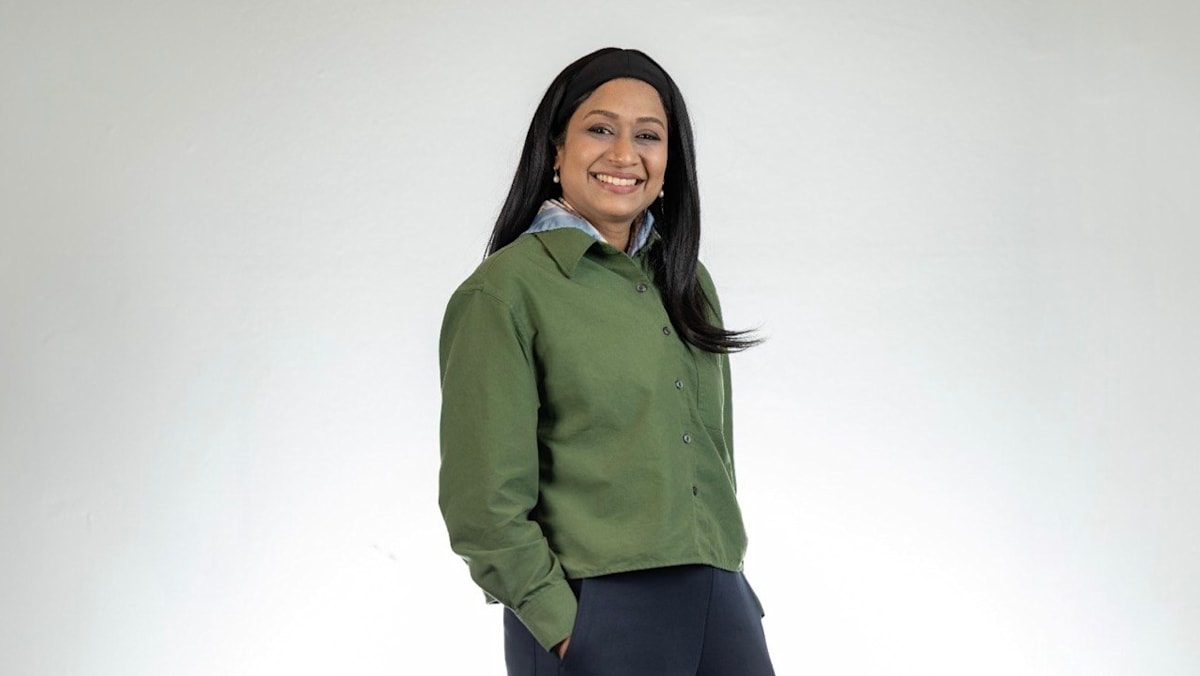
When Dr Geetha Shantha Ram asks new students at the Dyslexia Association of Singapore (DAS) if they know why they are attending intervention sessions, they sometimes say: “Because I’m stupid” or “Because I cannot spell.”To her, the answers reveal more than the child’s struggles with reading, spelling or writing. They suggest that some children may have internalised the belief that their learning differences make them less capable than their peers.“When you hear these comments, you know the child probably has heard and assimilated this information,” the 47-year-old told CNA Women.As chief operating officer of DAS and director of the organisation’s Specific Learning Differences (SpLD) Assessment Services, Dr Geetha has spent more than two decades working with children with dyslexia.Dyslexia is a specific learning difference that primarily affects reading, spelling and writing. It is linked to how the brain processes language, particularly phonological processing, or the brain’s ability to recognise and work with the sounds that make up speech.According to DAS, about 10 per cent of the Singapore population has dyslexia, with about four per cent experiencing difficulties severe enough to require intervention.Dyslexia is lifelong, and each person experiences it differently. It is not a measure of intelligence, Dr Geetha said.SpLD Assessment Services assess learning and neurodevelopmental difficulties, including dyslexia, dyscalculia (a learning difficulty in mathematics) and attention-deficit hyperactivity disorder, to determine the support needed.For Dr Geetha, labels such as “stupid” are particularly poignant because her own 14-year-old daughter has dyslexia.“The child is capable of doing many other things, capable of even succeeding in academic environments. It’s just that they need a different way of processing this information, and at a very young age, someone needs to provide that guidance,” she said.It starts with looking at the child’s strengths and challenges, understanding how they learn best and tailoring instruction, she explained. Dyslexia is not a measure of intelligence but differences in how the brain processes language, says Dr Geetha. (Photo: Dyslexia Association of Singapore) In September, Dr Geetha was among the recipients of the Social Service Professional Awards 2026. The awards recognised 12 professionals for their contributions to the social service sector.FINDING HER WAY INTO DYSLEXIA INTERVENTIONWith a degree in English literature and a Master of Arts in English studies, Dr Geetha initially thought of becoming a literature teacher. She wanted to inspire children to love reading as much as she did.But a conversation with her father changed her plans. He asked whether she wanted to be a conventional teacher or teach children whom society at the time considered “unteachable”.In 2004, at 25, she joined DAS as an educational therapist.“I went in thinking that I’m going to be there as the adult and I’m going to guide these young minds. Very quickly, I learned that a lot of teaching was actually coming from them to me: about character, persistence and resilience,” she said.“Just imagine a situation where something that is basic and expected of you is difficult, but you have to persevere and do that every day, and perhaps even experience that sense of failure time and again.“The fact that they would continue to do that, continue to be curious and have a sense of joy – they were lessons to me.” Dr Geetha (centre) received the Excellence Award at the Social Service Professionals Awards 2026 in September. (Photo: Dyslexia Association of Singapore) One of the challenges was helping teachers and parents recognise that a child’s learning difficulties were genuine.“At that point, it wasn’t a question of whether dyslexia existed or not, but it was a question of, does this child have dyslexia or is this child just a daydreamer?” she recalled.Some children, she explained, might respond to their struggles by “clowning around” in class. When a child is placed in an environment where learning is a struggle, such behaviour may become a way of coping with the experience or a way to identify themselves, she said.A CHILD OF HER OWN WITH DYSLEXIADr Geetha’s work took a personal turn when she noticed that her daughter Tara was developing speech differently from her older brother. “My daughter had difficulties finding the right words,” she recalled.When literacy challenges appeared during the preschool years, the concerned mother began early intervention with Tara at four, before she could be formally assessed. According to Dr Geetha, dyslexia can be assessed in children who are at least six years old with a minimum of six months of educational exposure.“By Primary 1, I was confident that my daughter has dyslexia,” she said.However, a dyslexia assessment at that time was inconclusive. Despite her difficulties, Tara was performing on a par with her peers, which Dr Geetha attributed to early intervention and the considerable effort her daughter put into her learning. Dr Geetha with her daughter Tara, aged seven – she suspected the child had dyslexia when she had difficulties finding the right words to use. (Photo: Dr Geetha Shantha Ram) Tara was eventually identified as having mixed dyslexia at nine, which involves difficulties with phonological processing and recognition of written words.She recalled how her daughter spent hours memorising words for spelling tests yet struggled when the time came to write them down.“She would be close to tears, and tell me, ‘I’m sorry, Mama. I’ll try harder’. I knew that wasn’t the problem,” said Dr Geetha.“To me, it was important that I was able to tell her, ‘Look, this is the reason why. We can work on this, this will not define who you are’.”Despite her professional experience, navigating dyslexia as a parent was different for Dr Geetha.“As a professional, I was up to date about dyslexia. I knew the research. I knew what intervention would work. I knew about assessments. But as a parent, that experience with a child with dyslexia… it was very humbling,” she said. Dr Geetha at the Unite Conference organised by DAS, which brings together researchers, parents, teachers and practitioners who work with children who learn differently. (Photo: Dyslexia Association of Singapore) “I asked myself: Will my daughter be accepted for who she is? Will my daughter be able to have the right resources to find happiness and success? Will she be able to stand up for herself and be proud of who she is?” said Dr Geetha.She wanted others to recognise her daughter for her strengths. “She’s highly artistic, highly musical, very perceptive and so empathetic – I wanted her to be proud of herself.”The experience gave her a more intimate understanding of the concerns faced by parents of children with dyslexia. SUPPORTING THE ADULTS SUPPORTING A CHILD WITH DYSLEXIAIn 2005, she was part of the team that developed the dyslexia training programme for the Ministry of Education, which equipped special needs officers (now called special educational needs officers) in mainstream schools to better recognise and support students with dyslexia.“One individual, one adult, who is willing to appreciate the child for who she or he is, and takes the effort to understand the child, can make a huge difference in their self-perception,” she said. Dr Geetha and her daughter Tara, aged 10 – her experience helped her to understand more deeply what parents of children with dyslexia face. (Photo: Dr Geetha Shantha Ram) She now chairs the DAS Research Committee, which oversees and reviews research activities involving DAS staff, students and programmes.In 2015, she established MAPTrack, Singapore’s first curriculum-based assessment tool for dyslexia intervention, to help educational therapists at DAS monitor students’ progress in reading, spelling, writing and reading comprehension, and identify areas requiring additional support.“It should always centre around the student,” she said. “You might have an evidence-based, research-based programme delivered in an excellent way, by very highly trained teachers. But the final question should always be: ‘Did the child learn?’”Dr Geetha also advocates for continued support beyond school, including in the workplace. For adults, assistive technology, such as spell-check, text-to-speech and artificial intelligence tools, can help with everyday tasks like reading emails, processing information and taking meeting notes, she said.“I’m not suggesting in any way that an adult with dyslexia should not be challenged as much as an individual who doesn’t (have dyslexia),” she said. “It’s about providing the necessary accommodations… such that they can continue to give you that 100 per cent. And sometimes, you’ll realise that this individual can give you 120 (per cent).”Dr Geetha believes that ultimately, the larger change must come from how educators view diverse learning abilities within a classroom.“I like to think of it as walking into the ocean and just seeing different kinds of fish and being able to appreciate the beauty of all. With that mindset, learning differences are not an exception.“I go in looking at everyone as able already. And what do I? I uplift you. That mindset switch is what I hope we can work towards,” she said. CNA Women is a section on CNA Lifestyle that seeks to inform, empower and inspire the modern woman. If you have women-related news, issues and ideas to share with us, email CNAWomen [at] mediacorp.com.sg.
She knew how to help children with dyslexia – but watching her own daughter struggle with it was different
Full Article
Original Source
Read the full article at Cnalifestyle →KhanList aggregates and links to publicly available news content. We do not host full articles from third-party sources. Always verify important information with original sources.