
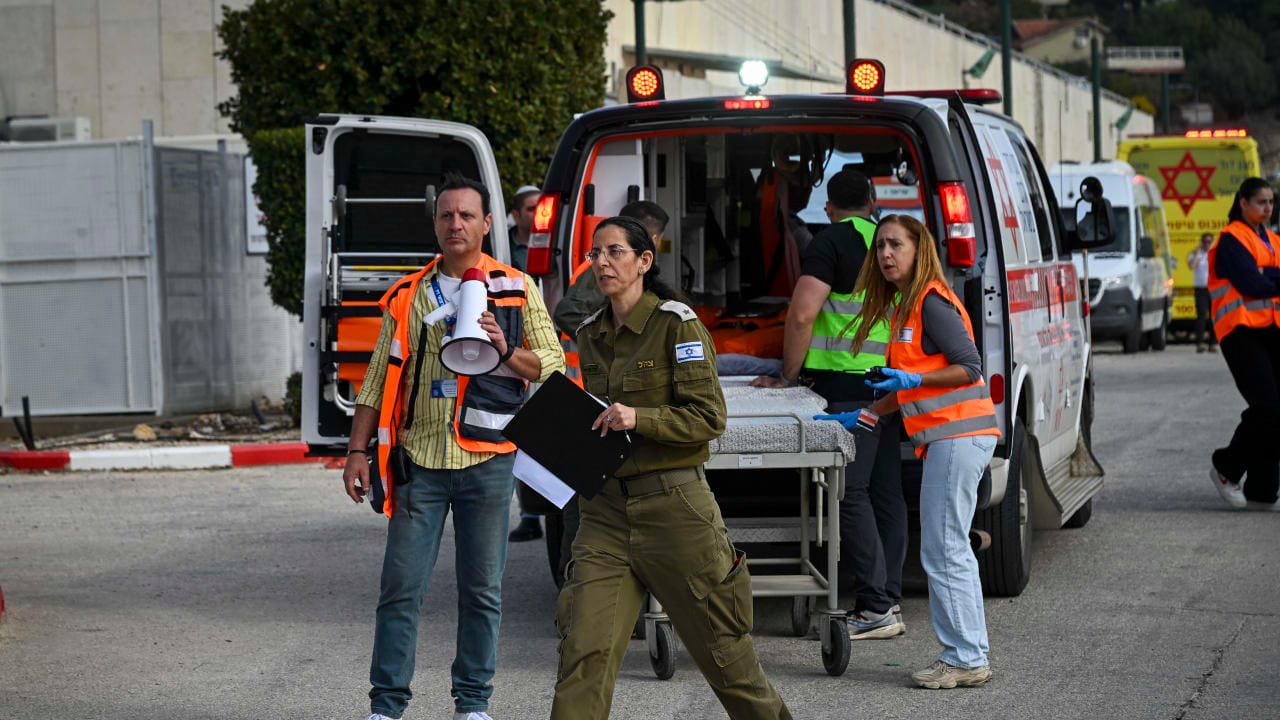
NOVEMBER 15, 2026 08:47A major earthquake in Israel could kill thousands of people, displace hundreds of thousands and cause widespread damage to critical infrastructure, a senior Home Front Command officer warned in an interview with Walla following an earthquake felt in the Gulf of Eilat earlier this week.The officer outlined the IDF's preparations for a large-scale disaster, including contingency plans for mass evacuations, prolonged rescue operations, and the rapid deployment of medical and rescue teams to geographically isolated cities, particularly Eilat."It can be said that this is the main and largest scenario we are preparing for. Nothing compares to an earthquake," the officer said.The scenario considered most likely by emergency and rescue organizations, led by the Home Front Command, involves "between hundreds and thousands of fatalities and between tens of thousands and hundreds of thousands of evacuees," along with extensive damage to infrastructure, hospitals, and the energy sector.According to the officer, emergency services would begin operating immediately under standing orders, with the first several hours devoted to assessing the scale of the disaster and identifying the areas most urgently in need of assistance.Israeli security and rescue forces take part in an earthquake drill at Ziv Hospital in Tzfat, northern Israel, December 23, 2025. (credit: MICHAEL GILADI/FLASH90)"Ultimately, it takes between six and 12 hours to build the initial situation assessment," he explained.Israel Police would serve as the initial responders, while the Home Front Command would take responsibility for more complex disaster sites requiring its specialized capabilities."Prolonged search and rescue operations, evacuating casualties, establishing disaster assistance areas, tent cities, and dealing with damaged national infrastructure," the officer said, describing the main tasks that would fall to the military.The officer also addressed Israel's earthquake early warning system, which relies on sensors operated by the Geological Survey of Israel to trigger alerts through mobile phones and public warning sirens.Although the system provides only seconds of advance notice, he stressed that even such a short warning could make a critical difference."It can also be 12 or 13 seconds. That saves lives."IDF designates 2027 as year of earthquake preparednessWhile no major technological breakthroughs have been introduced over the past year, the IDF and Home Front Command have designated 2027 as the "Year of the Earthquake," marking a renewed emphasis on national disaster preparedness.A major earthquake preparedness exercise originally scheduled for November 2023 was postponed following the outbreak of the war, leaving the military focused on other operational priorities.The Home Front Command now intends to use 2027 to restore and strengthen capabilities that received less attention during the war, when its personnel were deployed across multiple fronts and supported the operational activities of its brigades along Israel's borders and in the West Bank.As part of the effort, the military is establishing a National Home Front Center, headed by a brigadier-general, to oversee training and improve coordination among the organizations responsible for responding to national emergencies.The initiative also includes integrating volunteer assistance units operating under local authorities, conducting joint emergency simulations involving municipalities, government ministries, and other organizations, and holding hackathons aimed at developing new approaches to extreme disaster scenarios.Emergency airlift plan aims to prevent Eilat from being cut offThe recent earthquake has also renewed concerns about Eilat's ability to cope with a major disaster, given its geographic isolation and relatively limited medical and logistical resources.The officer acknowledged that providing assistance to the southern city would present a significant operational challenge, particularly if an earthquake caused extensive destruction in several parts of the country simultaneously, stretching emergency resources and delaying the arrival of reinforcements.Nevertheless, he said lessons learned from the war and the October 7 attacks had substantially improved the military's readiness to respond to emergencies in the region.The regional Edom Formation has undergone adjustments, while the IDF has developed a dedicated operational plan to ensure that rescue and medical personnel can be deployed rapidly to Eilat in the event of a major earthquake."There is a very detailed plan for all of this, enabling central Israel to immediately deploy both rescue personnel and medical teams," the senior officer said."We practice the movement of personnel, including coordination with the Air Force and flying in specialized teams as part of an emergency mobilization plan," he added.The plan calls for an airlift of medical and rescue teams from central Israel to Eilat, allowing the military to overcome the city's geographic isolation and reinforce local emergency services.The objective, the officer explained, is to ensure that even in a nationwide disaster, Eilat would not be left to face the emergency alone.The Environment and Climate Change portal is produced in cooperation with the Goldman Sonnenfeldt School of Sustainability and Climate Change at Ben-Gurion University of the Negev. The Jerusalem Post maintains all editorial decisions related to the content.Follow us on Google
Shaking things up: IDF details earthquake preparedness plans amid fears of next potential disaster
Full Article
Original Source
Read the full article at Jpost →KhanList aggregates and links to publicly available news content. We do not host full articles from third-party sources. Always verify important information with original sources.